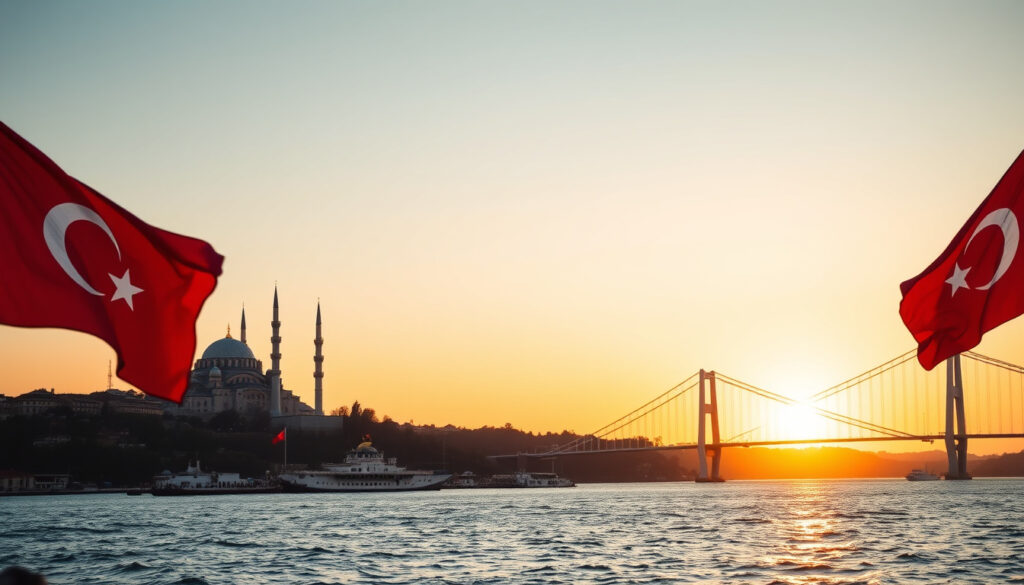
Is Turkey in Europe? Geography, EU Status & Culture
Anyone who has ever looked at a map of the Mediterranean has paused over Turkey’s unusual arrangement: a thin strip of land reaches into southeastern Europe, while most of the country spreads across Anatolia into Asia. Only about 3% of Turkey’s territory actually sits in Europe, according to the Republic of Türkiye Ministry site (official government portal).
Land in Europe: 3% (East Thrace) ·
EU membership status: Candidate (negotiations frozen) ·
Population (2023): 85.8 million ·
GDP per capita (nominal, 2023): $13,384 ·
Currency: Turkish lira (TRY)
Quick snapshot
- Turkey is a transcontinental country, with territory in both Europe and Asia (Britannica (encyclopedia)).
- About 3% of national territory lies in Europe, in the East Thrace region (Republic of Türkiye Ministry site (official government portal)).
- Türkiye is a candidate country for EU membership, not a member (European Commission (EU executive body)).
- Turkey’s geographic position is split between Europe and Asia (Britannica (encyclopedia)), which is why cultural labels stay contested.
- EU accession talks are frozen, and the conditions for restarting them are not public. (Britannica (encyclopedia))
- Cold War terms like “first world” have no modern official definition that settles Turkey’s case. (Britannica (encyclopedia))
- — Turkey granted EU candidate status (Council of the EU (EU member-state body)).
- — EU opened membership negotiations (EEAS (EU diplomatic service)).
- — Negotiations stalled (Council of the EU (EU member-state body)).
- The standstill continues, with Türkiye remaining a “candidate country and key EU partner” (European Commission (EU executive body)).
- For travelers, Turkey’s visa and currency rules sit outside Schengen-area norms. (European Commission (EU executive body))
- The practical debate has shifted from EU accession to Turkey’s own economy and security. (European Commission (EU executive body))
One profile, one pattern: the official country description defines Turkey as transcontinental, and the basic data — area, population, language, clock — all sit on the same Europe-Asia fault line.
| Label | Value |
|---|---|
| Official name | Republic of Turkey (Türkiye) |
| Total area | 783,562 km² |
| Population (2023) | 85.8 million |
| Languages | Turkish (official), Kurdish, Zaza, others |
| Time zone | UTC+3 (TRT) |
| Calling code | +90 |
Is Turkey considered part of Europe?
Geographers answer with a split decision: yes, in a small way; no, in a big way. The Bosphorus and the Dardanelles divide the country, and the European side is the smaller half. Turkey’s own government describes the country as a transcontinental Eurasian nation, with Anatolia in Western Asia and East Thrace in Southeastern Europe.
What percentage of Turkey lies in Europe?
- Roughly 3% of national territory, the strip called East Thrace, is in Europe; the UN’s FAO puts that area at about 23,764 km² (FAO (UN food and agriculture agency)).
- The rest is Anatolia, the large Asian portion of the country.
That 3% is the anchor for every phrase like “Turkey is partly in Europe.” It is technically true, geographically precise, and easily overstated: the European slice is small enough that no one would call Turkey a European country on the basis of map area alone.
The 3% figure is the most useful fact in this debate: it settles the geographic question without settling the political one.
Is Turkey in Asia or Europe?
- Nearly all of Turkey is in Asia, with the remainder in the extreme southeastern part of Europe (Britannica (encyclopedia)).
- The conventional boundary between the continents runs through the Bosphorus, the Dardanelles, and the Sea of Marmara.
Turkey is not in Asia instead of Europe, or in Europe instead of Asia. It is both, with the balance tipped heavily toward Asia — roughly 97% to 3%.
Is Turkey part of the Middle East?
Geographically, Turkey is not in the Middle East. Politically and culturally, it is tied to the region — which is why the label keeps appearing anyway.
Maps put Turkey on the edge of both Europe and the Middle East. That double position explains the confusion: a country can be 97% Asian without being “Middle Eastern” in the geographic sense, while still featuring in Middle East headlines.
The implication: if geography alone decided “Is Turkey in Europe?”, the answer would be 3% yes and 97% no. Everything else — politics, identity, convenience — is where the debate actually lives.
The implication: the geographic fact is settled, but the political and cultural debates remain open.
Are Turkish people considered European?
This is where the map stops helping. Turkey’s official profile counts 85.8 million residents, and the largest ethnic group, Turks, traces its origins to Central Asia rather than to Europe. Ethnicity, language, and history each nudge the identity question in different directions.
What is the ethnic composition of Turkey?
- Turkey’s population is predominantly Turkic, with Kurdish, Zaza, Arab, and other communities making up the rest.
- Turkish is the official language; Kurdish and Zaza are spoken in daily life.
- The country’s official self-description as transcontinental reinforces that no single continental label fits.
These demographics matter because “European” is sometimes used as a synonym for a shared heritage. Turkey’s mix is distinct: it has Ottoman, Turkic, and Anatolian layers that do not map neatly onto the Western European story.
Are Turkish people considered Middle Eastern?
- In European political discourse, Turkey is often described as a bridge between Europe and Asia — a framing that keeps it outside both labels.
- In cultural and religious contexts, Turkish society shares ties with the Middle East, which is why outside observers often group it there.
- The EU’s official language is about candidacy and partnership, not about whether Turks are culturally European.
The pattern: “European” works as a map, a passport, and a feeling. Turkey passes one test, fails another, and leaves the third to whoever is arguing.
Is Turkey still part of the EU?
Turkey is not an EU member and has never been one. It is an official candidate, which is a status, not a membership card. Candidate status is real, but it is an application, not an acceptance letter.
Is Turkey a candidate for EU membership?
- Yes — candidate status was granted in December 1999, and accession negotiations opened in October 2005.
- Türkiye remains on the EU’s candidate list as a key partner.
Candidate status is a formal category, but it is not a promise of membership. Think of it as an application that stays open while the interview process is on hold.
Why is Turkey not in the EU?
- Accession negotiations have been at a standstill since June 2018.
- The EU Council has cited rule-of-law and democratic-standard concerns as the reason for the freeze.
- Turkey remains a NATO member and a key EU partner, so the relationship is parked, not broken.
The long-running freeze is the main reason “EU candidate” and “future EU member” can no longer be treated as the same thing.
Is Turkey part of the Schengen area?
For the European traveler, Turkey’s EU candidacy is political trivia; its Schengen status is the practical detail that decides whether you need an extra stamp — and an extra visa fee.
No. Turkey is outside the Schengen area, and a Schengen visa does not automatically work there. Visitors from many European countries need a separate e-visa or entry permit, and they should check current rules before booking.
What this means: “part of the EU” and “part of Europe” are not synonyms. Turkey is in Europe’s doorway, a candidate with stalled talks, and outside the Schengen system most Europeans take for granted.
Is Turkey a rich or poor country?
Turkey sits in the economic middle. It is an upper-middle-income economy and a newly industrialized country, with a large domestic market and a diversified industrial base. It is not wealthy by Western European standards, and it is not poor by global standards.
Is Turkey a 1st, 2nd, or 3rd world country?
- The “first,” “second,” and “third world” labels come from the Cold War and have no official modern definition.
- Turkey is best described as a developing, upper-middle-income economy with a strong industrial and tourism base.
- The real question behind the phrase is usually about wealth, infrastructure, and political alignment — three things the old labels mashed together.
The old categories simply do not fit a country that is too industrialized to be called poor and too far from Western European income levels to be called rich.
Why is Turkey so wealthy?
- Turkey’s nominal GDP reached about $1.15 trillion in 2023, supported by manufacturing, construction, tourism, and agriculture.
- The weak lira makes Turkish goods and holidays cheaper for foreign buyers, which boosts demand from outside.
- That same dynamic keeps per-capita income lower than Turkey’s overall output might suggest.
The result is an economy that feels rich in aggregate and middle-income per person.
How does Turkey’s economy compare to Greece and Italy?
Turkey’s per-capita output is roughly a third of Italy’s, which changes how both countries feel — and how much their vacations cost.
By nominal GDP per capita, the spread is wide: Turkey sits near $13,000, Greece near $21,000, and Italy near $35,000. Those numbers explain why Mediterranean travelers view Turkey as a value destination and why southern Europe still looks like the wealthier side of the map.
Is Turkey a safe country?
Safety in Turkey is regional before it is national. The southeast, close to the Syrian border, carries elevated security risks; the western tourist corridor — Istanbul, the Aegean coast, the Mediterranean resorts — operates with a much lower threat level.
Is Turkey safe for tourists?
- Most tourist districts and coastal resorts see routine street crime but not the kind of danger that cancels a holiday.
- Official travel advice generally encourages normal caution rather than an outright ban.
- Millions of visitors complete trips to Turkey each year without incident, and the risk profile differs sharply by region.
For most tourists, the practical risk is closer to a busy European city than to a conflict zone.
Which parts of Turkey are dangerous?
- The provinces bordering Syria are the areas most often flagged for terrorism and conflict risk.
- Large, crowded cities carry the usual pickpocketing and petty-theft risks found across Europe.
- Remote eastern areas can have security and infrastructure gaps that make travel slower and less predictable.
The eastern border region is a different travel proposition from the showcase coastal resorts, and official advisories treat it that way.
What are the travel advisories for Turkey?
Before booking, check the latest official government advisory for Turkey; the southeast near Syria is the zone that changes the risk picture, while the western coast remains the standard tourist route.
The trade-off: Turkey can be a safe, straightforward trip if you stay on the tourist map, but the country’s risk profile is split — coastal and central regions feel like one country, the southeast like another.
Is it cheaper to go to Turkey or Greece?
For most budgets, Turkey is the cheaper destination. Accommodation, food, and local transport generally cost less than in Greece, and the depreciated lira gives foreign visitors strong buying power. Greece, by contrast, prices its tourist economy in euros.
Which country, Turkey or Greece, is more affordable for tourists?
- Turkey usually wins on price for hotels, meals, and intercity bus or domestic flights.
- Greece is less expensive than Italy but more expensive than Turkey for comparable tourist services.
- The lira’s exchange rate is the main reason Turkey feels like a bargain; the euro is why Greece feels stable.
Season, route, and travel style matter, but the general ordering is consistent: Turkey below Greece, Greece below Italy.
What are the cost differences for accommodation, food, and transport?
Three destinations, one pattern: Turkey offers the lowest cost base, Greece sits in the middle, and Italy is the budget ceiling.
For the same length of stay, Turkey tends to deliver the lowest total trip cost of the three.
| Metric | Turkey | Greece | Italy |
|---|---|---|---|
| EU status | Candidate, negotiations frozen | Member, eurozone | Member, eurozone |
| Currency | Turkish lira (TRY) | Euro (EUR) | Euro (EUR) |
| GDP per capita (nominal) | ≈ $13,000 | ≈ $21,000 | ≈ $35,000 |
| Tourist prices | More budget-friendly | Moderate | Higher |
The catch: Turkey may look cheaper on paper, but Greece and Italy offer the convenience of a shared currency and simpler border rules. The real comparison is between a weak lira and a stable euro, not just between two price lists.
Why this matters: for a European traveler, the choice between Turkey and Greece is usually a trade between a cheap lira and a simple euro, a separate visa stamp and easier border rules.
Turkey’s EU timeline at a glance
Eight dates map the whole arc: what began as an association bid in 1959 became a full membership application, then a stalled negotiation. The EEAS dates the opening of membership talks to 3 October 2005 (EEAS (EU diplomatic service)).
| Date | Event |
|---|---|
| Turkey applies for association with the European Economic Community (EEC). | |
| Ankara Agreement signed, establishing a customs union path. | |
| Turkey applies for full EEC membership. | |
| Turkey officially recognized as an EU candidate country. | |
| Accession negotiations officially begin. | |
| EU-Turkey refugee deal; negotiations slow. | |
| EU Council freezes accession negotiations due to rule-of-law concerns. | |
| Negotiations remain frozen; Turkey remains a candidate. |
The pattern: the road was long, the expectations high, and the final stretch is no longer moving. For anyone following Turkey’s European question, the timeline’s last rows are the honest answer — candidate yes, member no, freeze ongoing.
Confirmed and contested: the clarity checklist
Confirmed facts
- 3% of Turkey’s territory is geographically in Europe (Republic of Türkiye Ministry site).
- Turkey is not a member of the European Union (European Commission).
- Turkey is a NATO member (NATO).
- Turkey’s currency is the Turkish lira.
What’s unclear
- Whether Turkey is culturally “European” is subjective and debated.
- The future of Turkey’s EU membership negotiations is uncertain (Council of the EU).
- Whether Turkey should be labeled a “first world country” is anachronistic and disputed.
- How the 3% European landmass should influence Turkey’s identity is a matter of perspective.
The split is the story: the hard facts are settled, and the soft categories are not.
What the institutions say
Three official voices frame the debate from three different angles: politics, membership, and geography.
Türkiye is a candidate country and a key EU partner.
European Commission (EU executive body)
Accession negotiations with Türkiye have been at a standstill since June 2018.
Council of the EU (EU member-state body)
European Türkiye comprises about 3% of the country.
Republic of Türkiye Ministry site (official government portal)
Taken together, they say the same thing from different seats: Turkey is partly European, formally a candidate, and practically frozen out of accession.
The honest answer
So, is Turkey in Europe? The only stable answer is a split one: the map says a small part of it is, the passport says not yet, and the culture says it depends. For a European tourist weighing Turkey against Greece, though, the choice is clear: choose Turkey if a weak lira and lower prices matter more than border convenience, or choose Greece if you want the simplicity of the euro and easier border rules.
eeas.europa.eu, en.wikipedia.org, turkeyfrontier.com, propertyturkey.com, brusselstimes.com, istanbuljoy.com
Frequently asked questions
Is Turkey in NATO?
Yes. Turkey has been a member of NATO since 1952, which keeps it firmly inside the Western security alliance even while its EU accession process is frozen.
Does Turkey use the euro?
No. Turkey’s official currency is the Turkish lira (TRY). The lira’s exchange rate is one reason Turkey often looks cheaper than eurozone destinations like Greece.
What language is spoken in Turkey?
Turkish is the official language. Kurdish and Zaza are also spoken by sizable communities, especially in the east and southeast.
Do I need a visa to visit Turkey from Europe?
Visa rules depend on your nationality. Many European passport holders can enter Turkey with an e-visa or no visa for short stays, but Turkey is outside the Schengen area, so a Schengen visa is not a substitute. Check the current rules before booking.
Is Turkey a secular country?
Turkey’s constitution defines the state as secular. Religious identity plays a visible role in public life, but the legal framework is not built around an official state religion.
What is the capital of Turkey?
Ankara. The capital sits inland, while Istanbul remains the country’s largest city and cultural center.
What is the time difference between Turkey and Central Europe?
Turkey uses UTC+3 (TRT) year-round. Central European countries are typically one to two hours behind, depending on the season.
Related reading
If this article left you curious about the other side of the Europe-Asia question, here is more context from the same publication:
- How Do Tariffs Work? — a look at the trade mechanics that shape cross-border economies.
- Subsistence Rates Ireland 2025 — cost-of-living data for the European side of the comparison.
More related posts
 Personal Trainer Near Me: Costs, Duration & How to Choose
 188 cm in Feet: Exact Conversion & Height Percentiles
 Dunnes Stores Bow Dress: Joanne Hynes Review & Price
 Belfast Things to Do: Must-Sees, Itineraries & Tips 2026
 What Do Electrolytes Do? Benefits and Signs of Imbalance
 The Day of the Jackal: Season 2, Streaming Guide & Where to Watch
 2026 U.S. Open Tee Times: Round 3 & Final Round Schedule
 Best 5 Star Hotels in Galway: Estates, Spas & More
