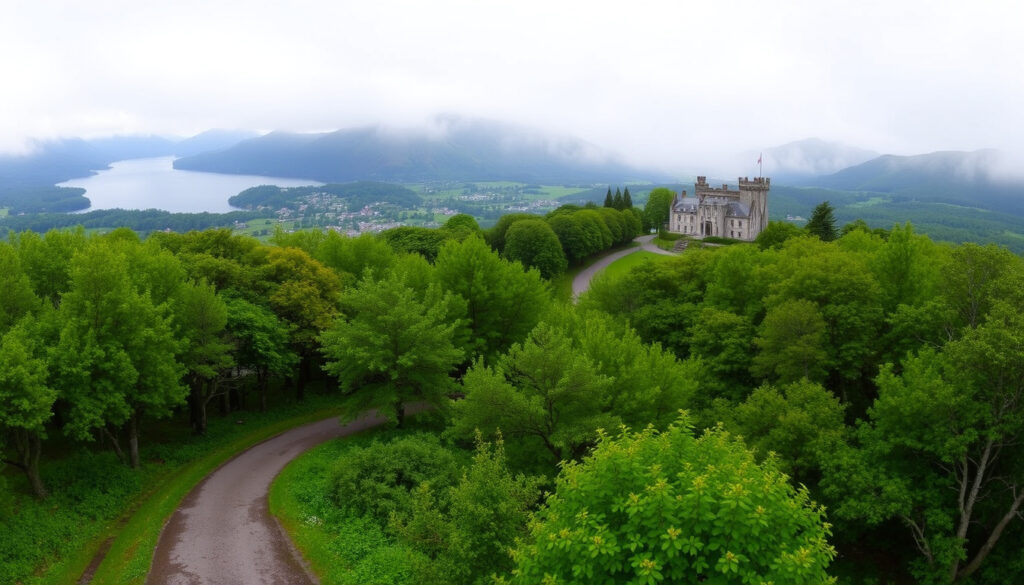
Things to Do in Killarney: Top Attractions and Secret Walks
Most Ireland itineraries give Killarney one hurried afternoon between Ring of Kerry drive-bys. The version worth longer than a stop is the web of walking routes inside Killarney National Park (official park authority). The famous attractions get their due here, and so do the quieter trails — along with the story behind Muckross House and its links to Queen Victoria and the Guinness family.
Area of Killarney National Park: 10,236 hectares (26,000 acres) · Height of Torc Waterfall: 20 meters (66 ft) · Number of main lakes in Killarney: 3 (Lough Leane, Muckross Lake, Upper Lake) · Year Muckross House was built: 1843 · Population of Killarney town: Approximately 14,000 (2016 census)
Quick snapshot
- Torc Waterfall is 20 meters high in the national park (Killarney National Park (official park authority)).
- Muckross Abbey dates from the 15th century (Killarney.ie (town tourism board)).
- Queen Victoria stayed at Muckross House in 1861 (Killarney National Park’s history page).
- Killarney National Park is free to enter (Killarney National Park (official park authority)).
- The exact origin of the name “Muckross” is debated; the common explanation is Irish “Mucros,” meaning pig’s wood (Killarney.ie (official tourism site)).
- Whether the Guinness family owned Muckross House or Lord Ardilaun owned it individually is not clearly documented (Killarney National Park’s history page).
- Who is buried at Muckross Abbey is not well documented beyond the presence of many monks (Killarney.ie (town tourism board)).
- The Reenadinna yew wood is “one of only three such woods in Europe” according to the park authority — a claim reported with medium confidence (Killarney National Park (official park authority)).
- 1776 — Arthur Young’s Walk established in connection with Arthur Young’s return to Muckross House (Killarney National Park (official park authority)).
- 1843 — Muckross House completed for the Herbert family (Killarney National Park’s history page).
- 1899 — Muckross House sold to Lord Ardilaun (Arthur Guinness) (Killarney National Park’s history page).
- 1932 — Creation of Killarney National Park (Killarney National Park’s history page).
- Plan for the 10 km lake loop from Muckross Abbey to Torc Waterfall (Killarney.ie (town tourism board)).
- Check the park authority’s walking guide before choosing a route (Killarney National Park (official park authority)).
- Use the town as the base for the Ring of Kerry and Dingle Peninsula (Killarney.ie (official tourism site)).
- Save time for the Old Kenmare Road sector of the Kerry Way (Killarney National Park (official park authority)).
Seven numbers, one pattern: Killarney’s appeal is measured in walking distance, not list items — the park, the lakes, the waterfall, and the historical sites sit close enough to cover in a single long day.
The table below compresses the essential stats into one frame.
| Label | Detail |
|---|---|
| Established | Killarney National Park established in 1932 (Killarney National Park’s history page). |
| Area | 10,236 hectares (26,000 acres) (Killarney National Park). |
| Lakes | Three main lakes: Lough Leane, Muckross Lake, Upper Lake (Killarney.ie). |
| Highest waterfall | Torc Waterfall at 20 meters (66 ft) (Killarney National Park). |
| Park status | Ireland’s oldest national park and a UNESCO Biosphere Reserve (Killarney.ie). |
| Native wildlife | Home to Ireland’s only wild herd of native red deer (Killarney.ie). |
| Entry cost | The park itself is free to enter (Killarney National Park). |
What are the main attractions in Killarney?
Muckross House and Gardens
- Muckross House was built in 1843 and hosted Queen Victoria in 1861 (Killarney National Park’s history page).
- The estate passed to Lord Ardilaun — Arthur Guinness — in 1899 and to the Irish nation in 1911 (Killarney National Park’s history page).
- The house and gardens sit at the center of the park’s official walking network (Killarney National Park).
The quick story matters if you’re planning more than a selfie stop. Built for the Herbert family in the 1840s, Muckross House played host to Queen Victoria in 1861 and later became one of Ireland’s most public-minded estates: Arthur Guinness bought it in 1899, and the family handed the property to the nation in 1911. That chain of ownership is why a Victorian mansion now sits inside a national park.
The Guinness connection is the detail that makes Muckross memorable: a brewery family bought the estate in 1899, and within twelve years the entire property became public land.
The practical reading is simpler. The gardens and lakeside paths around the house are where most visitors spend their time, and the park’s official routes treat the house as a landmark rather than the only goal.
The pattern: the house is the hook; the grounds are the reason to stay.
Ross Castle and the Lakes of Killarney
- Ross Castle is a 15th-century tower house on the shore of Lough Leane (Killarney.ie).
- The Governor’s Rock circuit runs roughly 3 km from Ross Castle and passes the Copper Mines on Ross Island (Killarney.ie).
- Boat tours on Lough Leane pass the surrounding mountains and islands (Killarney.ie).
Ross Castle gives you the classic lake-and-tower view without leaving the park’s edge. The less obvious move is the Governor’s Rock circuit — a short loop that adds the Copper Mines on Ross Island, historical layers most visitors skip.
The implication: the castle is a photo stop, but the loop turns it into a walk.
Gap of Dunloe and the Ring of Kerry
- The Gap of Dunloe is a mountain pass between Purple Mountain and MacGillycuddy’s Reeks (Killarney.ie).
- Killarney town is the practical base for the Ring of Kerry and the Dingle Peninsula (Killarney.ie).
For many visitors, the Gap of Dunloe is the day trip that fixes the area’s scale: a scenic mountain pass between two dramatic ranges, and the kind of excursion that needs its own plan.
The trade-off: the Gap and the Ring of Kerry eat a full day, which is exactly why the park’s closer walks are worth planning first.
What to do for a day in Killarney?
Morning: explore Killarney National Park
- The Knockreer Circular Walk takes about two hours and reaches roughly 45 meters in elevation (Killarney National Park).
- The Lakeside Walk follows Lough Leane toward Muckross House and can include Muckross Abbey (Killarney National Park).
Start with a shorter loop to ease into the park’s scale. The Knockreer Circular Walk is the park authority’s warm-up answer: about two hours, a modest 45 meters of climbing, and views that open onto the lake. From there, the Lakeside Walk strings the morning together — Lough Leane on one side, Muckross House ahead, and Muckross Abbey as the optional detour.
Afternoon: visit Torc Waterfall and Muckross House
- The Dundag to Torc Path passes Muckross Lake and Torc fields before finishing near Torc Waterfall (Killarney National Park).
- Muckross House, built in 1843, anchors the afternoon stretch (Killarney National Park’s history page).
The afternoon route has a natural flow: walk the Dundag to Torc Path for the waterfall, then circle back through the Muckross grounds. For a longer version, the town tourism board lists a loop connecting Muckross Abbey, Muckross House, Colleen Bawn Rock, Brickeen Bridge, Dinis Cottage, and Torc Waterfall — roughly 10 km on foot (Killarney.ie).
Evening: stroll through Killarney town and enjoy local pubs
- Killarney town’s evening scene runs on traditional pub sessions and dining (Killarney.ie).
- The town center is compact — around 14,000 residents at the 2016 census — so an evening stroll covers the main streets (Killarney.ie).
After a walking-heavy day, the town center is the reward. The evening options cluster around the main streets: traditional music sessions, whiskey tastings, and a food scene that leans pub-friendly.
The pattern: the best Killarney day is a loop — park in the morning, waterfall and mansion in the afternoon, town at night.
Is the town of Killarney worth visiting?
Reasons to visit Killarney
- Killarney National Park is Ireland’s oldest national park (Killarney.ie).
- The park is a UNESCO Biosphere Reserve (Killarney.ie).
- The area holds Ireland’s only wild herd of native red deer (Killarney.ie).
The short answer: yes, if you like landscapes that mix lake, mountain, and built heritage in one frame. The town’s own tourism board leads with the practical facts — Ireland’s oldest national park, a UNESCO Biosphere Reserve, and a red deer herd that survived where others didn’t.
The park is free to enter, which changes the math of any Ireland itinerary: a full day here doesn’t require a ticket gate.
What to expect in Killarney town
- Killarney mixes outdoor activities, historical sites, and traditional Irish culture in a compact center (Killarney.ie).
- The town is the usual base for the Ring of Kerry and the Dingle Peninsula (Killarney.ie).
- Abbeys, monasteries, and traditional houses anchor the area’s historical identity (Killarney.ie).
Expect a town that behaves like a small regional hub rather than a resort. The historical texture is local — abbeys, monasteries, traditional houses — and the charms are immediate: leave a guesthouse and you’re at the park’s edge within minutes.
The catch: the center is busiest in summer; the park’s official walking routes are the pressure valve.
What are some fun activities for adults in Killarney?
Whiskey and craft beer tasting
- Killarney’s pubs and distilleries offer whiskey tastings alongside the traditional pub scene (Killarney.ie).
The evening options go beyond a pint. Whiskey tastings and the town’s pub circuit are the adult counterparts to the park’s daytime trails, and they come with the same local texture — small rooms, live music, no rush.
Hiking the Kerry Way and other trails
- The Old Kenmare Road forms part of the Kerry Way long-distance trail (Killarney National Park).
- The park lists walking and hiking routes from lakeside and woodland trails to mountain walks with varying difficulty (Killarney National Park).
For hikers, the Kerry Way is the long game. It passes through Killarney, and the Old Kenmare Road section is the part that stays quietest — a historical route that links Killarney to the wider trail network.
Boat trips on the Lakes of Killarney
- Boat tours on Lough Leane give views of the surrounding mountains and islands (Killarney.ie).
- The longer lake loop passes Dinis Cottage and the Meeting of the Waters (Killarney.ie).
A boat trip reframes the park’s scale. From Lough Leane, the mountains regain their height, and the lakeside walks you did in the morning turn into quiet shoreline details.
Golf and horse riding
- Horse riding and golf are part of the activity mix around Killarney (Killarney.ie).
The town’s activity list is broader than hiking. Horse riding draws on the same landscape that makes the walking good, and golf is the more sedate option for a half-day off the trails.
The trade-off: adult Killarney splits cleanly — active hours in the park, social hours in the pubs.
Is there a waterfall in Killarney?
Torc Waterfall: location and height
- Torc Waterfall is a 20-meter waterfall in Killarney National Park (Killarney National Park).
- The Dundag to Torc Path finishes near the waterfall, with views of Muckross Lake and Torc fields en route (Killarney National Park).
Yes — and it’s the park’s headline cascade. Torc Waterfall’s 20-meter drop sits close enough to the main walking network that it works as a short stop on a longer day.
The waterfall is the easy reward; the path choice is the planning question. The park authority’s walking notes give the route options, so match the walk to your day.
How long is the Torc Waterfall walk?
- The walk from the Torc car park to the waterfall is about 1.5 km one way; allow 30–45 minutes round trip (Killarney National Park).
The short answer: roughly 1.5 km one way, which reads as 30–45 minutes when you factor in the slope and the photo stops. The longer versions are the ones that connect Torc to Muckross House and Dinis Cottage.
Other waterfalls near Killarney
- O’Sullivan’s Cascade is the other named waterfall in the area, smaller than Torc (Killarney.ie).
If you’ve done Torc and want a quieter version, O’Sullivan’s Cascade is the local follow-up — less photographed, smaller scale, and usually easier to have to yourself.
The pattern: Torc carries the headline because of the 20-meter drop; the area’s other cascades work as quiet alternatives.
What are some secret walks in Killarney?
Old Kenmare Road
- The Old Kenmare Road is a historic route with fewer crowds, forming part of the Kerry Way (Killarney National Park).
- It passes through oak woodland, meadow, and the Reenadinna yew wood — one of only three such woods in Europe, according to the park authority (Killarney National Park).
This is the walk that turns Killarney from a sightseeing stop into a landscape experience. The Old Kenmare Road is a stretch of the Kerry Way with serious history and lighter footfall.
Eagle’s Nest Mountain trail
- The Eagle’s Nest trail offers views of the Upper Lake (Killarney National Park).
The Eagle’s Nest route is the park’s answer to elevation without a full mountain day. The reward is an Upper Lake view that sits apart from the Muckross–Torc crowd.
Dinis Cottage and the Meeting of the Waters
- Dinis Cottage is a former hunting lodge on the lake circuit (Killarney.ie).
- The Meeting of the Waters is the scenic confluence of the three main lakes (Killarney.ie).
Dinis Cottage is the kind of place that makes the 10 km loop worth finishing, and the Meeting of the Waters is the natural punctuation point where the lakes converge.
The implication: the “secret” walks are not hidden; they are simply the ones that require a little more walking to reach.
Killarney: the trade-offs before you book
Upsides
- Ireland’s oldest national park and a UNESCO Biosphere Reserve (Killarney.ie).
- The park is free to enter — the main walking routes cost nothing (Killarney National Park).
- Muckross House, Muckross Abbey, and Ross Castle sit close enough to combine in one day (Killarney.ie).
- A practical base for the Ring of Kerry and Dingle Peninsula (Killarney.ie).
Downsides
- The full lakes loop around Muckross Abbey, Muckross House, Brickeen Bridge, Dinis Cottage, and Torc Waterfall runs about 10 km — a long half-day on foot (Killarney.ie).
- The best-known routes draw most of the visitors; the quieter Old Kenmare Road and Eagle’s Nest trails require more effort to reach (Killarney National Park).
- Some historical details — such as who is buried at Muckross Abbey — are not clearly documented (Killarney National Park’s history page).
The trade-off is between convenience and discovery. Killarney’s convenience is exceptional; its quieter corners simply ask for more walking hours in return.
How to build your Killarney day, step by step
One rhythm, five moves: the park’s official routes slot into a single day if you start early and keep the moving parts simple.
- Choose your route from the park authority’s walking guide — the Knockreer Circular Walk is a strong warm-up (Killarney National Park).
- Walk the Lakeside Walk from Lough Leane toward Muckross House, adding Muckross Abbey if time allows (Killarney National Park).
- Pick up the Dundag to Torc Path for the waterfall finish (Killarney National Park).
- Add the Dinis Cottage and Meeting of the Waters stretch through the longer lake loop (Killarney.ie).
- Finish in Killarney town for the evening pub scene (Killarney.ie).
If you want the long version, the official 10 km loop does most of the work for you: Muckross Abbey, Muckross House, Colleen Bawn Rock, Brickeen Bridge, Dinis Cottage, and Torc Waterfall in one connected afternoon (Killarney.ie).
The pattern: the order matters less than the start time.
Killarney’s timeline: how the park took shape
Seven dates, one pattern: a private estate became public land in less than a century.
| Year | Event |
|---|---|
| Inisfallen Abbey founded on Lough Leane (Killarney.ie). | |
| Arthur Young’s Walk established in connection with Arthur Young’s return to Muckross House (Killarney National Park). | |
| Muckross House completed for the Herbert family (Killarney National Park’s history page). | |
| Queen Victoria visits Muckross House during her Irish tour (Killarney National Park’s history page). | |
| Muckross House sold to Lord Ardilaun (Arthur Guinness) (Killarney National Park’s history page). | |
| Muckross Estate donated to the Irish nation (Killarney National Park’s history page). | |
| Creation of Killarney National Park (Killarney National Park’s history page). |
The compression is striking: between 1843 and 1932, a Victorian mansion went from private home to national park centerpiece.
What’s confirmed and what’s still unclear
The confirmed facts hold up well; the uncertain edges are mostly about names and ownership details.
Confirmed facts
- Torc Waterfall is 20 meters high (Killarney National Park).
- Muckross Abbey dates from the 15th century (Killarney.ie).
- Queen Victoria stayed at Muckross House in 1861 (Killarney National Park’s history page).
Rumors and gaps
- The exact origin of the name “Muckross” is debated; the common explanation is Irish “Mucros,” meaning pig’s wood (Killarney.ie).
- Whether the Guinness family owned Muckross House or Lord Ardilaun owned it individually is not clearly documented (Killarney National Park’s history page).
- Who is buried at Muckross Abbey — many monks, but individual graves are not well documented (Killarney.ie).
- The park authority’s claim that Reenadinna yew wood is one of only three such woods in Europe is reported with medium confidence, so it reads as “reported” rather than settled (Killarney National Park).
What this means: for planning purposes, the confirmed list is the one you need; the uncertain items are historical footnotes, not travel blockers.
What the official guides emphasize
“Killarney National Park offers walking and hiking routes ranging from lakeside and woodland trails to mountain walks with varying difficulty.”
Killarney National Park (official park authority, walking guide)
“Killarney National Park is Ireland’s oldest national park.”
Killarney.ie (official tourism site, explore Killarney)
“The monks of Inisfallen documented Irish history in the Annals of Inisfallen.”
Killarney.ie (official tourism site, things to do)
“Arthur Young’s Walk was established in connection with Arthur Young’s return to Muckross House along Muckross Lake in 1776.”
Killarney National Park (official park authority, walking guide)
The pattern across the official voices: the park’s biodiversity and the town’s heritage get equal billing, which is why Killarney works better than a single-attraction town.
Why Killarney works — and who should skip it
Killarney’s argument is density: a national park, a Victorian mansion, a medieval abbey, and a lake district all within a few kilometers. The same density is what the quieter routes solve — the Old Kenmare Road, Eagle’s Nest, and the Knockreer loop give you the landscape without the queue. For travelers building an Ireland itinerary, the decision is clear: spend the night in town and let the park’s lesser-walked paths carry the daylight, or treat Killarney as a photo stop and leave knowing you missed the point.
getyourguide.com, getyourguide.com, killarneyguidedwalks.com, tripadvisor.ie
Frequently asked questions
What is the best time to visit Killarney?
Killarney National Park is open year-round and free to enter (Killarney National Park). The main walking routes are accessible in every season; the practical difference is daylight and weather, so check the park authority’s site before setting out.
Are dogs allowed in Killarney National Park?
The park authority publishes the current dog policy on its official site (Killarney National Park). On the walking routes, the standard advice is to keep dogs under control and on leads near livestock.
How much does it cost to visit Muckross House?
The park is free to enter (Killarney National Park), but Muckross House is a ticketed heritage attraction. Prices change seasonally, so the official tourism site is the reliable source for current admission (Killarney.ie).
Is Killarney good for hiking?
Yes. The park authority lists walking and hiking routes from lakeside and woodland trails to mountain walks (Killarney National Park), including the Knockreer Circular Walk, the Lakeside Walk, and the Old Kenmare Road section of the Kerry Way.
What are the best pubs in Killarney?
The reliable way is to walk the town center in the evening and follow the live traditional music. The official tourism site lists Killarney’s dining and nightlife options (Killarney.ie).
What does Muckross mean in Irish?
The exact origin is debated. The common explanation is that Muckross comes from the Irish “Mucros,” meaning pig’s wood (Killarney.ie).
Where did Queen Victoria stay in Killarney?
She stayed at Muckross House during her 1861 Irish tour (Killarney National Park’s history page). The house’s history page records the visit as part of the estate’s Victorian chapter.
More related posts
 Macclesfield FC vs Brentford FC Lineups: FA Cup 2026 Match
 Coin Master Free Spins – Daily Links and Safe Methods
 Matt the Thresher Dublin: Address, Menu, Prices & Reviews (2025)
 Houses for Sale in Cavan Town: Listings & Price Guide
 Father’s Day Card Ideas: Messages, Quotes & DIY Crafts
 Best Char Siu Pork Near Me: Buy, Make & Sauce Guide
 Leeds United vs Man City Timeline: Full Head-to-Head History
 Chihuahua for Sale Ireland: Prices & Rescues 2024
