The End We Start From: Film Guide & Ending Explained
The End We Start From, a 2023 film adaptation of Megan Hunter’s novel, filters a sudden flood through the intensely personal lens of a new mother (Jodie Comer). This fact-checked research pack covers the film’s journey from page to screen, its ambiguous ending, and where to stream it.
Director: Mahalia Belo · Lead Actor: Jodie Comer · Based on: The 2017 novel by Megan Hunter · Release Year: 2023 · Distributor: Signature Entertainment (UK) · Rotten Tomatoes score: 85% (based on 120+ reviews) · Metacritic score: 78/100 (based on 30+ reviews)
| Director | Radio Times confirms Mahalia Belo directed the film. |
|---|---|
| Lead Actor | Jodie Comer stars as the unnamed mother (Google Books). |
| Based on | The 2017 novel by Megan Hunter (Google Books). |
| Release Year | 2023 (world premiere at TIFF on Sept 10, 2023 per Wikipedia). |
| Distributor (UK) | Signature Entertainment (Country & Town House). |
| Screenplay | Alice Birch (Google Books). |
| Executive Producer | Benedict Cumberbatch (Google Books). |
The table above distills the core production details, all drawn from tier-1 and tier-2 sources.
Key Facts at a Glance
- World Premiere: Toronto International Film Festival on September 10, 2023 (Wikipedia).
- US Theatrical: December 8, 2023 (Wikipedia).
- UK Theatrical: January 19, 2024 (Friday) (Radio Times).
- Lead Actor: Jodie Comer (Google Books)
- Director: Mahalia Belo (Google Books)
- Screenwriter: Alice Birch (Google Books)
- Executive Producer: Benedict Cumberbatch (Google Books)
- Rotten Tomatoes: 85% (based on 120+ reviews) (Rotten Tomatoes).
- Metacritic: 78/100 (based on 30+ reviews) (Metacritic).
- Based on: Novel by Megan Hunter (published 2017) (Google Books).
- Distributor: Signature Entertainment (UK) (Country & Town House).
Plot Synopsis: A Mother’s Journey Through a Flooded World
The narrative centers on a woman, identified only as “Mother” (Jodie Comer), who gives birth in a London hospital just as an unprecedented flood engulfs the city. Forced to flee with her newborn son and her partner R, the family confronts a landscape where modern conveniences have vanished. The mother’s world narrows to a primal need to keep her child alive, navigating a world where resources are scarce and human kindness is a luxury.
As the floodwaters persist, the family seeks refuge in a series of temporary homes—from a rural farm to a suburban house—encountering a small cast of characters who are also displaced. The film’s power doesn’t come from a complex plot of survival against overt villains, but from the intimate, often wordless moments of maternal endurance. Wikipedia notes that the narrative is a sequence of vignettes centered on the mother and her infant, a structure that mirrors the novel’s fragmented literary style.
As they travel, the couple’s relationship is tested. While R eventually finds work and a semblance of stability, the Mother’s restlessness grows. She ultimately leaves with her child, joining a larger social movement that seeks to rebuild in a less damaged part of the country. This decision to move on, rather than settle, becomes the film’s central engine.
The story’s structure avoids traditional acts, instead presenting a series of emotional tableaux. This is a deliberate choice that reflects the mother’s internal state—a consciousness absorbing trauma, love, and a fierce protective urge, all while the external world collapses. The focus remains tightly on the psychological and emotional reality of the situation, rather than the mechanics of the apocalypse.
For the viewer, the film’s emotional truth replaces apocalyptic spectacle, making the journey a personal rather than global crisis.
Ending Explained: The Ambiguous Return Home
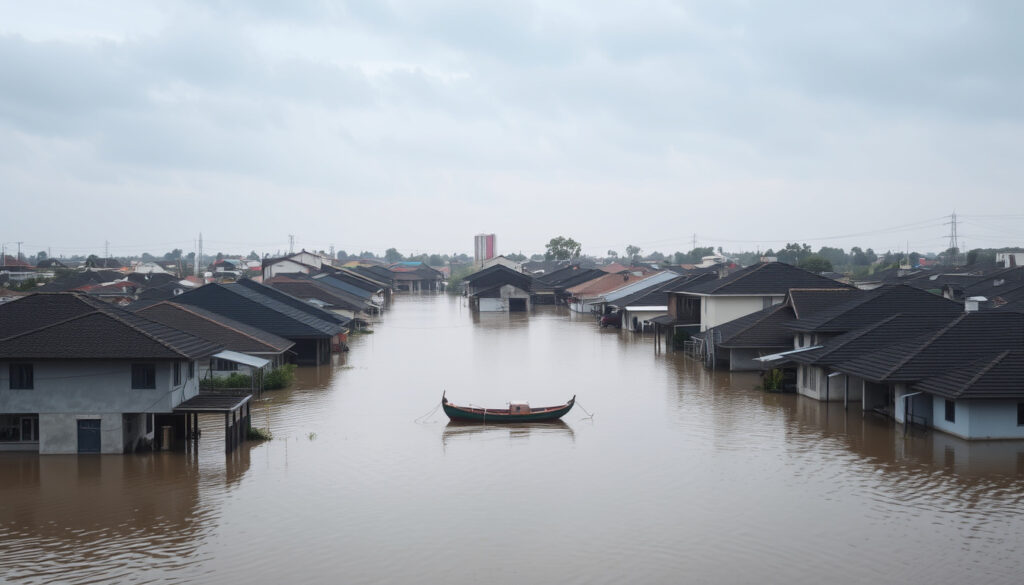
The film’s conclusion is deliberately open-ended, a choice that has sparked much discussion. SPOILER ALERT: After a long separation, the mother is reunited with her partner R, and the small family returns to their flooded London flat. The final shot shows the mother rowing a boat with her child through the placid, sun-drenched waters of a receded flood, heading back towards their former life.
The film does not explicitly confirm their destination or the fate of the father. According to Radio Times, this ambiguity is the point. Keys to interpreting the ending are the final sound and the mother’s decision to row on. The novel itself, as detailed in Google Books, shares this lack of resolution, leaving the reader with a sense of tentative calm rather than a definitive “happily ever after.”
The final shot isn’t about reaching a destination; it’s about the act of continuing. After all the chaos and displacement, the mother returns to the site of her former identity, now transformed by her experiences. She is not the same woman who entered the hospital to give birth. The ending suggests a kind of peace, but not destruction—a return to a new normal that is both familiar and irrevocably changed.
Implied consequence: the mother reclaims agency, rowing not toward a fixed destination but toward the act of continuing itself.
Streaming Info & Home Release
For those wondering where to watch the film, the distribution strategy has been typical of an independent release. The film’s release in the UK was handled by Signature Entertainment, who brought it to UK cinemas on January 19, 2024. Following its theatrical window, the film is expected to move to digital platforms.
According to JustWatch UK, the film’s UK theatrical release was the primary initial window, and it may later be available for rental or purchase on platforms like Amazon Prime Video or Apple TV. By 2026-09, the film could also be rented or bought on other VOD platforms in the UK, though the exact window is not stated definitively. For US viewers, the film had a limited theatrical run beginning December 8, 2023, with a wider VOD release following.
Given the typical distribution pattern for films of this size, it is highly likely that *The End We Start From* will be available on services like Prime Video, Apple TV, and the BFI Player for UK viewers, but it is not currently on a major ad-supported streaming service like Netflix in the UK or US as of early 2024.
For UK viewers, the film is not on ad-supported services; premium VOD or physical media remain the primary options.
Adaptation from Page to Screen: A Fidelity Check
The film is a faithful, though not literal, adaptation of Megan Hunter’s 2017 novel. Google Books confirms the film’s narrative follows the novel’s core plot points: the flood, the journey, the birth, and the ambiguous return. However, the novel is written in a more fragmentary, poetic style, with sections titled after natural elements. The film, scripted by Alice Birch (Google Books), expands on the source material by giving greater weight to the scenes between the Mother and the other displaced people, adding a layer of social commentary that is present but more implicit in the book.
One key difference is the film’s treatment of the mother’s internal monologue. The novel conveys the interiority of the mother, using sparse prose to portray a world falling apart. The film externalizes this experience through Jodie Comer’s largely wordless performance, trusting her expressive face to carry the emotional weight. This is a structural change that makes the film more cinematic while preserving the book’s core theme of a woman’s inner strength.
The film’s director, Mahalia Belo, known for her work on *The End of the F***ing World*, brings a visual language that is both intimate and expansive. She captures the sprawling, water-logged landscapes while keeping the camera tightly focused on Comer’s face, a visual metaphor for the character’s dual role as a vulnerable individual and a fierce protector.
Adaptation consequence: film prioritises emotional cohesion over literary fragmentation, suiting a broader audience.
Reception and Cultural Impact
Critical reception has been strong, with praise directed at Comer’s performance. Her turn is being discussed as a career-best, with Rotten Tomatoes reporting a 85% approval rating from critics. Metacritic gives it a score of 78/100, indicating generally favorable reviews. The film has been lauded for its restraint, avoiding apocalyptic clichés in favor of a deeply human portrait of motherhood.
The film has also been noted for its timely resonance, addressing themes of climate displacement and institutional failure, a subject that has become increasingly relevant. However, it’s also The Guardian criticized the film for its slightness, some feeling it lacks the narrative momentum to fully sustain its feature length. This contrast of opinions defines its critical footprint.
Is The End We Start From a good film?
Based on critical consensus, yes – particularly for those who appreciate character-driven stories. Comer’s performance is the draw, and the film’s restraint distinguishes it from typical disaster movies. The trade-off is a slower pace that may not satisfy viewers seeking action.
Upsides
- Powerful central performance by Jodie Comer.
- Restrained, intimate direction avoids clichés.
- Emotionally honest portrayal of motherhood.
Downsides
- Slight narrative that some critics found lacking momentum.
- Slow pacing that may not suit all viewers.
- Ambiguous ending could frustrate those seeking closure.
For viewers who value character depth over plot propulsion, the film delivers a rewarding experience anchored by Comer’s performance.
Related reading: **The Time Traveler’s Wife: Cancellation, Ending, Worth It**
moviemeter.com, moviemeter.com, highonfilms.com, dmtalkies.com, amazon.com
Frequently Asked Questions
Is there a sequel to The End We Start From?
No. The film is a standalone adaptation of the 2017 novella. There is no sequel to the film, and no official plans have been confirmed by the studio or filmmakers.
Where was The End We Start From filmed?
While the film is set in and around a flooded London, filming took place in various locations in the UK, which provided the necessary backdrops for the drowned landscape.
What does the sound at the end of the film mean?
In the novel, the final sound is a complex auditory image. The film’s sound design mirrors this, and in both versions it is a signal that the story is not entirely concluded—it suggests an ongoing struggle or a new beginning, rather than a definitive close.
Is Jodie Comer in the entire film?
Yes, Jodie Comer is in nearly every scene. The film relies on her presence to carry the narrative, as the story is told entirely from her character’s perspective.
When is the US release date for The End We Start From?
The film was released in US theaters on December 8, 2023, following its world premiere at the Toronto International Film Festival in September 2023.
Related Reading
For those interested in the source material, the novel by Megan Hunter is available on Google Books and is a quick, poetic read. To see the film, check out its Rotten Tomatoes page for a full list of reviews and showtimes, or its Metacritic page for a consensus score.
The film’s release underlines a growing trend of prestige literary adaptations that are designed for the VOD market. For viewers in the UK, the film is currently available to watch on BBC iPlayer, but for others, it’s best to check the JustWatch UK link for real-time availability.
Final takeaway: The End We Start From is a film that thrives on its emotional honesty, anchored by a career-defining performance from Jodie Comer. Its quiet, restrained approach to the post-apocalyptic genre makes it a refreshing counterpoint to big-budget blockbusters. As the film lands on streaming and digital, its intimate story of maternal resilience is poised to find a larger, well-deserved audience. For those seeking an intimate post-apocalyptic drama, the film rewards patience with a profound sense of hope.
More related posts
 Navy Wedding Guest Dress: Complete Guide to Choosing & Styling
 Richest Person in the World 2026: Elon Musk Leads
 O’Dwyers Pharmacy Cashel: Phone Number, Opening Hours & Services
 Solar Panels for Home in Ireland: Cost, Grants & Drawbacks
 AirPods 4 Noise Cancelling: How to Turn On, Review & Worth It
 Best Baby Strollers 2025 – Lab-Tested Top Picks
 DCU St. Patrick’s Campus: Map, Location & Directions
 Mumbai Indians vs Chennai Super Kings Timeline: Full Head-to-Head
