Best Places to See Autumn Leaves in Japan (2026)
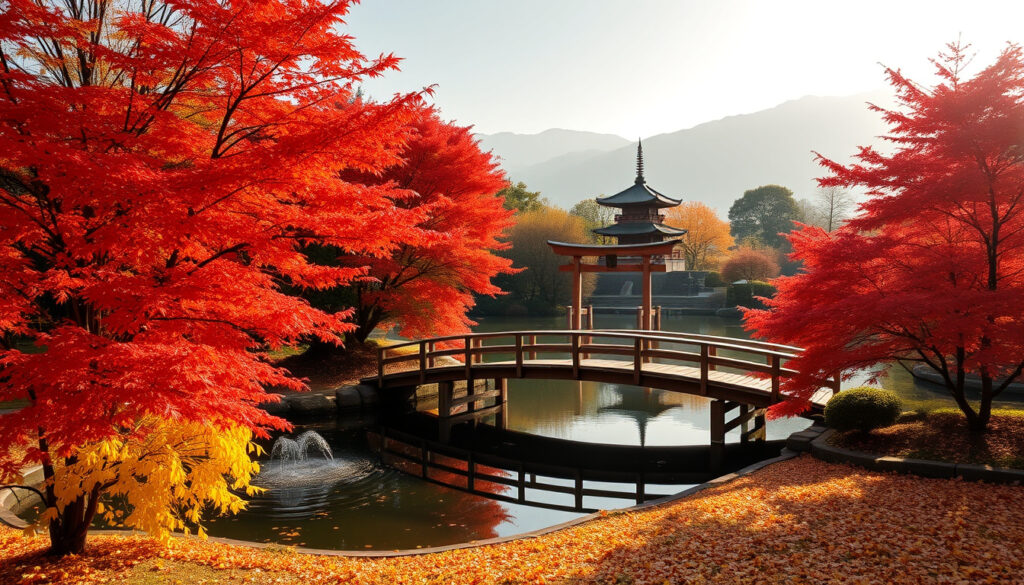
There’s a moment in late autumn when Kyoto’s temple gardens look like they’ve been painted with fire, and the air smells of crisp leaves and green tea. If you’re planning a trip to see Japan’s famous koyo (autumn leaves) in 2026, the key is knowing exactly where and when the color peaks — because the window is narrow, and it moves from north to south over nearly three months. This guide breaks down every region, the latest forecast projections, and the practical logistics that turn a good trip into a great one.
Best time to see autumn leaves in Japan: Mid-September to early December, varying by region ·
Peak viewing regions: Hokkaido (late Sep), Tohoku & Nikko (Oct), Kanto & Kansai (Nov) ·
Key tree species for koyo: Japanese maple (momiji), ginkgo, and Japanese rowan ·
Iconic viewing destination: Kyoto, with dozens of temple gardens and UNESCO World Heritage sites ·
Average autumn temperature in Tokyo: 15–20°C (59–68°F) in November
Quick snapshot
- Official foliage forecasts are released by the Japan Meteorological Corporation (Kanko Map (travel guide platform))
- Peak season progresses from north to south over 8–10 weeks (Asia Odyssey Travel (touring operator))
- Kyoto is the most famous international destination for autumn leaves in Japan (Self Guide Japan (travel planning site))
- Exact peak date for specific temples can shift by one week due to microclimates (MATCHA (Japan travel media))
- 2026 forecast details are not finalized until mid-2026 — rely on historical averages (Two Wandering Soles (travel blog))
- Crowd levels are highly variable and not centrally tracked (Kanko Map)
- Mid-September: Leaf color starts in Hokkaido (Daisetsuzan) (Asia Odyssey Travel)
- Late October: Peak in the Japan Alps (Kamikochi, Takayama) (Kanko Map)
- November: Peak foliage in Tokyo, Kyoto, and central Honshu (Agate Travel (travel agency))
- Official 2026 forecast expected from Japan Meteorological Corporation in September 2026 (Watabi (travel guide))
- Book accommodations by spring 2026 for peak November dates (Kanko Map)
- Download Japan Rail Pass and regional transit maps before departure (Ume Travel (foliage map provider))
Six key regions, one pattern: the color starts in the snowy north and rolls south over three months, peaking in each area for only 10–14 days.
| Region | Peak window (2026 projection) | Key destinations |
|---|---|---|
| Hokkaido | Late September – mid-October | Daisetsuzan National Park, Sapporo, Hakodate |
| Tohoku | Mid-October | Nikko, Lake Towada, Oirase Gorge |
| Chubu & Hokuriku | Mid-October – early November | Japan Alps, Takayama, Kanazawa |
| Kanto (Tokyo region) | Late November | Tokyo parks, Mt. Takao, Kamakura |
| Kansai (Kyoto/Osaka) | Late November – early December | Kyoto temples and gardens, Nara, Osaka |
| Kyushu | Early – mid-December | Mount Aso, Yufuin, Nagasaki |
Best places to see autumn leaves japan reddit
Frequently mentioned spots on travel forums
- Reddit users often recommend Daisetsuzan National Park for earliest foliage — the first reds appear here in mid-September (Asia Odyssey Travel (touring operator)).
- Kyoto’s Arashiyama and Higashiyama areas are consistently praised for their temple gardens and bamboo-lined paths (Self Guide Japan (travel planning site)).
- Less crowded alternatives include Hakone (with Mount Fuji views) and the Fuji Five Lakes region, where the fall color reflects across the water (Two Wandering Soles (travel blog)).
Tips from experienced travelers
- Seasoned travelers on r/JapanTravel suggest arriving at popular temples by 7:30 a.m. to avoid the 10 a.m. tour-bus crush (Self Guide Japan).
- Many recommend pairing a visit to Kiyomizu-dera with a walk through the nearby Sannenzaka and Ninenzaka slopes — the sunset light there is unforgettable (MATCHA (Japan travel media)).
The most Instagrammed temple gardens draw crowds of 5,000–10,000 people on peak weekends. Arrive early or book a temple night-illumination ticket to see the colors without the selfie-stick brigade.
Best places to see autumn leaves japan map
Regional breakdown of peak viewing zones
The north-to-south progression is driven by temperature and altitude. Hokkaido’s mountains turn first, followed by the Japan Alps, then the lowland parks of Tokyo and Kyoto.
- Hokkaido: Late September – late October. Daisetsuzan’s alpine trails offer 360° views of red and gold (Ume Travel (foliage map provider)).
- Tohoku and the Alps: Mid- to late October. Nikko’s Irohazaka winding road is a driver’s paradise of colour (Kanko Map (travel guide platform)).
- Kyoto, Tokyo, and Osaka: Mid-November to early December. This is the peak travel window for most international visitors (Kanko Map).
Interactive map of foliage forecasts
Several websites publish interactive maps showing projected peak dates by prefecture. Ume Travel’s 2026 map places Sapporo around October 28 and Kagoshima around December 15 (Ume Travel). Agate Travel’s forecast pushes Sapporo to November 2 and Kyoto to December 8 (Agate Travel (travel agency)).
Accessibility and transportation links
The Japan Rail Pass covers most Shinkansen routes to the major viewing hubs — Tokyo, Kyoto, Nikko, and Kanazawa are all connected by bullet train. Local buses and private railways reach the gardens and trailheads from the stations.
If you’re mapping a 10-day trip, plan one region per leg: start in Tokyo (3 days with day trips to Nikko or Hakone), Shinkansen to Kyoto (4 days), and finish in Osaka (2–3 days with a side visit to Nara).
Best time to see autumn leaves in japan 2026
2026 foliage forecast from official sources
As of July 2026, the official Japan Meteorological Corporation forecast had not yet been released — those updates typically appear in September (Watabi (travel guide)). Until then, travel planners rely on historical averages and third-party projections.
- Hokkaido starts in mid-September (Asia Odyssey Travel).
- Kanto region (Tokyo) peaks in late November (Agate Travel).
- Kansai region (Kyoto/Osaka) peaks in late November to early December (Self Guide Japan).
Variation by latitude and altitude
Japan’s 2026 autumn leaves are widely projected to peak 3–7 days later than usual because of a warm year (Kanko Map). Higher-elevation spots like Kamikochi (1,500 m) turn weeks before lowland Kyoto.
Weather impact on peak color timing
Two Wandering Soles’ planning table shows Kyoto averaging November 24 for yellow leaves and December 5 for red leaves (Two Wandering Soles). Tokyo averages November 23 for yellow and November 28 for red.
The 3–7 day delay means your carefully planned mid-November Kyoto visit might catch leaves that are still 30% green. Build a contingency day or two into your itinerary — and monitor the September forecast.
Autumn in Japan temperature
Average regional temperatures during koyo season
Tokyo’s average high in October is 21°C (70°F), dropping to a low of 14°C (57°F). By November, Kyoto averages 15°C (59°F) high and 7°C (45°F) low (Kanko Map). Hokkaido temperatures can drop to 5°C (41°F) in late September, so layers are essential.
What to pack for autumn in Japan
- Layers: A light sweater + waterproof jacket work for most of October and November.
- Comfortable walking shoes: Temple gardens have gravel paths and steep slopes.
- Foldable umbrella: Autumn in Japan is shoulder season for rain, especially in Kyoto.
Weather patterns and daylight hours
November daylight runs from about 6:30 a.m. to 4:30 p.m., so temple visits need an early start. Late-afternoon golden hour (3–4 p.m.) is prime photography time.
The pattern: central Japan’s best viewing hours are 7–10 a.m. for low-angle light and minimal crowds. Use midday for travel or indoor attractions.
Koyo autumn
What is ‘koyo’ and why is it significant?
Koyo ( ) literally means “red leaves” — Japan’s centuries-old tradition of autumn leaf viewing, akin to hanami in spring. It’s not a single event but a cultural season involving temple illuminations, tea ceremonies, and leaf-themed sweets (MATCHA (Japan travel media)).
Difference between koyo and momiji
- Koyo: General term for all autumn leaves — maples, ginkgo, rowan, and Japanese oak.
- Momiji: Specifically refers to Acer palmatum, the Japanese maple — the most brilliant red species.
Cultural events and festivals during koyo season
Illuminations and night viewing are held at popular spots like Kiyomizu-dera, Eikando, and the Philosopher’s Path in Kyoto. Many temples extend hours from mid-November through early December, charging ¥600–1,200 entry.
Night illuminations are spectacular but pack the temples even tighter. If you want serenity — and fewer photos with strangers in them — skip the illumination and go at sunrise instead.
Best time to visit Japan for autumn foliage
Comparing early-season vs late-season visits
Late October to late November is the optimal window for most travelers: you catch Tokyo at peak, Kyoto shifting into high color, and Nikko at its fiery best (Kanko Map).
- Northern Japan is best in October, central/southern in November (Asia Odyssey Travel).
- Combine with cities like Tokyo, Kyoto, and Kanazawa for a comprehensive trip.
Recommended 7-day itinerary for peak foliage in 2026
- Day 1–2 (Tokyo): Shinjuku Gyoen, Meiji Jingu Gaien (ginkgo-lined avenue), and a day trip to Mt. Takao.
- Day 3 (Nikko): Toshogu Shrine, Irohazaka, and Lake Chuzenji.
- Day 4–6 (Kyoto): Kiyomizu-dera, Arashiyama, Eikando, and Philosopher’s Path. Add a day for Nara’s deer park and Todaiji.
- Day 7 (Osaka): Minoo Park waterfall and Osaka Castle Park before departure.
“Kyoto’s fall foliage is not a backdrop — it’s the main character. The temples are built around the trees, not the other way around.”
— Travel blogger from Japan-Guide.com, in a 2025 leaf-viewing report
“The safest Kyoto fall foliage window for most travelers is November 20 to December 7. Anything earlier risks green leaves; anything later risks bare branches.”
— Self Guide Japan’s editorial team, from their 2026 Kyoto autumn guide
“If you only have one week, skip Hokkaido and focus on the Tokyo–Kyoto–Osaka corridor. You’ll see more color per mile.”
— Reddit user in r/JapanTravel, annual autumn travel thread, 2025
“The crowds at Kiyomizu-dera in late November are intense — but the view from the terrace at sunset is the single most photographed scene in Japan for a reason.”
— Two Wandering Soles (travel blog), autumn 2025 dispatch
odynovotours.com, japanhighlights.com, umetravel.com, sg.trip.com
Frequently asked questions
What is the best month to see autumn leaves in Japan?
November is the most reliable month for central Japan (Tokyo, Kyoto, Osaka). Hokkaido peaks in October, and Kyushu stretches into early December.
Is autumn a good time to visit Japan?
Yes — autumn offers comfortable temperatures (15–21°C), lower humidity than summer, and fewer tourists than spring’s cherry blossom season.
What should I pack for an autumn trip to Japan?
Layers (sweater + waterproof jacket), comfortable walking shoes, a foldable umbrella, and a camera with good low-light performance for temple interiors.
Are the autumn leaves in Japan worth traveling for?
Absolutely — the combination of meticulously maintained temple gardens and the native momiji maple creates a visual experience unmatched in most of the world.
How do I follow the 2026 autumn foliage forecast?
Bookmark the Japan Meteorological Corporation’s website — their annual forecast typically drops in September. Follow Kanko Map and Ume Travel for map updates.
What are the best day trips from Tokyo for autumn leaves?
Nikko (2 hours by train), Hakone (1.5 hours), and Kamakura (1 hour) all have strong foliage in November.
Are there any free viewing spots for autumn leaves in Kyoto?
Yes — the Philosopher’s Path, Maruyama Park, and the grounds of the Imperial Palace are free and offer excellent foliage without an admission fee.
Related reading
- Things to Do in Amsterdam — a travel guide for European destinations, with tips for sightseeing on a budget.
- Matcha Ice Cream Near Me: Health, Cost & Dublin’s Best — a look at matcha’s growing popularity beyond Japan.
More related posts
 How to Make a Paper Airplane: Step-by-Step Guide
 Ukrainian Birthday Greetings for a Woman: 5 Heartfelt Types
 Leeds United vs Man City Timeline: Full Head-to-Head History
 The Pogues Dirty Old Town Lyrics: Meaning, Origin, MacGowan
 How to Clean Outdoor Furniture: Expert Guide
 Fairytale of New York: Full Story of MacColl and MacGowan
 Walk in Clinic Dublin: Compare Costs, Hours & Insurance
 Bow Lane Social Club: Menu, Brunch, Events & Reviews
