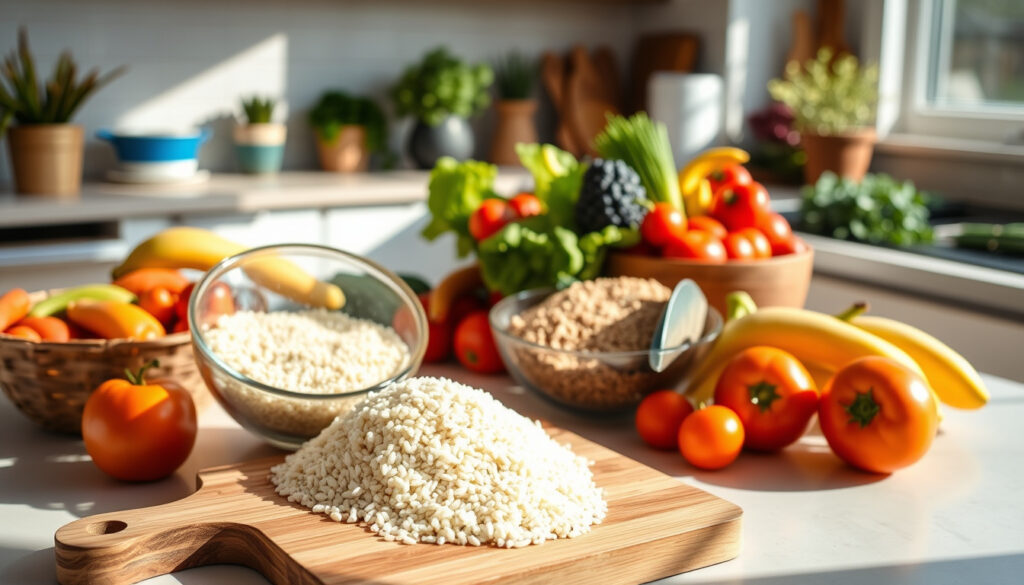
Easy Ways to Eat Healthier: 10 Simple Tips & Swaps
Anyone who’s stared into the fridge after a long day, knowing they should eat better but reaching for the easiest option, already knows the struggle is real. The good news is that small, evidence-backed swaps—like choosing water over soda or adding a handful of spinach to a meal—can shift your health without overhauling your entire kitchen.
Adults meeting daily fruit intake recommendation: 1 in 10 (CDC) · Adults who skip breakfast regularly: 1 in 3 (CDC) · Reduction in type 2 diabetes risk from healthy eating: Up to 40% (Harvard T.H. Chan) · Daily vegetable servings recommended: 2 to 3 cups (USDA)
Quick snapshot
- 2025 updates to U.S. Dietary Guidelines expected (Dietary Guidelines for Americans)
- Focus on whole-food patterns over single nutrients (WHO)
Four entries from official dietary frameworks, one pattern: simple swaps outrank strict diets. The NHS Eatwell Guide and Harvard’s Healthy Eating Plate both emphasize building plates around whole foods rather than counting every calorie.
| Label | Value |
|---|---|
| Recommended daily fruit servings | 5 servings (WHO) |
| Calories in one sugary soda | ~140 calories (USDA) |
| Proportion of adults who eat enough vegetables | 1 in 10 (CDC) |
| Average weight gain per year from sugary drinks | 1.1 to 1.5 kg (Harvard) |
What are 10 ways to eat healthy?
What is the simplest way to eat healthy?
Fill half your plate with vegetables and fruit. That’s the core recommendation from both the Harvard T.H. Chan School of Public Health and the NHS. No counting, no apps—just a visual cue at every meal.
How can beginners start eating healthy?
- Base meals on higher-fibre starchy carbohydrates like potatoes, bread, rice, or pasta (NHS).
- Eat at least 5 portions of fruit and vegetables daily (NHS).
- Include oily fish twice a week for omega-3s (NHS).
- Cut down on saturated fat and sugar (WHO).
- Choose whole grains over refined ones (Harvard T.H. Chan).
How to eat healthy when you are lazy?
What naturally kills hunger?
- Eat high-volume, low-calorie foods—think leafy greens, broccoli, and broth-based soups (CDC).
- Drink water before meals to take the edge off appetite (Mayo Clinic).
- Include protein and fiber at every meal to increase satiety (Harvard T.H. Chan).
Skipping breakfast may not help with weight loss. Mixed evidence suggests it can backfire by increasing cravings later in the day (CDC). For the 1 in 3 American adults who skip breakfast, the smarter lazy hack is a protein-rich smoothie that takes 90 seconds to make.
How to trick your body to eat less?
- Use smaller plates—studies show people serve 22% less food on a 10-inch plate vs. a 12-inch one (Public Health Nutrition).
- Keep pre-cut vegetables in the fridge at eye level (CDC).
The lazy person’s diet isn’t about willpower—it’s about geometry. Smaller plates, pre-cut veggies, and a glass of water before meals can cut daily calorie intake by 200–400 calories with zero extra effort.
The implication: low-effort environmental changes consistently outperform willpower-dependent strategies for weight management.
What is the 3-3-3 rule for healthy eating?
The 3-3-3 rule is a simple eating pattern that proposes three meals, three snacks, and at least three hours between eating occasions. Its goal is to maintain stable blood sugar and support portion control throughout the day (NHS).
- Helps avoid long gaps between eating that trigger overeating.
- Creates a predictable schedule for blood sugar regulation.
- Encourages mindful eating at set intervals.
The pattern: three snacks a day—morning, afternoon, and evening—each around 100–150 calories, like an apple with almond butter or a handful of nuts (WHO).
What are 5 foods that fight fatigue?
- Oily fish (salmon, sardines, mackerel): omega-3 fatty acids support brain health and energy metabolism (Harvard T.H. Chan).
- Bananas: provide potassium and quick-release energy for muscles (CDC).
- Oats: deliver slow-release carbohydrates that sustain energy for hours (NHS).
- Nuts and seeds: supply healthy fats and magnesium, a mineral linked to reduced fatigue (Harvard T.H. Chan).
- Dark leafy greens (spinach, kale, collards): rich in iron, which combats anemia-related fatigue (CDC).
Fatigue often has a nutritional root cause. Iron deficiency alone affects one in three women of childbearing age in the US (CDC), making dark leafy greens and fortified cereals a direct energy intervention.
The pattern: these five foods target distinct nutritional pathways—omega-3s, potassium, slow-release carbs, magnesium, and iron—collectively addressing the most common dietary causes of low energy.
What is the #1 worst food for weight gain?
Sugary drinks earn the top spot. The CDC notes that sugar-sweetened beverages are the single largest source of added sugar in the American diet and are consistently linked to weight gain, type 2 diabetes, and cardiovascular disease.
What food puts on most belly fat?
- Trans fats found in processed snacks (pastries, crackers, microwave popcorn) contribute directly to visceral fat accumulation (WHO).
- Refined carbohydrates—white bread, white rice, pasta—increase body fat storage (Dietary Guidelines for Americans).
What are the 5 worst foods for belly fat?
- Sugary drinks (soda, sweetened teas, fruit drinks)
- Ultra-processed snacks (chips, cookies, pastries)
- Refined grains (white bread, instant rice, pasta)
- High-fat processed meats (sausages, bacon, salami)
- Artificial trans fats (margarine, shortening, fried fast foods)
What are the worst fruits to eat when trying to lose weight?
No fruit is inherently “bad,” but high-calorie, low-fiber fruits like grapes, bananas, and mangoes can hinder weight loss when overconsumed. The CDC recommends whole fruits over juice and encourages portion awareness: one medium banana counts as a full fruit serving toward the daily 2-cup target.
Confirmed facts
- Sugary drinks cause weight gain (CDC)
- Eating more fruits and vegetables reduces disease risk (NHS)
- Sleep influences hunger hormones (Mayo Clinic)
What’s unclear
- Whether skipping breakfast aids weight loss (CDC)
- Effectiveness of the 3-3-3 rule (NHS)
The Harvard T.H. Chan School of Public Health’s Healthy Eating Plate and the U.S. Dietary Guidelines for Americans both emphasize that a healthy diet is about overall patterns, not perfection. For the 9 in 10 American adults who don’t eat enough vegetables (CDC), the clearest path forward is simple: one less soda, one more handful of greens, and a plate that’s half plants.
For the average American looking to eat healthier without a total lifestyle upheaval, the choice is clear: start with the half-plate rule and cut one sugary drink per day, or risk the cumulative weight gain and energy drain that 10 years of small daily choices can bring. The consequence is straightforward: small daily swaps compound into meaningful health outcomes over time.
Frequently asked questions
Is it better to eat three large meals or several small meals throughout the day?
Both approaches can work. The NHS says there’s no strong evidence that small frequent meals boost metabolism more than three regular ones. Choose the pattern that fits your schedule and hunger cues.
Can I eat healthy on a budget?
Yes. Frozen and canned vegetables are just as nutritious as fresh ones (CDC). Beans, lentils, rolled oats, and eggs are low-cost protein staples that fit every budget.
How much water should I drink with meals?
The NHS recommends 6–8 glasses of fluid daily from all sources—water, tea, coffee, and food. Drinking a glass before meals can help with portion control (Mayo Clinic).
Are frozen vegetables as healthy as fresh ones?
Yes. The CDC notes that frozen vegetables are processed at peak ripeness and can be more nutrient-dense than fresh produce that has traveled long distances.
What is portion control and how do I practice it?
Portion control means being mindful of how much food you put on your plate. The CDC suggests using smaller plates, measuring high-calorie foods, and avoiding eating directly from the package.
Does eating late at night cause weight gain?
The timing of meals matters less than total calorie intake. The NHS says weight gain is driven by a long-term surplus of energy (calories in vs. out), not by eating after 8 p.m.
Related reading: Takeaways Open Near Me
ncbi.nlm.nih.gov, pmc.ncbi.nlm.nih.gov, dietaryguidelines.gov, dietaryguidelines.gov, odphp.health.gov, nhs.uk, nal.usda.gov
More related posts
 Crystal Palace vs Bournemouth: Head-to-Head Stats & Facts
 When Is Easter in 2026? April 5, Good Friday & Why Late
 Louis Walsh Net Worth 2025: How Much Is He Really Worth
 Belgian Malinois for Sale Ireland – Puppies, Prices & Breeders Guide
 Peugeot 308 For Sale – Prices, Specs & Best Deals
 The Day of the Jackal: Season 2, Streaming Guide & Where to Watch
 Urgent Irish Passport Warning – Scams, Delays and Safe Renewal Steps
 Lymphatic Drainage Massage Cork: Costs, Self-Care & Local Clinics
