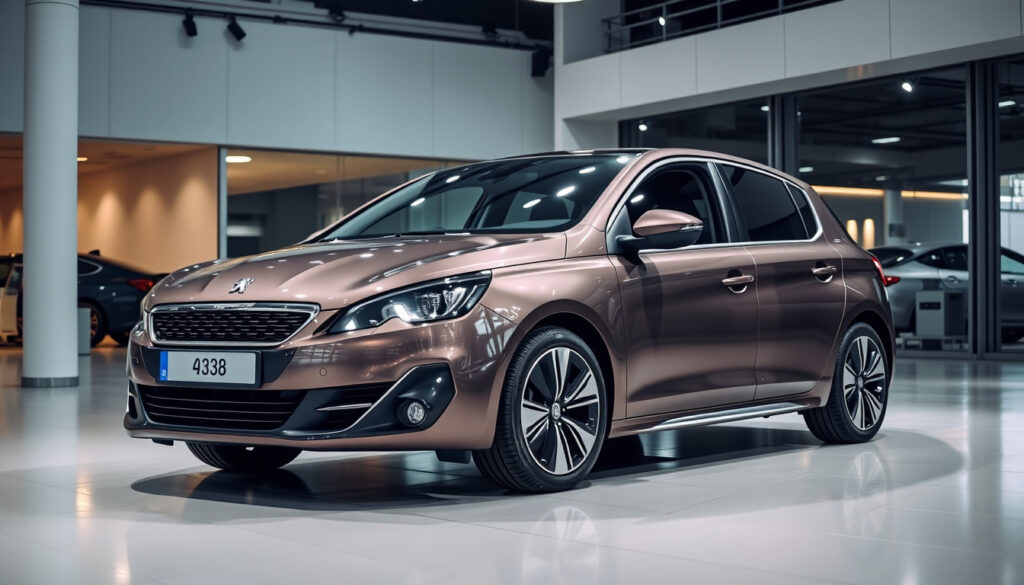
Peugeot 308 For Sale – Prices, Specs & Best Deals
The Peugeot 308 has established itself as a compelling option in the compact family hatchback segment since its 2022 redesign. Available across multiple powertrains—including mild hybrid petrol, plug-in hybrid, diesel, and fully electric variants—the current-generation model brings refined styling, an impressive interior, and competitive efficiency figures to buyers seeking a balance of practicality and premium feel. Understanding the full scope of pricing, availability, and specifications remains essential for anyone considering this French contender against established rivals like the Volkswagen Golf.
Whether searching for a brand-new example or exploring the used market, the Peugeot 308 presents distinct advantages and notable considerations. Running costs prove competitive across the range, particularly for mild hybrid variants delivering upwards of 60mpg. However, reliability ratings trail some competitors, and the standard warranty falls shorter than offerings from Asian manufacturers. These factors shape the overall ownership proposition and influence which model year and specification represents the strongest value for prospective buyers.
This comprehensive guide examines current market pricing, detailed specifications, expert assessments, and practical advice for locating your ideal Peugeot 308—whether purchased new or sourced from the secondary market.
How Much Does a Peugeot 308 Cost?
New Peugeot 308 pricing spans a considerable range depending on powertrain choice, trim level, and market. In the United Kingdom, current models start from approximately £25,000 for entry-level variants, with more powerful or electrified versions commanding significantly higher figures. Australian buyers face similar positioning, with the 2025 GT Hybrid listing at AUD$48,990 before on-road costs. Understanding these baseline figures helps narrow options before exploring specific trim levels and optional equipment.
Current UK Pricing Examples
- 1.2 Hybrid 145 Allure: from £29,995
- 1.6 PHEV 195 GT: from £41,435
- 1.5 BlueHDi GT (diesel): from £37,085
Plug-in hybrid variants carry substantial premiums over their petrol counterparts—approximately $16,000 more in certain markets according to automotive reviews. The 2026 facelifted models arriving soon may adjust entry pricing, with early indications suggesting potential reductions starting from £29,550 for certain specifications.
Mild hybrid petrol variants offer the most favourable balance of purchase price and running costs, achieving approximately 60mpg (4.2L/100km) while avoiding the significant premium charged for plug-in hybrid technology.
Used Peugeot 308 models currently represent attractive value compared to rivals like the Ford Focus from five to six years ago, though resale values lag behind Honda Civic and Toyota Corolla competitors due to reliability perception concerns.
Quick Reference: Peugeot 308 Overview
| Specification | Details |
|---|---|
| Starting Price (New) | From £25,000 (UK); from AUD$48,990 (Australia GT Hybrid) |
| Average Used Price | Competitive vs Ford Focus; below Honda Civic |
| Top Trims | GT, GT Premium (UK); GT (other markets) |
| Fuel Economy | Up to 60mpg (mild hybrid petrol) |
Key Insights for Buyers
- Mild hybrid petrol variants offer the best value-to-cost ratio for most buyers
- PHEV models suit company car drivers benefiting from tax advantages
- Facelifted 2026 models may offer updated technology at potentially lower entry prices
- Used market prices remain competitive, though inspection for recalls remains essential
- Diesel variants appeal to high-mileage drivers despite lower reliability ratings
- GT trim adds significant luxury features justifying the premium for many buyers
Where to Find Peugeot 308 for Sale
Locating a Peugeot 308 involves exploring multiple channels, each with distinct advantages regarding warranty coverage, vehicle condition verification, and pricing transparency. Official Peugeot franchised dealers provide the most comprehensive coverage for new vehicles and certified pre-owned programs, while independent used car specialists and online marketplaces offer broader selection and potentially lower prices.
New Vehicle Sources
Purchasing new means accessing the latest generation’s full warranty coverage and configuration flexibility. Official Peugeot’s official website allows specification building before visiting dealerships. The Carwow platform aggregates offers from multiple dealers, enabling price comparison across a single interface. Current listings show new deals from approximately £25,068, with leasing options providing an alternative ownership structure for those preferring lower upfront costs.
Approved Used Programmes
Peugeot franchised dealers offer Approved Used vehicles backed by a minimum 6-month warranty, providing additional peace of mind compared to private sales. These programmes typically include multipoint inspections and may cover recall-related issues discovered during preparation. The Drive.com.au Australian showroom lists both demo and used stock for local buyers.
Always verify outstanding recalls before purchase. Historical issues affecting earlier models include brake components, electrical systems, and fuel-related problems. Request a vehicle history check and confirm all recall work has been completed.
Independent Marketplaces
Private sales and independent dealers may offer lower prices but lack the structured warranty coverage of manufacturer programmes. Reviews from Honest John forums suggest used bargains exist, though thorough inspection for electrical issues and evidence of proper maintenance service history proves essential before committing.
Peugeot 308 Specs and Trims
The current-generation Peugeot 308 utilises the EMP2 V3 platform, delivering improved weight distribution and interior packaging compared to predecessor models. This architecture supports multiple powertrain configurations while maintaining the compact external dimensions essential for urban usability and parking convenience.
Engine Options and Performance
The mild hybrid petrol option centres on a 1.2-litre turbocharged three-cylinder engine producing 143-145 horsepower, paired with an automatic transmission and front-wheel drive. Efficiency figures reach approximately 60mpg (4.2 litres per 100km), making this the default recommendation for private buyers prioritising running costs over electric-only capability.
Plug-in hybrid variants combine a 1.6-litre petrol engine with an electric motor, generating combined outputs ranging from 177 to 221 horsepower depending on specification. The 12.4 to 14.6kWh battery pack enables meaningful electric-only driving range, though the £41,435 starting price positions these models toward company car drivers and those with specific tax advantages from electrified ownership.
Diesel customers can specify the 1.5-litre BlueHDi engine producing 130 horsepower, paired with automatic transmission. While offering excellent motorway economy, diesel variants carry lower reliability ratings than petrol alternatives, making them better suited to high-mileage fleet operators than private buyers expecting strong residual values.
The fully electric e-308 benefits from the platform’s inherent flexibility, though specific range figures require confirmation from official sources.
Trim Levels Explained
UK customers choose between Allure, GT, and GT Premium specifications. The Allure provides the essential specification at the lower price point, while GT adds sportier styling cues, enhanced interior materials, and additional technology features. GT Premium represents the flagship specification with maximum equipment levels including advanced driver assistance systems and premium audio.
Other markets offer Active and GT trims, with the GT providing comparable equipment to its UK namesake. Top Gear’s assessment notes that the premium interior feel and stylish design justify the price premium across all trim levels, though prospective buyers should carefully compare specification sheets to ensure desired equipment is included.
Transmission and Practicality
Automatic transmissions dominate the current range, with e-DSC6/7 and EAT8 units providing smooth shifts and sensible ratios for both urban and motorway driving. Boot space accommodates family needs adequately, while passenger room proves competitive within the segment. Carwow’s review highlights the premium-feeling interior and generous space as key strengths.
Is the Peugeot 308 Reliable? Reviews Overview
Reliability represents one of the Peugeot 308’s more contentious aspects. MotorEasy data through April 2025 indicates an overall reliability score of 60%, with 285 recorded claims averaging £429 in repair costs. These figures position the 308 below segment leaders from Japanese manufacturers, though the picture varies considerably across different powertrain configurations.
Reliability by Powertrain
| Variant | Rating | Notes |
|---|---|---|
| Overall | B (67%) | Low CO2 and running costs; safety rated average |
| Petrol/Diesel | E (17%) | Higher claim frequency and costs |
| Hybrid/Electric | C (56%) | Battery coverage improves overall rating |
Petrol and diesel variants receive notably lower ratings, with The Car Expert assigning D (31%) for overall reliability. Hybrid and electric versions perform better, achieving C (56%) ratings thanks to the comprehensive battery warranty coverage. The Car Expert’s analysis confirms these trends in their September 2025 assessment.
Warranty Coverage
The standard warranty covers 3 years or 60,000 miles in the UK—a figure described as “bare minimum” by What Car?’s review, particularly when competitors like Kia offer 7 years and Toyota provides 10 years of coverage. This shorter warranty represents a genuine disadvantage for the Peugeot brand.
Hybrid and plug-in hybrid battery components receive enhanced coverage: 8 years or 100,000-160,000km with guaranteed retention of at least 70% capacity. This coverage provides meaningful protection for electrified variants and partially offsets concerns about overall reliability.
Historical Issues and Recalls
Pre-2022 models suffered from cooling system problems, gearbox issues, and electrical faults, accumulating 17 recalls affecting brakes, electrics, and fuel systems. Honest John forum discussions confirm these patterns, with members reporting that early first-generation models (2007-2013) should be avoided based on TUV data and real-world owner experiences.
The third generation (2022-present) demonstrates markedly improved reliability, though time will reveal whether these early gains translate to long-term durability.
Expert Assessment Summary
“Good value versus rivals, frugal mild hybrid; the 3-year warranty lags behind competitors.” — What Car? (2026 review)
“Premium feel justifies price; improved facelift addresses previous concerns.” — Top Gear For those interested in a comprehensive guide to viewing the Australian soap opera, you can find a list of Home and Away episodes in order. Home and Away episodes in order
“Appealing despite high cost; 4-star Euro NCAP safety rating.” — YouTube review of 2023 GT PHEV
New vs Used Peugeot 308: Which to Buy?
The decision between new and used Peugeot 308 ownership hinges on budget constraints, risk tolerance, and desired warranty protection. Each path offers distinct advantages that suit different buyer circumstances and priorities.
Arguments for New Purchase
- Full manufacturer warranty coverage from day one
- Access to the latest facelifted models with updated technology
- Configuration flexibility—specify exactly the colours, options, and accessories desired
- Potential for competitive dealer financing incentives
- Peace of mind regarding accident history and previous ownership
Arguments for Used Purchase
- Significant depreciation already absorbed by the first owner
- Better value compared to rivals like Ford Focus from equivalent model years
- Lower insurance groups potentially reducing ongoing costs
- Availability of higher-specification models at entry-level prices
- Options for Approved Used programmes with warranty extension
Best Years to Consider
The 2022-present third-generation models represent the recommended starting point. The Car Expert advises avoiding early first-generation vehicles from 2007-2013 due to documented reliability concerns verified by TUV data. If considering used examples, prioritize 2022 onwards with verified service history and completed recall work.
The 2025-2026 facelifted models incorporate updates addressing earlier concerns, making these the most confident choice for new purchase or certified pre-owned selection.
For used buyers, the mild hybrid petrol Allure trim from 2022 onwards offers the best combination of modern features, reasonable pricing, and favourable reliability outlook.
What We Know and What Remains Uncertain
Certain aspects of the Peugeot 308 purchase decision are well-documented through multiple sources, while others remain dependent on individual circumstances, market conditions, and personal priorities.
| Established Information | Uncertain or Variable Factors |
|---|---|
| New prices start from £25,000 (UK) to £41,435 (PHEV GT) | Exact local dealer pricing without visiting or requesting quotes |
| Mild hybrid achieves approximately 60mpg | Actual real-world economy varies significantly by driving style |
| Standard warranty is 3 years/60,000 miles | Extended warranty availability and pricing by region |
| Third-generation (2022+) more reliable than predecessors | Long-term durability beyond 5 years remains unproven |
| PHEV commands approximately $16,000 premium over petrol | Residual values for electrified variants as market evolves |
| GT trim adds luxury features across all markets | Exact specification differences between market variants |
The Peugeot 308 in Market Context
The compact family hatchback segment remains intensely competitive, with the Peugeot 308 positioned against the Volkswagen Golf, Skoda Octavia, and Honda Civic as primary alternatives. What Car?’s direct comparison notes that while the 308 undercuts Golf equivalents on purchase price and running costs, it trails in warranty length and reliability reputation.
The Volkswagen Golf maintains stronger resale values and established driver appeal, with comparable driving dynamics and safety credentials. However, the Peugeot counters with distinctive styling, a more impressive interior design, and efficiency figures that match or exceed German competition from the mild hybrid powertrain.
For buyers prioritising purchase price, fuel economy, and design presence over long-term reliability assurance, the 308 represents a credible alternative. Those requiring maximum peace of mind regarding workshop visits and warranty claims may find the Golf’s stronger reputation more reassuring despite higher initial costs.
Sources and Expert Ratings
Multiple authoritative sources inform this assessment of the Peugeot 308, ranging from professional automotive publications to owner community forums and official manufacturer data.
The Car Expert provides the most structured reliability data, assigning an overall B rating (67%) with specific breakdowns for different powertrains. What Car? delivers practical buying advice emphasising value proposition against segment rivals. Top Gear focuses on driving experience and premium positioning. Honest John forums capture real-world owner experiences, including warnings about earlier generation problems and recommendations for reliable configurations.
For official specifications and pricing, Carwow’s aggregated dealer data provides current market positioning, while Drive.com.au offers Australian market context. Video reviews provide visual assessment of the GT PHEV variant specifically.
“B rating (67%); top for costs and emissions, average for safety and reliability.” — The Car Expert, September 2025
Summary: Key Takeaways for Prospective Buyers
The Peugeot 308 emerges as a stylish, efficient, and competitively priced option within the compact hatchback segment, with the mild hybrid petrol variant representing the strongest overall value proposition for private buyers. Running costs prove genuinely impressive, and the interior design conveys premium ambition successfully achieved.
However, average reliability ratings and a below-average warranty position mean prospective owners should factor potential repair costs into their budgeting and prioritise thorough pre-purchase inspections when considering used examples. The third generation (2022-present) demonstrates meaningful improvement over predecessors, though long-term durability data remains limited.
For those seeking maximum certainty and comprehensive warranty protection, exploring alternatives like comparative offerings from established brands may prove worthwhile before finalising a decision.
Frequently Asked Questions
How does the Peugeot 308 compare to the Volkswagen Golf?
The 308 undercuts Golf pricing but trails in warranty coverage and reliability reputation. Golf edges on driving dynamics and residual values; 308 wins on style, interior design, and efficiency figures from the mild hybrid powertrain.
Are there hybrid Peugeot 308 models available?
Yes. Mild hybrid petrol (1.2L turbo, 143-145hp), plug-in hybrid (1.6L + electric, 177-221hp total), and fully electric e-308 variants are available. PHEV models command significant premiums over petrol versions.
What is the standard warranty on a new Peugeot 308?
The standard warranty covers 3 years or 60,000 miles in the UK. This lags behind competitors offering 7-year (Kia) or 10-year (Toyota) coverage. Hybrid/PHEV batteries receive 8 years/100,000-160,000km warranty.
Which Peugeot 308 trim offers the best value?
The Allure trim provides essential features at the lower price point. The GT adds worthwhile sportier styling and enhanced equipment. Mild hybrid petrol variants offer the best running cost efficiency across all trims.
Is the used Peugeot 308 a reliable choice?
Third-generation models (2022-present) demonstrate better reliability than earlier versions, achieving C ratings for hybrid variants. Pre-2022 models had documented cooling, gearbox, and electrical issues. Always verify recall completion and service history before purchase.
What fuel economy does the Peugeot 308 mild hybrid achieve?
The 1.2-litre mild hybrid petrol engine achieves approximately 60mpg (4.2 litres per 100km) combined, making it the most efficient non-electrified option in the range.
How much do plug-in hybrid Peugeot 308 models cost?
UK pricing for the 1.6 PHEV 195 GT starts from £41,435, representing approximately £16,000 premium over equivalent petrol variants in some markets. Australian pricing for the GT Hybrid 1.2L starts at AUD$48,990.
Where can I find Peugeot 308 dealers near me?
Official Peugeot franchised dealers provide new vehicles and Approved Used programmes. Online aggregators like Carwow enable price comparison across multiple dealers. Always verify outstanding recalls regardless of purchase source.
More related posts
 Laptop Repair Near Me: Costs & Worth It
 Slade Valley Golf Club – Location Fees Membership Guide
 General Post Office Dublin: History, Visit, and Upgrade Guide
 Mrs Brown’s Boys Cast: Real-Life Relations & Family Tree
 Jo Malone Myrrh and Tonka: Scent, Reviews & Buying Guide
 1 Euro to PKR: Current Exchange Rate Today & Converter
 August Bank Holiday 2024 Ireland: Date, Meaning & 2026 Dates
 16 Guard Buzz Cut: Length, Meme & Why Barbers Forbid It
