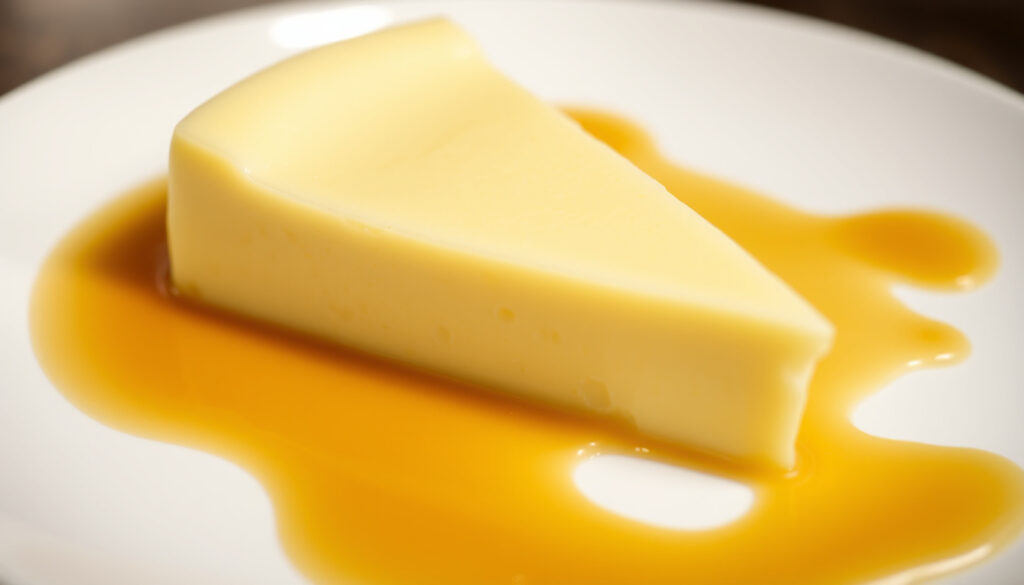
Pudim de Leite Condensado Recipe: Creamy, Firm, or Holey
If you’ve ever had a slice of Brazilian pudim de leite condensado, you know it’s not just a dessert—it’s a statement. Silky, caramel-glazed, and unapologetically sweet, this condensed milk flan has earned a spot on every festive table from São Paulo to Salvador.
Total prep time: 45 minutes · Baking method: Bain-marie (water bath) · Classic main ingredients: 3 eggs, 1 can condensed milk, 1 can whole milk · Caramel base: 1 cup sugar + 1/2 cup water · Container type: Pudim mold with lid or aluminum foil
Quick snapshot
- Classic ratio: 1 can sweetened condensed milk, equal volume whole milk, 3 eggs (Table Magazine)
- Water bath (banho-maria) is essential for gentle, even heat (Easy Brazilian Food)
- Chill at least 4 hours before unmolding (Brazilian Kitchen Abroad)
- Whether covering the mold is absolutely necessary (Our Best Bites offers uncovered methods)
- Exact origin of the 1:1:3 ratio (some families use 2 cans of milk) — Our Best Bites offers a family-style recipe with two cans (Our Best Bites)
- Food safety of cooking sealed condensed milk can (not universally tested) (Our Best Bites)
- Experiment with texture: adjust egg count, mixing method, and water-bath temperature
- Try stovetop or pressure-cooker methods for faster results
- Explore gourmet additions like vanilla bean, coconut milk, or espresso
Here are the key facts about pudim de leite condensado for quick reference.
| Origin | Brazilian adaptation of Portuguese caramel custard (pudim flan) |
|---|---|
| Key ingredient | Sweetened condensed milk (Leite Moça or similar) |
| Primary cooking method | Bain-marie (water bath) in oven at 180°C (350°F) |
| Chilling time after baking | At least 4 hours in refrigerator |
| Typical caramel base | 1 cup sugar + 1/2 cup hot water |
What are the ingredients for pudim de leite condensado?
Core ingredient ratio explained
The classic pudim de leite condensado relies on three components: sweetened condensed milk, whole milk, and eggs. The standard ratio is one 395g can of condensed milk, the same volume of whole milk (about 1½ cups when using the can as a measure), and three whole eggs. Table Magazine calls this the “can-measured” method, which is both practical and consistent. For the caramel, one cup of white sugar is melted until golden, then thinned with a small amount of hot water.
Optional ingredients for texture variation
Some Brazilian households add an extra egg yolk for richness, swap whole milk for a mix of milk and cream, or incorporate vanilla extract. Our Best Bites offers a family-style version using two cans of condensed milk, 2½ cups of milk, four eggs, and vanilla—showing that the base is flexible.
The implication: flexible base, but keep egg count between 3 and 4 for reliable texture.
How do you make pudim de leite condensado?
- Prepare the caramel by melting sugar until amber and thinning with hot water.
- Mix the batter by combining eggs, condensed milk, and whole milk in a blender or by hand.
- Bake in a water bath (bain-marie) at 350°F for 45–60 minutes until set.
- Chill for at least 4 hours (overnight is best) before unmolding.
Preparing the caramel (calda)
Place one cup of granulated sugar in a heavy saucepan over medium-low heat. Cook without stirring—just swirl the pan occasionally—until the sugar melts into a deep amber syrup. Brazilian Kitchen Abroad advises never to stir the caramel while it cooks.
Once golden, carefully add ½ cup of hot water (it will steam violently) and swirl until smooth. Pour immediately into your pudim mold and tilt to coat the bottom and sides evenly.
Watch the color carefully — caramel can go from amber to burnt in seconds.
Mixing the pudding batter
In a blender, combine the eggs, condensed milk, and whole milk. Pulse just until smooth—Chef Leticia notes that blending reduces overmixing risk. Do not overmix: too much air creates bubbles that lead to holes in the finished pudim. If mixing by hand, whisk gently in a bowl until fully combined.
Cooking in a water bath (banho-maria)
Pour the batter through a fine-mesh strainer into the caramel-lined mold. Cover the mold with its lid or a sheet of aluminum foil. Place the mold inside a larger roasting pan and pour hot tap water until it reaches halfway up the sides of the mold. Bake at 350°F (180°C) for 45–60 minutes. Table Magazine recommends checking the water level during baking and adding boiling water if needed. The pudding is done when the center wobbles like set gelatin—not liquid.
A stable water bath temperature around 180°F (82°C) prevents curdling.
Chilling and unmolding
Remove the mold from the water bath and let it cool on a rack to room temperature. Then refrigerate for at least 4 hours—preferably overnight—for the cleanest slices (Our Best Bites). To unmold, run a thin knife around the edges, place a serving plate over the mold, and invert with confidence. The caramel sauce will pool around the pudim.
What this means: patience in chilling is non-negotiable for clean slices.
What is the secret to making a good pudim de leite condensado?
Use the classic 1:1:3 ratio, a careful water bath, and at least 4 hours chilling. These steps are consistently recommended by authoritative Brazilian recipe sources.
What is the secret to making perfect pudim?
Perfect pudim comes from precise temperature control and ingredient freshness. Follow the standard baking time and never rush the chill. Trusted sources like Our Best Bites emphasize the wobble test for doneness.
What is the secret for the pudding to be creamy?
What makes the pudding creamy?
Creaminess comes from a higher yolk ratio and gentle mixing. Using extra yolks instead of whole eggs and avoiding overmixing yields a silky texture.
Egg-to-milk ratio for creaminess
The creaminess of a pudim depends largely on the proportion of fat and emulsifiers. Using a higher ratio of yolks to whites—or only yolks—creates a denser, silkier texture. Olivia’s Cuisine points out that egg yolks contain lecithin, which binds fat and water for a smoother mouthfeel. For a creamier result, replace one whole egg with two extra yolks.
Avoiding overmixing
Overmixing incorporates excess air, which turns into small holes (furinhos) in the final pudim. Brazilian Kitchen Abroad recommends blending only until the ingredients are just combined. For extra insurance, let the batter rest for 15 minutes before pouring into the mold so larger bubbles rise and pop.
Proper water bath temperature
The water bath should be hot but not boiling. Easy Brazilian Food notes that boiling water can cause the egg proteins to seize, curdling the custard. Aim for water around 180°F (82°C) and maintain a steady oven temperature of 350°F.
The catch: creamier texture may sacrifice structural firmness.
How do you make pudim de leite condensado firm (durinho) vs. creamy?
Conditions for a firmer pudim
A firmer pudim is achieved by using more eggs—four instead of three—which raises the protein content. Longer cooking times (up to 75 minutes) also drive off excess moisture, yielding a denser, more compact texture. Our Best Bites reports that baking until the center barely jiggles (like a thick panna cotta) signals a firm set.
Conditions for a creamier pudim
For a creamy, spoonable pudding, reduce the egg count to two + one yolk and use a shorter baking time. Table Magazine suggests pulling the pudim when the center still has a visible wobble—residual heat will finish the cook during cooling.
The pattern: adjust egg count and baking time to shift texture.
What is the secret to making pudim de leite condensado with holes (furadinho)?
How to create furinhos intentionally
Furinhos are tiny air holes that form when bubbles get trapped in the custard. To make them on purpose, beat the mixture vigorously—either in a blender for a full 30 seconds or by whisking energetically. Pour the batter from a height (about 12 inches above the mold) to incorporate even more air. Olivia’s Cuisine describes how the bubbles expand during baking and are captured by the setting proteins, creating a spongy interior.
Why furinhos are undesirable for smooth pudim
If you prefer a sleek, custard-like slice, avoid holes by gently stirring the batter by hand, letting it rest for 15 minutes before baking, and using a stable water bath temperature. Brazilian Kitchen Abroad emphasizes that covering the mold also prevents condensation from dripping onto the surface, which can create steam pockets.
The choice is yours: furinhos or smooth, both achievable with the right technique.
Do you have to cover the pudim when cooking in a water bath?
Purpose of covering
Covering the pudim mold with a lid or aluminum foil protects the custard from water droplets that may condense on the oven lid and drip onto the surface. Table Magazine warns that uncovered puddings can develop a rubbery film on top. In Brazil, dedicated pudim molds often come with a snug lid (tampa).
Alternatives to covering
Many home cooks bake pudim uncovered and still get excellent results. Our Best Bites recipe succeeds without covering—the key is to keep the water bath at a gentle simmer so steam doesn’t blast the pudding’s surface directly. If you notice a skin forming, cover the mold halfway through baking.
What this means: covering is optional but offers insurance against skin formation.
Can you make pudim de leite condensado on the stove or without an oven?
Stovetop water bath method
Yes, you can cook the pudim on the stove. Place the covered mold in a large pot filled with water halfway up the mold, bring the water to a gentle simmer, and cook for about 60 minutes. Easy Brazilian Food cautions that stovetop requires careful temperature control—boiling water will cause curdling.
Pressure cooker method
A pressure cooker dramatically shortens cooking time. Pour the caramel-lined batter into a mold, cover with foil, and place on a trivet inside the pressure cooker with 2 cups of water. Cook at high pressure for 15–20 minutes, then let the pressure release naturally for 15 minutes. Olivia’s Cuisine notes this method yields a perfectly set pudim in half the time of an oven bake.
No-bake alternative (not traditional)
A no-bake version using gelatin exists, but it is not the classic recipe. The traditional pudim relies entirely on egg coagulation for its structure, which requires gentle heat. Skipping the oven or stovetop means losing that signature silky, slightly jiggly texture that defines a proper pudim.
The pattern: alternative methods exist but require careful control to avoid bitterness.
Do you have to cover the can of condensed milk when cooking?
No—most manufacturers advise against cooking the sealed can as it may burst. Only use the milk mixed with other ingredients in a recipe.
“A successful pudim should wobble like set gelatin when finished baking—not appear fully liquid.”
Our Best Bites, a trusted baking blog
“Pudim de leite condensado is a benchmark of Brazilian sweets—creamy, rich, and deeply satisfying.”
“Never stir the caramel while it is cooking—just swirl the pan and watch for the color to turn golden.”
Pudim de leite condensado is more than a sweet treat—it’s a lesson in egg science and caramel craft. The texture you want—creamy, firm, or full of holes—is entirely in your control through ingredient ratios and technique. For home cooks in the US or Europe looking to replicate that Brazilian flan magic, the choice is clear: invest in a water bath, respect the chilling time, and start with the classic 1:1:3 ratio. Experiment from there.
hungrypaprikas.com, oliviascuisine.com, islandsmile.org, labculturerecipes.com, youtube.com, momamelia.blogspot.com, youtube.com
Frequently asked questions
Can I use low-fat milk in pudim de leite condensado?
Low-fat or skim milk reduces the fat content needed for a creamy texture. The pudding will still set, but it will be leaner and less silky. Stick with whole milk for the traditional result.
How do I prevent air bubbles (furinhos) in my pudim?
Gently stir the batter by hand instead of using a blender, let it rest for 15 minutes before pouring, and bake in a stable water bath at 350°F. Avoid pouring from height.
Is it safe to cook condensed milk in the can?
Most manufacturers advise against it—the can may burst under pressure. Use a dedicated recipe that mixes the milk with other ingredients, and never cook the sealed can.
Can I make pudim without a blender?
Yes. Whisk the ingredients in a bowl until combined, then strain through a sieve. The texture may be slightly creamier because less air is incorporated.
How long should I refrigerate the pudim before serving?
At least 4 hours; overnight is best. This allows the proteins to fully set and the caramel to evenly coat the surface when unmolded.
Why did my caramel become too hard or too bitter?
Overcooking the sugar leads to bitterness. Cook until the sugar turns a deep amber (about 340°F), then immediately add hot water to stop the process. If it gets too dark, start over.
Can I substitute Leite Moça with another brand?
Yes—any brand of sweetened condensed milk works. Nestlé’s Leite Moça is the most common in Brazil, but Eagle Brand, Carnation, or store brands all perform similarly.
More related posts
 Manchán Magan Wife Aisling Rogerson: Hospital Wedding & Legacy
 Celtic FC Transfer News: Latest Signings, Debt, and More
 Weather in Dublin Today: Current Conditions & Forecast
 Chelsea F.C. vs AFC Bournemouth Stats: H2H, Results, Predictions
 Matcha Ice Cream Near Me: Health, Cost & Dublin’s Best
 Made by Mitchell Curve Case Review & Variant Guide
 Pat McDonagh Net Worth: Age, Career, and Irish Wealth
 UL Timetable 2025/26: Access Dates & How to Find It
