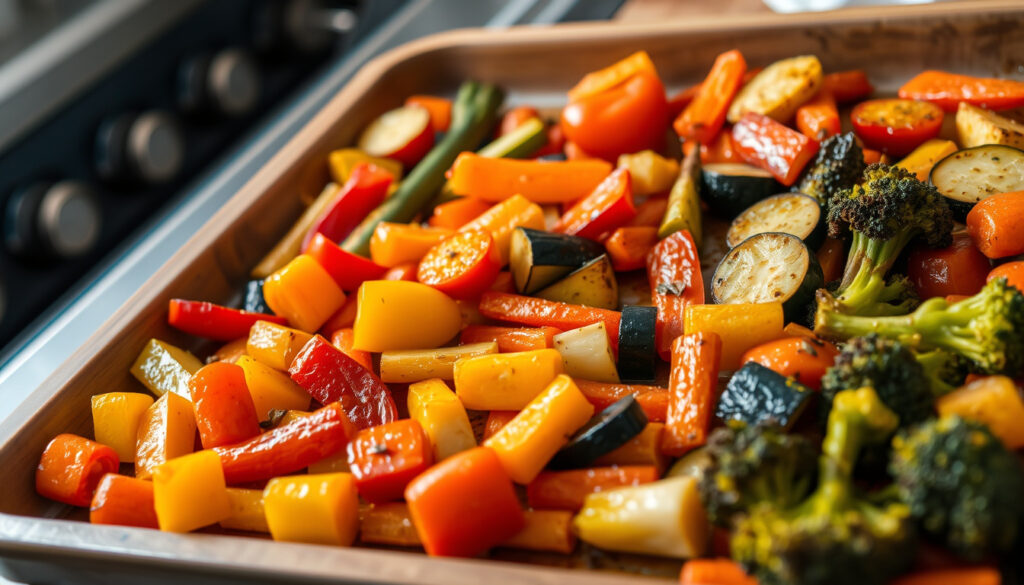
How to Make Roasted Vegetables: Crispy and Perfect
You’ve pulled a tray of rainbow vegetables out of the oven only to find them steaming in a puddle of their own juice instead of caramelizing into the crispy, golden-edged bites you were hoping for. Anyone who’s tried roasting vegetables more than a few times has been there—and the fix has less to do with magic and more with understanding how moisture, heat, and space work together.
Ideal oven temperature: 400–425°F (200–215°C) ·
Typical roasting time: 25–40 minutes ·
Best oil: Avocado, olive, or grapeseed ·
Easiest mistake: Overcrowding the pan ·
Vegetables that caramelize fastest: Bell peppers, onions, cherry tomatoes
Quick snapshot
- High heat (400–425°F) delivers caramelization (Bhooc cooking guide)
- Uniform cuts promote even cooking (Two Peas & Their Pod recipe blog)
- Overcrowding causes steaming, not roasting (Well Plated nutrition-focused blog)
- Oil is essential for browning and flavor transfer (Well Plated)
- Whether extra virgin olive oil performs uniformly at 400°F across all ovens
- Whether parboiling consistently improves texture for all dense vegetables
- Claims that certain vegetables should not be eaten together lack cooking-science support
- Flip or stir halfway through for even browning (California Grown farm bureau)
- Hard vegetables need the full 35–40 minutes; soft ones 15–25 minutes (California Grown farm bureau)
- Parboiling dense roots can reduce oven time by 10–15 minutes (California Grown farm bureau)
- Master moisture control and vegetable density for consistent results
- Apply staggered roasting for mixed-vegetable trays
- Explore finishing techniques: balsamic glaze, fresh herbs, citrus
Six key facts to keep at hand before you preheat the oven:
| Fact | Value |
|---|---|
| Ideal oven temperature | 400–425°F (200–215°C) |
| Typical roasting time | 25–40 minutes, flip halfway |
| Best oil for high heat | Avocado or grapeseed oil |
| Most common seasoning | Salt, pepper, garlic powder, herbs |
| Top mistake | Overcrowding the pan |
| Yield | 1 pound vegetables per person for main, half for side |
How to roast vegetables in your oven?
Start with the oven set to 400–425°F (200–215°C). The higher end of the range produces faster caramelization, as California Grown farm bureau calls it the “sweet spot” for crisp edges.
Preheat the oven
- Allow at least 15 minutes for the oven to reach temperature.
- A hot oven triggers the Maillard reaction above 285°F (140°C).
- If using convection bake, reduce temperature by 25°F (Well Plated).
Prep vegetables: wash, dry, cut uniformly
- Dry thoroughly after washing—moisture is the enemy of crispiness.
- Cut into 1–2 inch pieces for even cooking, as recommended by Bhooc’s guide.
- Uniform size ensures no piece is underdone or burnt.
Toss with oil and seasoning
- Use 1–2 tablespoons of oil per pound of vegetables.
- Olive oil delivers flavor; avocado oil handles higher heat (Two Peas & Their Pod).
- Season with salt and pepper at this stage for even distribution.
Spread in a single layer on a baking sheet
- Avoid overcrowding—vegetables need space to release moisture and brown.
- Use a rimmed sheet pan lined with parchment for easy cleanup.
- Well Plated warns that crowding traps steam and prevents caramelization.
Roast at high heat, flip halfway
- Roast 25–40 minutes depending on vegetable density.
- Flip or toss halfway through for even browning (California Grown).
- Rotate the pan 180 degrees for uneven ovens.
Check doneness and serve
- Test with a fork: tender with browned edges equals done.
- Add delicate herbs or a squeeze of lemon after roasting.
- Serve immediately for best texture.
The single most common failure—soggy vegetables—traces directly to two variables: moisture on the surface and pan crowding. Fix those two, and temperature becomes the fine-tuning knob, not the problem.
What is the secret to roasting vegetables?
The secret isn’t a single trick; it’s a chain of decisions—drying, heat, spacing, oil, and timing—each one reinforcing the next. The result is caramelization, not steaming.
Dry vegetables thoroughly before oiling
- Pat dry with a clean towel after washing.
- Moisture prevents the Maillard reaction from starting.
- Even a thin film of water evaporates and creates steam (Well Plated).
High heat triggers Maillard reaction
- The reaction begins above 285°F (140°C) and accelerates at 350°F+.
- At 400–425°F, browning happens fast—monitor closely after 20 minutes.
- This chemical reaction creates the deep, savory flavor of roasted vegetables.
Give each vegetable its own space and time
- Dense vegetables (potatoes, carrots, beets) need 35–40 minutes.
- Soft vegetables (zucchini, bell peppers, cherry tomatoes) need 15–25 minutes.
- If roasting together, add soft vegetables halfway through.
Add delicate vegetables later
- Broccoli, asparagus, and green beans benefit from a late addition.
- This prevents overcooking while still achieving caramelization.
- Chelsea’s Messy Apron recipe blog uses this staggered approach in mixed trays.
Use enough oil but not too much
- Oil conducts heat and helps seasonings adhere.
- Skimping leads to dryness and uneven browning (Well Plated).
- Too much oil creates a greasy texture—1–2 tablespoons per pound is the sweet spot.
Dense roots deliver the most caramelized payoff but demand the longest cooking time. Quick-cooking vegetables like zucchini brown fast but can turn mushy if left in the full duration. The solution: stagger your additions.
Do you need to boil vegetables before roasting them?
Parboiling (brief boiling before roasting) has a narrow but useful role. It’s not required for most recipes, but it can help with specific dense vegetables.
When parboiling helps: dense root vegetables
- Carrots, potatoes, beets, and parsnips benefit from a head start.
- Boil for 3–5 minutes, then drain and dry thoroughly.
- This reduces roasting time by 10–15 minutes and ensures tender interiors.
When it hurts: soft or high-moisture vegetables
- Zucchini, peppers, mushrooms, and tomatoes should never be parboiled.
- They already contain high water content; parboiling adds more.
- The result is soggy, not crisp.
Alternative: soaking in cold water for potatoes
- Soaking cut potatoes in cold water for 30 minutes removes surface starch.
- This promotes crisper edges after roasting.
- Dry thoroughly before oiling.
No boiling is required for most recipes
- Most vegetables roast perfectly without any precooking.
- Broccoli, cauliflower, onions, and asparagus go straight into the oven.
- Parboiling adds a step and requires extra drying—skip it unless you need faster cooking.
What oil is best for roasting vegetables?
Oil choice affects both flavor and performance at high temperatures. The best oil depends on your oven temperature and taste preferences.
High smoke point oils: avocado, grapeseed
- Avocado oil has a smoke point of 520°F (271°C)—ideal for 425°F roasting.
- Grapeseed oil is neutral-tasting and handles high heat well.
- Two Peas & Their Pod lists avocado oil as a primary option.
Extra virgin olive oil: fine for moderate heat
- EVOO has a smoke point around 400°F (204°C).
- Its flavor adds character; some cooks prefer it for that reason.
- Bhooc, an olive oil producer explicitly recommends high-quality EVOO.
Flavored oils: add character but watch smoke point
- Infused oils (garlic, chili, herb) can burn at high heat.
- Use them for finishing after roasting, not during.
- Plain olive or avocado oil remains the safest base.
Oil quantity: just enough to coat
- California Grown recommends about 1 tablespoon per 2 cups of vegetables.
- Toss vegetables until evenly glossy—no puddles at the bottom of the bowl.
- Too much oil prevents crisp edges and can make vegetables greasy.
Olive oil producers recommend EVOO for roasting, and many food bloggers agree, but the smoke point debate persists. For temperatures above 425°F, switch to avocado oil. For standard roasting, don’t fear EVOO.
What seasoning is good for roast vegetables?
Seasoning transforms roasted vegetables from a side dish into the center of the plate. The key is knowing when to add each component.
Classic: salt, pepper, garlic powder
- These three form the baseline for nearly every recipe.
- Chelsea’s Messy Apron recommends adding them at the oil-coating stage.
- Salt draws out moisture—add it just before roasting or wait until after.
Herbs: rosemary, thyme, oregano
- Hardy herbs (rosemary, thyme) can be added before roasting.
- Delicate herbs (basil, parsley, cilantro) should be added after to avoid burning.
- Chelsea’s Messy Apron uses oregano, rosemary, thyme, and basil in its blend.
Spice blends: paprika, cumin, chili flakes
- Smoked paprika adds depth; cumin brings warmth.
- Chili flakes provide heat—use sparingly.
- Season generously; vegetables absorb flavor during cooking.
Citrus and acid: lemon juice, balsamic vinegar after roasting
- Acidic ingredients can prevent browning if added before roasting.
- Lemon juice brightens the final dish; balsamic vinegar adds sweetness.
- Add after removing from the oven for maximum effect.
Pre-made seasoning blends: look for low sodium
- Italian seasoning, herbes de Provence, or za’atar work well.
- Check labels—many blends contain high salt content.
- Adjust salt separately to avoid over-seasoning.
Parboiling vs direct roasting: a quick comparison
Two preparation paths for dense vegetables, one key trade-off: time savings versus crispiness.
| Factor | Parboiling first | Direct roasting |
|---|---|---|
| Total cooking time | 35–50 min (boil + roast) | 35–40 min |
| Crispiness | Medium (if dried well) | High |
| Best for | Very dense roots (beets, whole carrots) | All other vegetables |
| Extra steps | Boil, drain, dry thoroughly | None |
| Risk | Soggy if not dried | None for most vegetables |
The implication: direct roasting wins on simplicity and crispiness, but parboiling can save 10–15 minutes for very dense roots if you have the extra drying step.
Clarity check: what we know and what remains open
Confirmed facts
- Roasting at 400–425°F yields caramelization
- Uniform cuts promote even cooking
- Overcrowding causes steaming instead of roasting
- Oil is necessary for browning and flavor transfer
- Flipping halfway through improves even browning
- Staggering soft vegetables prevents overcooking
What’s unclear
- Whether extra virgin olive oil is always fine at 400°F in every oven
- Whether parboiling improves texture for all dense vegetables the same way
- The supposed negative effect of combining certain vegetables (e.g., tomatoes and cucumbers) is not supported by cooking science
Expert perspectives on perfect roast vegetables
“Oven to 200C/180C fan/gas 6. Toss veggies with oil and roast.”
“Roast for 30 minutes at 200°C/390°F, then add red onion and roast further.”
“Toss and rotate halfway through for even results.”
— Well Plated nutrition-focused recipe blog
“Roast until edges are deeply caramelized, about 30–40 minutes.”
The common thread across these chef and dietitian voices: high heat, adequate time, and a single flip are non-negotiable for caramelization. The implication for home cooks is that the technique matters more than the recipe—master these principles and you can roast any vegetable.
For those who want to ensure their vegetables turn out perfectly every time, this crispy roasted vegetable recipe details all the key tips for achieving that ideal texture.
Frequently asked questions
Can I use frozen vegetables to roast?
Yes, but expect different results. Frozen vegetables release more moisture as they thaw in the oven. To compensate, roast at 425°F, spread them in a single layer without thawing first, and increase cooking time by 5–10 minutes. They will be less crisp than fresh.
How do I reheat roasted vegetables without drying out?
The best method is the oven: spread on a baking sheet and warm at 350°F for 5–8 minutes. Avoid the microwave, which makes them soggy. A hot skillet with a small amount of oil also works and can restore some crisp edges.
Should I line my baking sheet with foil or parchment?
Parchment paper is easier for cleanup and prevents sticking better than foil. Foil can reflect heat and reduce browning on the bottom. If using foil, brush it with a thin layer of oil to help with caramelization.
Can I roast vegetables with chicken or meat in the same pan?
Yes, but with caveats. Choose dense vegetables like potatoes or carrots that take as long as the meat. Ensure chicken reaches a safe internal temperature of 165°F. Avoid crowding the pan—use a large sheet tray or spread across two pans.
How do I store leftover roasted vegetables?
Store in an airtight container in the refrigerator for up to 4 days. For best texture when reheating, use the oven (350°F, 5–8 minutes) or air fryer. Avoid stacking them while warm; let them cool first to prevent condensation.
Why are my roasted vegetables bitter?
Bitterness can come from burnt seasoning (especially garlic or dried herbs) or overcooking at too high a temperature. Certain vegetables like broccoli and Brussels sprouts can also develop bitterness when cooked past the point of caramelization into char. Reduce temperature by 25°F and check doneness earlier.
What is the best way to cut broccoli for roasting?
Cut florets into 1.5–2 inch pieces, keeping some stem attached for even cooking. Slice large stems into ½-inch rounds or strips so they cook at the same rate as the florets. Pat dry before oiling to avoid steaming.
Can I roast vegetables in a convection oven?
Yes. Convection fans circulate hot air, which promotes even browning and can reduce cooking time by 10–15%. Reduce the temperature by 25°F from standard roasting temperatures. Flip vegetables halfway through for best results.
Related reading
- What Do Electrolytes Do? — Nutrition science connects to vegetable-rich diets and hydration.
- How to Lower Blood Pressure — A vegetable-heavy diet is frequently cited in hypertension management.
For the home cook pulling a sheet pan from a 425°F oven, the choice is clear: dry those vegetables, give them space, and trust the heat to do the work—or accept the soggy alternative that has frustrated kitchens for decades.
More related posts
 Car Hire Bristol Airport: Cheapest Deals & Compare Prices
 Jake Paul vs Anthony Joshua: Full Fight Recap, Result & Highlights
 Kearys Car Store Dublin: Used Cars, Trade-In & Warranty Guide
 Belfast Things to Do: Must-Sees, Itineraries & Tips 2026
 Three Top Up Number: How to Top Up Three (Ireland & UK)
 Jewelry Store Near Me – How to Find the Best Local Options
 How to Help Constipation: Fast Relief That Works
 Weather in Galway for 10 Days: Forecast & Conditions
