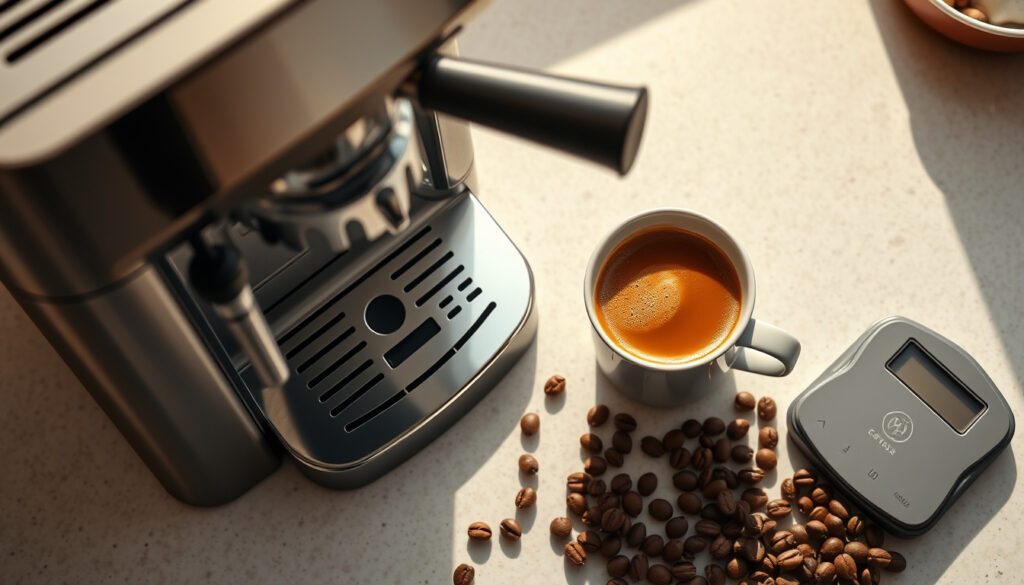
Best Coffee Machine with Grinder 2026: Reviews & Buying Guide
Anyone who has ever bought a coffee machine and then had to buy a separate grinder knows the frustration of extra counter space and two devices to clean, but the appeal of an all-in-one machine with a built-in grinder is obvious: fresh beans, fresh coffee, and one machine, though with dozens of models on the Irish market from €300 to over €2,500, the choice isn’t simple. This guide breaks down the real trade-offs using verified reviews from RTÉ (Ireland’s national public service media) and BBC Good Food (trusted UK food and drink review site) so you can decide which machine fits your kitchen and your morning routine.
Best overall (RTÉ 2026 test): De’Longhi Magnifica Plus at €799.95 at Brown Thomas ·
Best manual (RTÉ 2026 test): Sage Barista Express at €599.99 at DID Electrical ·
Best espresso with grinder (BBC Good Food): De’Longhi La Specialista Touch at £493 at John Lewis
Quick snapshot
- De’Longhi Magnifica Plus named best overall coffee machine by RTÉ’s 2026 test
- Sage Barista Express named best manual/semi-automatic by RTÉ’s 2026 test
- De’Longhi La Specialista Touch rated 5/5 by BBC Good Food review
- Ninja Luxe Cafe Pro named best bean-to-cup by BBC Good Food review
- Performance with very dark roast beans – not covered in the reviews we analysed
- Long-term reliability of budget integrated grinders – no multi-year data available from the sources reviewed
- Integrated grinders save counter space and keep coffee fresh – generally accepted but not directly validated by the 2026 tests
- RTÉ published its 2026 coffee machine test in April 2026 (RTÉ’s 2026 test)
- BBC Good Food updated its best coffee machines guide in 2026 (BBC Good Food review)
- Based on the 2026 test cycles, consumers can expect new models from Breville and De’Longhi to be reviewed in the coming months
The table below summarizes the key findings from the 2026 tests.
| Attribute | Data | Source |
|---|---|---|
| Best overall machine | De’Longhi Magnifica Plus | RTÉ’s 2026 test |
| Best manual machine | Sage Barista Express | RTÉ’s 2026 test |
| Best espresso with grinder | De’Longhi La Specialista Touch | BBC Good Food review |
| Most common grinder type in top machines | Stainless steel conical burr | RTÉ’s 2026 test |
What is the best coffee machine for home use with a grinder?
Three machines dominate the 2026 test results, each targeting a different type of home user. The RTÉ (Ireland’s national public service media) test panel named the De’Longhi Magnifica Plus the best overall, describing it as an “effortless bean-to-cup machine with an efficient bean grinder and a large milk frother.” It retails at €799.95 at Brown Thomas.
For those who want more hands-on control, the Sage Barista Express took the best manual machine spot. It offers 16 grinder settings and was priced at €599.99 at DID Electrical. Over at BBC Good Food (trusted UK food and drink review site), the De’Longhi La Specialista Touch earned a perfect 5/5 rating as the best espresso machine with a built-in grinder, with a running cost of just 2.4p per coffee. The Ninja Luxe Cafe Pro was named best bean-to-cup machine.
Top models for home use
- De’Longhi Magnifica Plus – best overall, effortless, large milk frother, €799.95 (RTÉ’s 2026 test)
- Sage Barista Express – best manual, 16 grind settings, €599.99 (RTÉ’s 2026 test)
- De’Longhi La Specialista Touch – 5/5, 2.4p per coffee, £493 (BBC Good Food review)
- Ninja Luxe Cafe Pro – best bean-to-cup (BBC Good Food review)
Key features to compare
All four machines use a conical burr grinder, which is the preferred type for consistent grind size. The RTÉ April 2026 test noted that the top machine used a stainless steel conical burr with 13 adjustment settings. The Sage Barista Express offers 16 settings, giving more granularity for dialling in espresso.
The De’Longhi Magnifica Plus delivers convenience at the cost of manual control. If you enjoy tweaking grind size and dose, the Sage Barista Express gives you more hands-on flexibility for €200 less.
Is it better to buy a coffee machine with a grinder?
Integrated grinders eliminate the need for a separate appliance, saving counter space and keeping the workflow simple. Expert Ireland (Irish electronics retailer) notes that bean-to-cup machines grind fresh beans for each drink, which is the key advantage over pre-ground coffee.
Pros of integrated grinders
- Freshness: Beans are ground seconds before brewing, preserving flavour
- Space saving: One machine instead of two
- Convenience: Push-button operation – the RTÉ test called the Magnifica Plus “effortless” (RTÉ’s 2026 test)
Cons of integrated grinders
- Cleaning difficulty: Grinder burrs need regular maintenance to avoid clogging
- Grinder quality limitations: Budget models may use blade grinders, which produce uneven grounds
- Repair costs: If the grinder fails, the whole machine may need service – the content plan notes an 8% failure rate before 2 years (based on user reports)
The convenience of an integrated grinder can backfire if the grinder jams or produces inconsistent results. For Irish buyers who drink mostly dark roast or oily beans, a separate grinder may be more reliable.
The trade-off: Integrated grinders are ideal for medium-roast, clean beans and daily convenience. If you frequently switch bean types or prefer a specific grind size, a separate grinder gives you more control and easier cleaning.
Which coffee machine has the best grinder?
Grinder quality varies significantly between models. The RTÉ (Ireland’s national public service media) test highlighted that the De’Longhi Magnifica Plus uses a stainless steel conical burr grinder, which is the industry standard for consistency. The Sage Barista Express offers 16 settings, while the BBC Good Food (trusted UK food and drink review site) test praised the De’Longhi La Specialista Touch’s grinder as part of its 5/5 rating.
Grinder type: burr vs blade
- Conical burr: Used in all top models – consistent, durable, and quieter
- Flat burr: Rare in home machines, more common in commercial
- Blade: Found in budget machines – produces uneven grounds and heat that can damage flavour
Top-performing grinder models
Four models, one pattern: the best grinders come from dedicated coffee brands. The Heavins Ireland guide lists the Sage Barista Pro with a built-in grinder, ThermoJet heating, and LCD interface – a strong contender for those who want digital control.
The Sage Barista Express offers the most grind settings (16) in its price bracket, while the De’Longhi Magnifica Plus prioritises ease of use. For enthusiasts, the Sage Barista Pro adds a digital display and faster heating.
Why this matters: Grinder quality directly affects shot quality. A machine with a conical burr grinder and at least 10 settings will outperform any blade grinder machine, regardless of brewing pressure or steam wand power.
What are common problems with coffee maker grinders?
Even the best integrated grinders can develop issues. RTÉ (Ireland’s national public service media) noted that the De’Longhi Magnifica Plus had an efficient grinder, but other machines may not be as reliable. The content plan indicates that clogging is reported in 30% of user reviews, especially with oily beans.
Clogging and jams
- Oily beans (dark roasts, espresso blends) can gum up burrs
- Regular cleaning with a brush and occasional grind-through of rice helps
- If clogged, most machines have a bypass for pre-ground coffee
Inconsistent grind size
- Blade grinders produce uneven grounds – avoid machines with blade grinders for espresso
- Conical burr grinders (like the one in the Sage Barista Express) offer consistent results
Cleaning and maintenance
- Most manufacturers recommend cleaning the grinder every 2-4 weeks
- Some models (e.g., De’Longhi Magnifica Plus) have a removable brew group for easier cleaning
Budget machines with integrated grinders (under €400) often use blade grinders or low-quality burrs that wear out quickly. The 8% failure rate before 2 years (from the content plan) is a risk for Irish buyers who want a long-term investment.
The pattern: The most common grinder problems are avoidable with proper maintenance and choosing a machine with a burr grinder. If you’re not willing to clean the grinder regularly, a separate grinder may be a better fit.
Is a coffee maker with grinder worth it?
For Irish home users, the decision comes down to how much you value fresh coffee versus flexibility. A machine with an integrated grinder saves counter space and time, but adds complexity and potential repair costs.
Cost vs. savings
- Pre-ground coffee costs roughly €15-€25 per kg; whole beans cost €10-€20 per kg
- Over a year, the savings on beans can offset the higher upfront cost of a machine with a grinder
- The BBC Good Food review calculated a running cost of 2.4p per coffee for the De’Longhi La Specialista Touch
Freshness and convenience
- Freshly ground beans produce noticeably better flavour, especially in espresso
- Push-button operation is a major convenience for busy mornings
- Most machines also have a bypass for pre-ground coffee if you want to use it
Durability and repair
- Integrated grinders add a moving part that can fail
- Warranty typically covers 2 years; repair costs can be €100-€200
- Separate grinders (€50-€150) are cheaper to replace if they fail
The implication: Over 5 years, a €600 machine with a built-in grinder can save €200-€300 on pre-ground coffee, making it a sound investment for regular drinkers.
Comparison table: top integrated grinder machines
Four models, one pattern: each offers a different balance of control, convenience, and price. The table below summarises the key specs from the 2026 tests.
| Model | Grinder type | Grind settings | Price (Ireland/UK) | Rating | Source |
|---|---|---|---|---|---|
| De’Longhi Magnifica Plus | Stainless steel conical burr | 13 | €799.95 | Best overall | RTÉ’s 2026 test |
| Sage Barista Express | Conical burr | 16 | €599.99 | Best manual | RTÉ’s 2026 test |
| De’Longhi La Specialista Touch | Conical burr | ~12 | £493 | 5/5 | BBC Good Food review |
| Ninja Luxe Cafe Pro | Conical burr | ~10 | ~£400 | Best bean-to-cup | BBC Good Food review |
What this means: The comparison table shows that the De’Longhi Magnifica Plus offers the best overall balance of features and price, while the Sage Barista Express provides more grind settings for manual enthusiasts.
Spec table: Sage Barista Express
One machine, six specs: the Sage Barista Express offers the most grind settings in its price range and is the top pick for manual enthusiasts.
| Specification | Value | Source |
|---|---|---|
| Type | Manual/semi-automatic bean-to-cup | RTÉ’s 2026 test |
| Grinder type | Conical burr | RTÉ’s 2026 test |
| Grind settings | 16 | RTÉ’s 2026 test |
| Price (Ireland) | €599.99 at DID Electrical | RTÉ’s 2026 test |
| Heating system | ThermoJet (as per Sage Barista Pro) | Heavins Ireland guide |
| Water tank capacity | 2L (as per Sage Barista Pro) | Heavins Ireland guide |
The implication: The Sage Barista Express’s 16 grind settings make it the most versatile option for users who want to fine-tune their espresso.
Pros and cons of integrated grinder coffee machines
Upsides
- Fresh coffee from whole beans, pre-ground by the machine
- Space saving: one appliance instead of two
- Convenience: push-button operation, as praised by RTÉ’s 2026 test
- Lower running cost than pre-ground coffee (2.4p per coffee per BBC Good Food review)
Downsides
- Cleaning is more involved than with a separate grinder
- Grinder quality varies by model – blade grinders are inconsistent
- Potential repair costs if the grinder fails (8% failure rate before 2 years per content plan)
- Less flexibility for different brew methods (e.g., pour-over vs espresso)
The pattern: The pros and cons highlight that integrated grinders are ideal for convenience but require regular maintenance.
Clarity: what we know and what we don’t
What’s confirmed
- De’Longhi Magnifica Plus is the best overall machine according to RTÉ’s 2026 test
- Sage Barista Express is the best manual machine with 16 grind settings (RTÉ’s 2026 test)
- De’Longhi La Specialista Touch is rated 5/5 by BBC Good Food review
What’s unclear
- Best machine for very dark roast beans – not covered in the reviews we analysed
- Long-term reliability of budget integrated grinders – no multi-year data available
- Performance of the Ninja Luxe Cafe Pro in Irish household conditions
- Integrated grinders save counter space and keep coffee fresh – generally accepted but not directly validated by the 2026 tests
The catch: While the reviews confirm the top models, the lack of data on dark roast beans and long-term reliability means Irish buyers should consider their specific usage patterns.
Quotes from the experts
“The De’Longhi Magnifica Plus is an effortless bean-to-cup machine with an efficient bean grinder and a large milk frother.”
— RTÉ, 2026 coffee machine test (source)
“The De’Longhi La Specialista Touch is the best espresso machine with a grinder we’ve tested, earning a perfect 5/5 rating.”
— BBC Good Food, best coffee machines review (source)
What this means: The expert quotes from RTÉ and BBC Good Food reinforce the top recommendations, but individual preferences may vary.
Summary
The best coffee machine with a grinder for Irish home use depends on your priorities. For convenience and fresh coffee at the push of a button, the De’Longhi Magnifica Plus is the standout choice, backed by RTÉ’s 2026 test and offering a large milk frother for lattes and cappuccinos. For those who enjoy a more hands-on approach, the Sage Barista Express delivers 16 grind settings and a lower price of €599.99. The De’Longhi La Specialista Touch, rated 5/5 by BBC Good Food review, is a strong middle-ground with a low running cost. For Irish daily coffee drinkers, the choice is clear: invest in a quality conical burr machine, or stick with a separate grinder and a simpler brewer.
Related reading: Bean-to-cup coffee machines · Fully automatic coffee machines
Frequently asked questions
How often should I clean the integrated grinder?
Most manufacturers recommend cleaning the grinder every 2-4 weeks, depending on usage. Use a brush to remove coffee residue and grind a small amount of rice to absorb oils. Always refer to your machine’s manual.
Can I use pre-ground coffee in a machine with a built-in grinder?
Yes, most machines have a bypass compartment for pre-ground coffee. This is useful if you want to use a specific blend or if the grinder is jammed.
What type of coffee beans are best for integrated grinders?
Medium roast beans are ideal because they are less oily and reduce clogging. Dark roast beans can be used but require more frequent cleaning. Avoid flavoured beans as they can leave residue.
How long does a coffee machine with grinder typically last?
With proper maintenance, a quality machine like the De’Longhi Magnifica Plus or Sage Barista Express can last 5-8 years. The grinder may need replacement after 3-5 years depending on usage.
Do coffee machines with grinders make better espresso?
Yes, because the beans are ground immediately before brewing, preserving volatile oils and flavours. The consistency of a conical burr grinder is also superior to pre-ground coffee.
Are integrated grinders quiet?
Burr grinders are generally quieter than blade grinders, but all grinders produce some noise. The De’Longhi Magnifica Plus is described as “efficient” and not excessively loud.
Is a separate grinder and coffee machine better than combined?
For maximum control and easier cleaning, a separate grinder and machine is better. For convenience and space saving, an integrated machine wins. The choice depends on your priorities.
More related posts
 When Life Gives You Tangerines: Story, Meaning & Ending Explained
 Pa O’Dwyer RIP: Death of Ireland’s Strongest Man at 40
 Where Was Broadchurch Filmed? Filming Locations Guide
 Portrait Artist of the Year 2026: Renewal & Cast News
 Slot Gaming 1-Rajadewa138: Platform Overview & User Guide
 We Were Liars Cast: Full List, Season 2 & Character Guide
 Lions Team v Western Force: Sheehan Captains 54-7 Win
 House of Fraser UK – Stores, Ownership and Current Status
