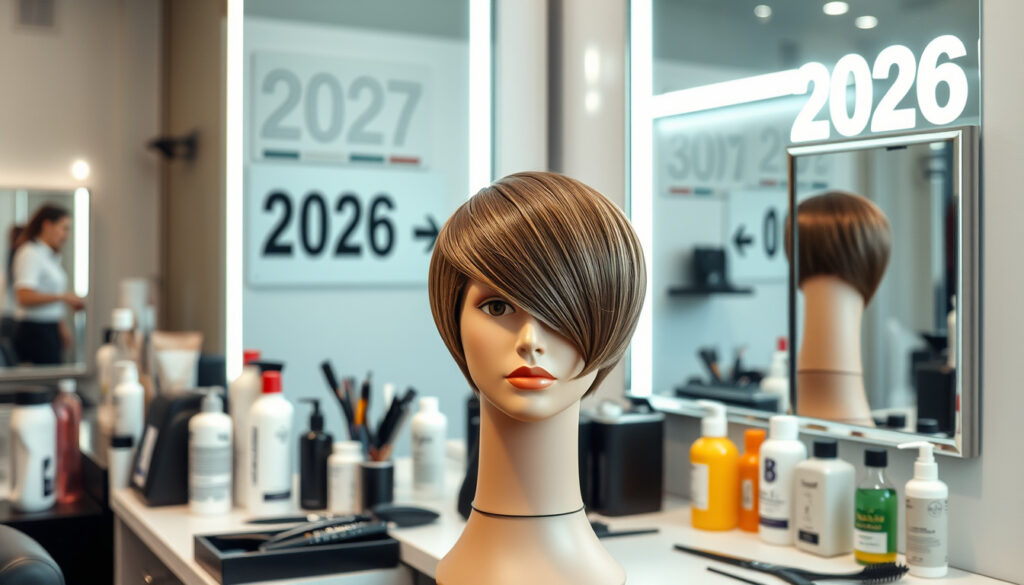
Hairstyles for Short Hair: 2026 Trends, Easy Styling & Age Tips
Anyone who has ever left the salon with a fresh chop knows the feeling: the lightness is thrilling, and the next morning is a small puzzle. Short hair in 2026 has real momentum — ELLE has named five best short haircuts for women over 50 for summer 2026, and Harper’s Bazaar UK says the chin-length bob is set to get even more popular. Consider this your practical map to the cuts, the 5-minute styling tricks, and the haircare rules that actually hold up.
Short hair tutorial views on YouTube: 1.9 million · Short haircuts featured in Vogue article: 60 · Easy styling methods listed by Byrdie: 40
Quick snapshot
- Five best short haircuts for women over 50 are trending for summer 2026 (ELLE (fashion magazine)).
- A short graduated bob is one of the biggest hair trends right now and a good choice for finer strands (Good Housekeeping UK (consumer advice magazine)).
- Work with your natural hair texture when choosing a short hairstyle (Wimpole Clinic (London hair clinic)).
- Whether cutting hair on specific calendar days affects growth — no scientific evidence backs the tradition.
- Whether wet or dry cutting is more precise — a stylist-preference debate, not a settled rule.
- How often hair needs cutting for maximum health — it varies by texture, density, and style.
- 2024-2025: the wolf cut and textured bobs rose, building the layered-shag direction for 2026. (Harper’s Bazaar UK (fashion title))
- 2026: four short hairstyles are set to take over the year (Harper’s Bazaar UK (fashion title)).
- Layered pixies stay a low-maintenance go-to for older women (Latest Hairstyles (hair inspiration site)).
- The bob momentum continues through 2026, with chin-length versions leading the conversation. (Latest Hairstyles (hair inspiration site))
- Sleek side parts and textured bedhead waves are the two easiest everyday finishes for short lengths. (Latest Hairstyles (hair inspiration site))
Ten signals, one pattern: the 2026 short-hair conversation keeps circling back to texture, shape, and low daily maintenance.
| Signal | What the sources say |
|---|---|
| Summer 2026 edit for women over 50 | Five best short haircuts, per ELLE (fashion magazine) |
| 2026 trend direction | Precision shapes: textured pixies, blunt bobs with fringe, layered shags |
| Fine-hair front-runner | Short graduated bob — a top trend right now (Good Housekeeping UK (consumer advice magazine)) |
| Range of 50+ haircuts | Bob, layered styles, pixie, soft waves, fringe, voluminous crops (The Right Hairstyles (hairstyle catalog site)) |
| Choosing a cut | Balance texture, face shape, and maintenance before booking |
| Short-hair popularity among women over 50 | High — most 2026 coverage targets low-maintenance styles |
| Average styling time | Under 10 minutes for most short looks |
| Trim frequency | Every 4-6 weeks to hold the shape |
| Haircut-day superstitions | No scientific evidence links calendar dates to growth |
| Easy everyday finishes | Half-up twists, messy bedhead waves, sleek side parts |
What is the best short hairstyle for a 60 year old woman?
There is no single winner, but there is a clear logic. The 2026 coverage from US and UK editors keeps returning to the same family of cuts: pixies, soft bobs, and anything with layers that move.
Age-appropriate pixie cuts
- Layered pixies are trending as a low-maintenance choice for older women, including shaggy versions suited to women 70 and older (Latest Hairstyles (hair inspiration site)).
- The pixie is described as one of the most flattering haircuts for women over 50 (Women.com (lifestyle outlet)).
The modern pixie is not the strict crop of past decades. A longer, textured top gives it flexibility — push it back, sweep it sideways, or let it fall forward, and the cut still looks deliberate.
Textured bobs for mature hair
- 2026 is the year of the bob, especially for women over 50 and those with finer hair textures (Harper’s Bazaar (fashion title)).
- Graduated cuts — shorter in the back, longer at the front — give fine hair a denser silhouette without extra styling.
Bob variations do two jobs at once: shorter styling time and a stronger line around the face. That combination is why they keep showing up in mature-hair coverage.
Styling tips for thinning hair
- Build the cut around your natural texture, your face shape, and how much styling you can actually maintain (Wimpole Clinic (London hair clinic)).
- Colour does heavy lifting: embracing silver or choosing a bold tone adds dimension without adding styling minutes.
For thinning hair, density is a styling choice. Shorter layers stack visual weight at the crown, and a side part is the easiest volume trick on short lengths.
Does short hair make you look older?
- Short haircuts for women over 50 range from bob and layered styles to pixie, soft waves, fringe, and voluminous crops — a category The Right Hairstyles calls versatile and youthful (The Right Hairstyles (hairstyle catalog site)).
- ELLE’s summer 2026 edit treats short cuts for women over 50 as a mainstream beauty statement, not a concession (ELLE (fashion magazine)).
The age question is really a cut question. Hair that ignores your texture will age you at any length; hair that works with it does the opposite — which is exactly why the 2026 trend coverage keeps pointing women over 50 toward short, textured shapes.
The 2026 short-hair consensus for women over 50 is remarkably narrow: pixies for low-maintenance texture, graduated bobs for fine hair, and chin-length shapes for effortless polish. The only real variable is the texture you are starting with.
What are the trendy short hair cuts for 2026?
The trend cycle for short hair moves in seasons, not decades. For 2026, the shapes are choppier, softer, and more texture-obsessed than the sleek styles of a few years ago.
The wolf cut revival
- Side bangs paired with shorter hair are a hot new trend (Latest Hairstyles (hair inspiration site)).
- Face-framing layers are back for fall 2026, adding softness and movement (Women.com (lifestyle outlet)).
The wolf cut’s choppy layers have not vanished — they have migrated into softer pixies and bobs that read as textured rather than spiky. That evolution is friendlier for fine hair and for anyone who does not plan to style with heat every day.
The cultural logic — texture over polish — is running through fashion too; our off-shoulder dress guide tracks the same shift on the clothing side.
Modern pixie variations
- Textured pixie with a longer top: the 2026 variation that keeps the cut modern without extra styling time.
- Shaggy pixies, once aimed mainly at women in their 60s, are now being recommended for women 70 and older.
The through-line is consistency: pixies keep earning their reputation because they make the shortest hair look intentional. The 2026 update adds more texture on top and softer edges around the ear.
Blunt bobs with fringe
- Bangs are back for fall 2026 and are being recommended for older women, per Women.com’s fall preview (Women.com (lifestyle outlet)).
- A blunt bob with a micro fringe sits at the precise, graphic end of the 2026 spectrum.
Blunt shapes trade softness for polish. The trade-off works when the cut is sharp and the fringe is kept light — and it leans more editorial than everyday.
Textured shags
- Textured shags — the softer, shorter heirs to the wolf cut — are the 2026 silhouette to expect.
- Graduated shapes, shorter in the back, are the fine-hair-friendly version of the same layered idea.
Textured shags are the answer for anyone who wants wolf-cut energy without the daily commitment. The layers do the volume work, and a texturizing spray finishes the job.
What are some easy hairstyles I can do on my short hair?
Short hair is not a limitation — it is a cut with different tools. Once you know the three quick moves (twist, pin, spray), most styles take under 10 minutes.
5-minute updos
- Half-up twists: take the front section, twist it back, and pin at the crown.
- Messy buns sit lower on short hair — right at the nape — and look intentionally undone.
- Pin curls along the front hairline give a retro finish with zero heat.
The kit is small: two clips, three bobby pins, and a texturizing spray. Step-by-step tutorials from creators like Mallory Brooke turn the half-up twist into a 90-second habit.
No-heat waves for short hair
- Damp hair plus sea-salt spray plus a loose twist while it dries equals beach texture without a curling iron.
- Braid-out waves: two small braids on damp hair, slept on overnight, undone in the morning.
No-heat methods are gentler on fragile ends, and short hair holds them faster because there is less weight pulling the curl out. If you do reach for heat, the tool matters more than the brand — our guide to cheapest Dyson hair dryer UK deals is a useful starting point.
Accessorizing with clips and headbands
- A single claw clip at the crown upgrades a plain bob in seconds.
- Headbands work overtime on grown-out fringes — push the fringe back and the style looks planned.
Accessories are the fastest way to change the look without changing the cut. Keep three or four good pieces on hand and a one-length bob starts behaving like a styling system.
Braiding techniques for short lengths
- Two-strand twists along the hairline keep short layers out of the face.
- A tiny crown braid — start at one ear, pin as you go — reads as formal even on a crop.
Braids on short hair are about pinning as much as weaving. Keep the sections small, use a mirror, and give yourself two tries — the second attempt always looks better.
What is the 3 rule for short hair?
The “3 rule” sits between stylist shorthand and folk tradition. It is worth separating the practical part from the superstition.
Understanding the 3-inch rule
- In practice, the rule points to a length benchmark: keep the cut short enough that it falls back into place without heat or heavy product.
- The 2026 cuts that keep winning — chin-length bobs, pixies, micro fringes — all sit on the low-maintenance side of that line.
The rule is really a maintenance test. If your hair needs more than a few minutes to look right, it has crossed the length limit for your texture.
How often to trim
- Short cuts hold their shape for roughly 4-6 weeks; after that, the line softens and the styling effort climbs.
- The maintenance commitment is the deciding factor most people underestimate before going short.
A trim every month to six weeks is not a luxury on short hair — it is the mechanism that keeps the style looking intentional. Budget for it the way you budget for a haircut in the first place.
Wet vs dry cutting debate
- Professional advice favors dry cutting when precision matters — it respects how the hair actually falls.
- Wet cutting still has its place for sharp geometric lines and blunt shapes.
Neither method is objectively better. The right call depends on the cut and the hair — and a good stylist will explain why they prefer one before they start.
Superstitions about hair cutting days
- Haircut timing traditions vary by culture — lunar calendars, weekday taboos, and seasonal rules all exist.
- None of them have scientific evidence behind them; hair growth is a biological process, not a calendar event.
If a specific day makes you feel better about the chop, following it costs nothing. Just do not let a superstition delay a trim the cut actually needs.
The 4-6 week trim is the hidden cost of every low-maintenance short cut. Pixies and bobs only stay easy if the shape stays disciplined — skip two trims and you are styling a completely different haircut.
What hairstyles look good with short hair?
Short hair is gender-neutral and age-neutral. The real question is which variant fits your face, your texture, and your tolerance for daily styling — and the options are wider than they look.
Styles for men
- Crew cuts and buzz cuts: zero styling, maximum structure.
- Textured crops with a longer fringe: modern, low-effort, and easy to grow out.
For men, short hair is mostly a numbers game between the sides and the top. A textured crop adds interest without the commitment of a strict cut.
Styles for boys
- Wash-and-go crops with a side part survive playgrounds and swimming pools.
- Curly crops keep natural texture tidy without heavy styling products.
Kids’ short hair should survive a week of chaos with a comb and a splash of water. The simpler the shape, the better it ages between cuts.
Styles for girls
- Bob variations — chin-length, with or without fringe — are the versatile default.
- Curly crops and half-up pin styles give short hair a dress-up option.
Short hair for girls works best when it can do double duty: school-day simple, party-day styled. That is where clips and twists earn their keep.
Universal flattering cuts
- Pixies, buzz cuts, and crew cuts are the most common men’s short styles; bobs and curly crops cover most women’s and girls’ options.
- All of them share one trait: they get out of the way of daily life.
The universal cuts are the ones you stop noticing — until you see a great one and wonder why everyone is not wearing it. That is the sign of a cut that fits a face, not a trend.
Pros and Cons of Short Hair
Before you commit, here is the honest trade-off list — short hair is simpler in some ways and more demanding in others.
Upsides
- Most short looks style in under 10 minutes — pixies and bobs were built for speed.
- Layered and shaggy pixies are trending as low-maintenance choices for older women.
- Graduated bobs make fine hair look denser and more polished.
- Short cuts read as confident and modern at any age — the position taken across the 2026 trend coverage.
Downsides
- Shape depends on trims every 4-6 weeks — skip them and the style works against you.
- Precision cuts like blunt bobs and micro fringes demand a skilled stylist and a stricter schedule.
- Updo options shrink at very short lengths — buns and braids are possible, but smaller and more fiddly.
- The first two weeks after a big chop come with a styling learning curve.
The trade-off: short hair trades daily styling time for a standing salon appointment. If you cannot keep the 4-6 week rhythm, choose the shaggiest version of the trend — it forgives grow-out far better than a blunt bob.
How to Style Short Hair: A 5-Minute Routine
This routine works for the widest range of short cuts — pixie, bob, or shag. It follows the order stylists actually use: texture first, shape second, finish third.
- Dampen hair slightly and run a texturizing spray through the roots — this gives fine hair grip.
- Air-dry or rough-dry with a diffuser; avoid brushing short hair forward or it flattens.
- Find the natural side of your part; a forced straight part works against the cut.
- Twist the front section back and pin at the crown — for extra volume, tease the roots before pinning.
- Pull out a few face-framing strands and let them fall around the ears.
- Set with a light-hold hairspray, add a clip or headband, and go.
The whole sequence should take about five minutes once it is familiar. The trick is consistency: texture spray, side part, twist, pin — the order stops being a decision and becomes a habit.
Why this matters: a five-minute routine is only useful if it is realistic on a Tuesday morning. This order is designed for exactly that — damp, spray, twist, pin, leave.
Short Hair Trends Timeline
The trend arc from the wolf cut to the 2026 bob is shorter than it looks. Here is the sequence, with the editorial markers that matter.
- — The wolf cut and textured bobs rose across salons and feeds, shifting the conversation from sleek lengths to choppy texture.
- — The chin-length bob is set to be even more popular, per Harper’s Bazaar UK (fashion title).
- — ELLE’s edit names five best short haircuts for women over 50.
The pattern: each wave feeds the next — the wolf cut’s texture gave way to the shag, which softened into the layered bob, and the bob is now generating the blunt, fringed versions dominating 2026 forecasts.
What’s Confirmed, What’s Not
The short-hair conversation mixes solid editorial consensus with claims that do not survive contact with evidence. Here is the honest split.
- Short hair can be styled to flatter any age — texture and face shape matter more than the number of candles on the cake.
- Certain cuts — pixies, blunt bobs, graduated bobs — require regular trims to maintain their shape.
- The bob is the defining short-hair shape of 2026, especially for women over 50 and finer textures.
- Texture-led styling beats heat-led styling for fine hair.
- Whether cutting hair on specific days affects growth — no scientific evidence supports it.
- Whether wet or dry cutting is more precise — a stylist-preference debate, not a settled rule.
- Whether fall 2026’s bangs-and-curls wave will hold — a forecast with a thin set of previews so far.
- The optimal trim frequency for maximum hair health — it varies by hair type, and 4-6 weeks is a guideline, not a law.
The practical takeaway: the age question has a solid answer — texture and maintenance matter more than the calendar. The rest is noise.
What the Experts Say
“A short graduated bob is one of the biggest hair trends right now and is a good choice for finer strands.”
— Good Housekeeping UK (consumer advice magazine)
Work with your natural hair texture when choosing a short hairstyle.
— Wimpole Clinic (London hair clinic)
Short haircuts for women over 50 run from bob and layered styles to pixie, soft waves, fringe, and voluminous crops — versatile and youthful.
— The Right Hairstyles (hairstyle catalog site)
The consensus across all three voices: short hair wins when it respects texture and accepts the trim schedule. The trend names change — the logic does not.
What This Means for Your Next Haircut
Short hair in 2026 is a texture story before it is a length story. The cuts with staying power — layered pixies, graduated and blunt bobs, textured shags — succeed because they work with natural texture and tolerate a busy routine, not because they chase a single viral shape. The editorial evidence across ELLE, Harper’s Bazaar, Good Housekeeping, and specialist hair sites points one direction: choose the silhouette your hair can air-dry into, budget for the 4-6 week trim, and let the calendar superstitions go. For women over 50 planning a 2026 refresh, the choice is clear: book the cut that matches your texture and your maintenance budget — or spend the next year fighting the grow-out of a style that was never meant to be ignored.
If you style short hair at home, a reliable dryer matters more than the cut — compare options in our guide to the cheapest Dyson hair dryer UK. For the fashion side of the 2026 wave, our off-shoulder dress guide covers how silhouette trends are shifting on the clothing side.
thepioneerwoman.com, fabbon.com, ma-grande-taille.com, latest-hairstyles.com
Frequently asked questions
How often should I wash short hair?
Short hair doesn’t need a different wash schedule than long hair — your scalp and texture decide. Fine hair usually looks better washed every other day, while coarser or curly hair can stretch longer between washes. Over-washing strips the very volume short styles depend on.
What products are best for styling short hair?
A texturizing spray, a light-hold hairspray, and a small amount of matte paste or pomade cover almost every short style. The 2026 trend coverage keeps returning to texture products — anything that enhances natural movement beats heavy gels and creams.
Can short hair be curled without heat?
Yes. Pin curls, braid-outs, and two-strand twists on damp hair create waves without heat, and short hair holds those shapes faster because it is lighter. The no-heat route is also kinder to fine, fragile strands.
How can I make short hair look thicker?
Choose a cut that builds density at the crown — graduated bobs and layered pixies are the two shapes most recommended for finer strands. A side part and a texturizing spray at the roots add instant volume.
What face shapes suit short hair best?
Every face shape can wear short hair — the trick is matching the silhouette to your features. The guiding rule is to weigh your face shape before committing, the same way stylists do before reaching for the scissors.
Is short hair more damaging than long hair?
The cut itself doesn’t damage hair — heat, bleach, and over-washing do. Short hair often looks healthier because damaged ends get removed sooner, but it still needs the same heat protection and gentle washing habits.
How do I transition from long to short hair?
Ask for a cut that works at every stage of the grow-out — a textured pixie or chin-length bob is easier to manage than a blunt style that needs constant trimming. Budget for a 4-6 week trim while the new shape settles.
More related posts
 Best Restaurants in Galway 2026: Where Locals Eat & Top Picks
 Pizza Restaurant Near Me: Best in Dublin & Ireland
 Pokémon Sun and Moon Guide: Availability After Global Link End
 Enterprise Rent-A-Car: Real Costs and Key Tips
 USD to EUR Exchange Rate: Live Converter and History
 Brighton vs Crystal Palace: Rivalry, H2H Stats & Results
 Irish Driving Test Road Signs: The Complete RSA Guide
 Leeds United vs Fulham Standings: Current PL Positions & H2H
