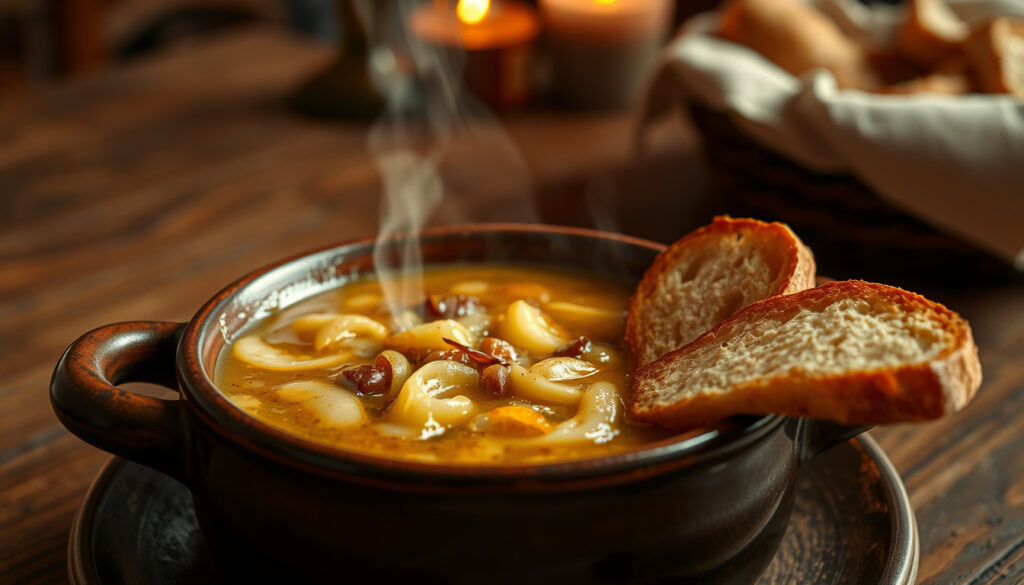
French Onion Soup Recipe – Classic with Caramelized Onions
French onion soup stands as one of the most beloved comfort dishes in Western cuisine, featuring deeply caramelized onions slow-cooked until sweet and jammy, then simmered in a rich beef broth and crowned with toasted baguette and melted Gruyère cheese. This classic recipe transforms humble ingredients into something extraordinary, with the slow caramelization of onions serving as the foundation for that distinctive deep, savory flavor.
While the dish may appear on restaurant menus year-round, its origins lie in 18th-century France, where it began as a simple peasant meal made from onions, stale bread, and water. Modern versions have evolved to include wine, aromatic herbs, and generous servings of melted cheese, creating a bowl of warmth that continues to satisfy diners generations later.
This guide covers everything from selecting the right onions to mastering the art of caramelization, along with ingredient substitutions, storage tips, and common mistakes to avoid.
How Do You Make French Onion Soup Step by Step?
Essential Tips Before You Begin
- Patience is the secret ingredient—rushing the caramelization leads to bitter, burnt onions
- Use a heavy-bottomed Dutch oven for even heat distribution
- Slice onions uniformly for even cooking
- Have all ingredients measured before starting, as the process requires minimal interruptions
- Allow the soup to rest overnight for flavors to meld and deepen
- Use oven-safe crocks for the final broiling step
- The soup requires mostly hands-off cooking time, making it ideal for meal prep
Key Ingredients and Nutrition
| Ingredient | Amount |
|---|---|
| Yellow onions | 5-6 lbs |
| Unsalted butter | 3-4 tbsp |
| Sugar and salt | 1-2 tsp each |
| Garlic cloves | 4-6 |
| Dry red wine | 1-2 cups |
| Beef broth | 6-12 cups |
| Fresh thyme and bay leaves | 1-2 tbsp / 1-2 leaves |
| Baguette | 1 loaf |
| Gruyère cheese | 2+ cups, grated |
Step-by-Step Method
The foundation of exceptional French onion soup lies in the caramelization process, which typically requires 45-60 minutes over medium-low heat. According to Once Upon a Chef, slicing onions thickly or thinly works equally well, though consistency matters for even browning. Melt butter with a tablespoon of oil in a Dutch oven, then add the sliced onions along with salt, sugar, and pepper.
Stir the onions every 5-10 minutes, allowing natural sugars to develop into that characteristic deep golden color. The Billy Parisi recipe emphasizes that skipping this step or using high heat will burn the sugars and create bitterness rather than sweetness.
Once the onions have reached a jammy, deeply colored state, stir in minced garlic and cook until fragrant, approximately 3-4 minutes. Pour in dry red wine—such as Cabernet, Merlot, or Pinot Noir—and scrape up all the browned bits from the bottom of the pot, a technique known as deglazing. Cook until the wine is mostly absorbed, which typically takes 2-5 minutes.
Optional thickening can be achieved by stirring in two tablespoons of flour for one minute. Add beef stock, Worcestershire sauce, thyme, and bay leaves, then bring the mixture to a boil before reducing to a simmer for 15-45 minutes. Finish with a splash of balsamic vinegar, sherry, or a pinch of nutmeg for balance.
For the topping, slice baguette into half-inch pieces and toast at 400°F for 10 minutes until crisp. Grate fresh Gruyère cheese—approximately 8-16 ounces—then ladle soup into oven-safe crocks placed on a sheet tray. Add 1-2 crostini slices and half to one cup of Gruyère per bowl before broiling for 2-4 minutes until bubbly and golden brown.
The total cooking time for French onion soup ranges from 1.5 to 2 hours, with most of that time being hands-off simmering and caramelization. This makes it an excellent weekend project or make-ahead dish.
How Long to Caramelize Onions for French Onion Soup?
Caramelizing onions properly represents the most critical—and time-intensive—step in French onion soup preparation. Most classic recipes call for 45-60 minutes of cooking over medium-low heat, though some professional cooks extend this to 90 minutes for maximum depth of flavor. According to the Serious Eats Food Lab, the low-and-slow approach allows the Maillard reaction to develop complex compounds that create the signature sweet, savory profile.
Yellow onions serve as the traditional choice for this dish, though white onions can work in a pinch. Spanish onions and Vidalia varieties offer sweeter alternatives, while leeks can add subtle herbal notes when used in combination with standard onions.
Common Caramelization Mistakes to Avoid
- Rushing the process by using high heat, which burns the natural sugars before they can develop properly
- Skipping the deglazing step, which misses the concentrated flavor in the fond
- Insufficient stirring, leading to uneven browning or sticking
- Adding liquid too early, which prevents the necessary dry-heat caramelization
- Using insufficient fat, causing the onions to stick and burn
If the onions begin to blacken rather than turn golden brown, the heat is too high. Reduce immediately and add a splash of water to stop the burning process.
What Wine and Key Ingredients for Authentic French Onion Soup?
Selecting the Right Wine
Dry red wines form the traditional foundation for French onion soup, with Cabernet Sauvignon, Merlot, and Pinot Noir representing popular choices that complement the richness of the broth. The recommended approach suggests using the same wine for both cooking and pairing, creating harmony between the dish and your glass. A dry white wine can substitute if red proves too bold, though the character will shift toward lighter territory.
The Cheese Question
Gruyère stands as the undisputed champion for French onion soup topping, prized for its excellent melting properties and nutty, slightly sweet flavor that pairs beautifully with caramelized onions. Swiss-imported Gruyère delivers the most authentic character, though domestic versions work admirably. Alternative options include Swiss cheese, a combination of Gruyère and Parmesan, or a blend of fontina and Gruyère for added complexity.
Choosing the Right Bread
A crusty baguette provides the traditional vehicle for French onion soup, sliced into half-inch rounds and toasted separately before adding to the bowl. This approach ensures the bread maintains structural integrity when submerged in hot broth rather than dissolving into mush. Stale bread can substitute, though fresh baguette that has been toasted offers superior texture.
The Vegetarian Adaptation
Those avoiding meat can create satisfying vegetarian versions by substituting vegetable stock for beef broth. Vanilla Bean Cuisine notes that Worcestershire sauce can be omitted or replaced with soy sauce or tamari for umami depth without anchovies. The resulting soup maintains the essential character while accommodating plant-based diets.
For gluten-free versions, use a gluten-free baguette or simply omit the bread entirely. When thickening is needed, substitute all-purpose flour with a gluten-free alternative or rely on the natural reduction of the onion broth.
French Onion Soup Variations Like Instant Pot or Vegetarian?
Modern Kitchen Adaptations
While traditional French onion soup recipes exclusively feature stovetop preparation, home cooks have adapted the technique for modern appliances. The traditional approach using a Dutch oven or heavy pot provides the most control over the caramelization process, which remains the defining step for flavor development.
For those seeking convenience, pre-caramelized onions can reduce active cooking time, though the depth of flavor may suffer. Andrew Zimmern’s recipe suggests that reducing the simmer time to a minimum of 20 minutes still produces acceptable results when time constraints apply.
Herb and Flavor Variations
Classic French onion soup relies on thyme and bay leaves, but numerous variations introduce alternative flavor profiles. Herbes de Provence adds a floral, herbaceous dimension. A pinch of nutmeg provides warmth and subtle spice. Tomato paste can introduce a touch of acidity and sweetness, while combinations of leeks with standard onions create layered complexity.
Low-Carb and Keto-Friendly Options
For those monitoring carbohydrate intake, French onion soup adapts readily to low-carb requirements. Simply omit the bread and flour thickener, relying on the natural starch from caramelized onions for body. Toppings can consist solely of melted cheese, or serve alongside low-carb bread alternatives.
The essence of French onion soup—caramelized onions in savory broth crowned with melted cheese—remains intact across variations. Adapt the recipe to your dietary needs while maintaining the core technique.
Tips for Storage, Freezing, and Serving French Onion Soup
Proper Storage Methods
French onion soup keeps well in the refrigerator for up to four days when stored in an airtight container. When reheating, warming on the stovetop over medium heat allows the flavors to redistribute effectively. If the soup has thickened beyond preference, add water or additional broth to achieve the desired consistency.
For longer-term preservation, the soup base—without cheese or bread—freezes successfully for up to three months. Jamie Schler’s authentic recipe recommends thawing overnight in the refrigerator and reheating gently before adding fresh toppings for serving.
Thickening Techniques
Should your soup require additional body, two primary approaches exist. Flour provides traditional thickening, typically added after deglazing and cooked for one minute to eliminate the raw taste. Alternatively, allowing the onions to reduce naturally concentrates flavor without the starchy texture that flour imparts.
Wine Pairing Recommendations
The same dry red wines used in cooking—Cabernet Sauvignon, Merlot, or Pinot Noir—make ideal partners at the table. These wines stand up to the rich, cheesy topping while complementing the sweet caramelized onions beneath. For non-wine drinkers, a robust beef broth or dark beer offers alternative pairing options.
What Makes French Onion Soup French?
French onion soup traces its roots to 18th-century France, where it began as a humble peasant dish prepared from onions, stale bread, and water. Historical accounts describe how resourceful cooks transformed abundant and inexpensive onions into something satisfying during lean winter months.
The dish evolved over generations, gaining broth, wine, and eventually the iconic cheese topping that defines the modern version. Billy Parisi notes that French onion soup remains a winter staple in France, served in cozy bistros and family homes alike during the colder months.
What distinguishes the French preparation is its commitment to slow caramelization, quality Gruyère cheese, and the technique of broiling the assembled soup to achieve that characteristic bubbly, golden-brown crust. These elements, combined with beef broth and dry French wine, create an unmistakably Gallic character.
Understanding Caramelization: Science and Technique
The Maillard reaction—the chemical process between amino acids and reducing sugars—drives the transformation of raw onions into their deeply flavored caramelized state. This reaction requires sustained, moderate heat to develop properly, which is why the 45-60 minute cooking window proves essential rather than optional.
Adding sugar early in the process accelerates browning, while salt added from the start helps draw out moisture and accelerates the caramelization timeline. Fat serves multiple purposes: it conducts heat evenly, prevents sticking, and carries fat-soluble flavor compounds that develop during cooking.
Sources and Expert Insights
The key to truly exceptional French onion soup lies in patience—specifically, patience with the onions. Taking the time to caramelize them slowly, resisting the urge to rush the process, yields rewards in flavor that no shortcut can match.
Multiple culinary authorities converge on the importance of this patience, with Once Upon a Chef, Billy Parisi, and Weekend at the Cottage all emphasizing the hands-off nature of the caramelization process once the initial setup is complete. Nutritional guidance follows USDA nutrition recommendations for balance and portion awareness.
Summary
French onion soup represents the triumph of patience and technique over elaborate ingredients. At its heart, this dish requires nothing more than onions, time, and attention to achieve something truly remarkable. Whether following the traditional path with beef broth and red wine or adapting to vegetarian, gluten-free, or low-carb requirements, the fundamental technique of slow caramelization remains non-negotiable for authentic results.
For those beginning their culinary journey, exploring foundational recipes like this one builds skills applicable across numerous dishes. Understanding how heat transforms simple ingredients opens doors to confidence in the kitchen that serves well beyond any single recipe.
For additional recipes supporting a healthy lifestyle, consider exploring 7 Natural Menopause Treatments That Really Work or learning about Best Workout Routines for Beginners.
Frequently Asked Questions
What makes French onion soup authentically French?
Authentic French onion soup features slow-caramelized onions, beef broth, dry French wine, fresh thyme, and a topping of melted Gruyère cheese broiled until golden. The commitment to traditional technique and quality ingredients distinguishes the French preparation.
Can French onion soup be frozen successfully?
Yes, the soup base without cheese or bread freezes well for up to three months. Thaw overnight in the refrigerator and reheat gently before adding fresh toppings for serving.
How long does the entire French onion soup process take?
Total time ranges from 1.5 to 2 hours, with approximately 45-60 minutes dedicated to caramelizing the onions and 15-45 minutes for simmering the broth. Most of this time requires minimal active attention.
Is French onion soup gluten-free?
The base soup is naturally gluten-free, but traditional recipes often include flour as a thickener and baguette as a topping. Use gluten-free flour alternatives and serve without bread for a gluten-free version.
Can French onion soup be made without wine?
Yes, wine can be omitted entirely. Substitute with additional broth or balsamic vinegar for deglazing. The resulting soup loses some complexity but remains delicious and comforting.
What bread works best for French onion soup?
A crusty baguette, sliced and toasted separately, provides the traditional choice. The toasting step is essential—it prevents the bread from dissolving when submerged in the hot broth.
How do you thicken French onion soup?
Two options exist: stir in 2 tablespoons of flour after deglazing, or allow the soup to reduce naturally over low heat. Avoid over-thickening, as the natural consistency from caramelized onions should provide adequate body.
Can French onion soup be made in an Instant Pot?
While traditional stovetop preparation remains the standard for maximum control over caramelization, some cooks adapt the recipe for pressure cookers. However, the distinctive fond that develops from stovetop caramelization may not be achievable in electric pressure appliances.
More related posts
 188 cm in Feet: Exact Conversion & Height Percentiles
 Brighton vs Crystal Palace: Rivalry, H2H Stats & Results
 How to Get Free Robux: Legitimate Methods & Scams
 Breaking News in Yuba County: Streaming, Cast, Plot & Reviews
 Intreo Office Near Me: Find Local Centre & Appointment Guide
 Jewelry Store Near Me – How to Find the Best Local Options
 What Causes Low Blood Sugar Without Diabetes? Causes & Treatment
