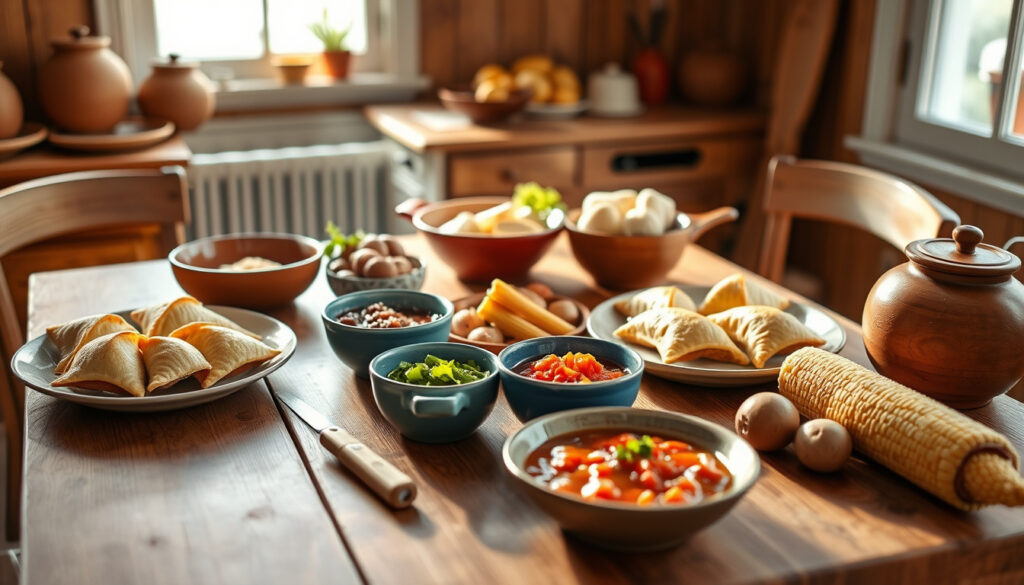
Easy Chilean Recipes at Home: Authentic and Simple
There’s something satisfying about pulling a steaming empanada from your own oven — golden dough, savory filling, a little bit of Chile on your kitchen counter. Chilean home cooking doesn’t demand exotic ingredients or culinary school training; it leans on the same pantry staples you probably already have. With roughly 30 traditional recipes adapted across North and South Chile, the cuisine offers approachable dishes for weeknight dinners, packed lunches, and even birthday celebrations. What follows is a practical guide to making authentic Chilean recipes at home, from the ubiquitous pebre salsa to crowd-pleasing empanadas and corn-rich casseroles.
Traditional Recipes Available: 75+ · Featured Easy Recipes: 3 to try at home · Recipes from North to South: 30 · Popular Chilean Dishes: Empanadas, Sopapillas
Quick snapshot
- Pebre uses tomato, onion, cilantro, olive oil, lemon, and salt (Cascada Travel)
- Empanada dough calls for 6 cups flour, 2 cups water, 2 tsp salt, 2 tbsp butter or lard (Chile Travel)
- Pastel de Choclo bakes for 30 minutes (Cascada Travel)
- Exact regional origins for specific stews like Tomaticán
- Precise calorie or nutritional data for most dishes
- Allergen warnings standard across recipe collections
- Chilean food blogs began publishing adapted recipes widely in the 2020s
- Traditional recipes passed down through generations — no fixed dates
- Empanadas documented in travel guides for tourism purposes
- Step-by-step guides below for empanadas, Pebre, Pastel de Choclo
- Regional variations from northern seafood to southern heartier stews
- Vegetarian adaptations for empanadas using mushrooms or eggplant
| Label | Value |
|---|---|
| Cuisine Focus | Central Chile dishes |
| Recipe Count in Sources | 75 traditional |
| Signature Salsa | Pebre |
| Humitas Cook Time | 35-40 minutes |
| Cazuela Initial Boil | 25 minutes |
| Chilean Flan Eggs | 4 |
What is the most famous Chilean dish?
When visitors think of Chilean food, two items surface most often in travel blogs and recipe collections: empanadas and sopapillas. These portable pastries and fried dough balls appear at street fairs, family gatherings, and restaurant menus throughout the country, making them the most recognizable Chilean dishes abroad, according to Bacon is Magic (travel publication covering Chilean cuisine).
Key ingredients for home version
- Empanada dough: 6 cups flour, 2 cups water, 2 tsp salt, 2 tbsp butter or lard, optional white wine — as specified by Chile’s official tourism portal Chile Travel
- Empanada filling: Minced beef, onions, spices, hard boiled egg, olive — per Chile Travel
- Sopapillas base: Flour, water, salt, deep-fried until puffed
Step-by-step cooking guide
- Mix dough ingredients, knead until smooth, rest 30 minutes
- Brown the ground beef with diced onion, garlic, cumin, paprika, and a pinch of sugar
- Roll out dough circles, place filling with a halved hard-boiled egg and olive in center
- Fold and seal edges with a fork crimp
- Bake at 375°F (190°C) for 20-25 minutes until golden
Serving suggestions
Empanadas pair naturally with pebre salsa or a drizzle of Chilean Food & Garden‘s signature tomato-cilantro sauce. Sopapillas work best drizzled with honey or served alongside a hearty stew.
The dough itself is forgiving — a bit of wine in the batter adds tang, but water works fine if you keep the butter soft and the flour measured accurately.
— Chile Travel, official tourism portal
Chilean home cooks treat these pastries as blank canvases — the filling is where regional personality shows up, from beef and olives in central Chile to seafood variations along the coast.
What is Chile’s national dish?
While empanadas often represent Chile internationally, the dish most frequently cited as the national centerpiece is Pastel de Choclo — a corn-rich casserole layered with ground beef, chicken, and hard-boiled eggs. According to Cascada Travel (travel blog with detailed Chilean recipes), this countryside favorite sits at the heart of Chilean home cooking.
Traditional preparation simplified
- Shred cooked chicken breast and set aside
- Brown ground beef with diced onion, season with cumin and salt
- Blend corn kernels with milk, basil, sugar, and butter until smooth
- Layer in a large baking dish: meat mixture first, then chicken, raisins, olives, halved eggs
- Top with corn mixture, bake at 350°F (180°C) for 30 minutes until bubbly
Easy substitutions for US kitchens
- Fresh corn kernels substitute for canned — frozen works in a pinch
- Chicken thighs instead of breast stay juicier
- Store-bought ground beef seasoned with cumin approximates the traditional blend
- Raisins can be replaced with sliced olives for a less sweet profile
Time and servings
The dish takes approximately 45 minutes of active prep and 30 minutes of baking, serving 4-6 people comfortably — per Cascada Travel. Leftovers reheat well and often taste even better the next day.
Pastel de choclo is a creamy corn dish that has a delicious taste and a great homey-feel.
— Cascada Travel
Pastel de Choclo relies on corn as its structural base, which means it’s difficult to make gluten-free without substituting the corn layer entirely. For home cooks managing celiac disease, swapping corn for pureed cauliflower creates a workable — if not traditional — adaptation.
For families avoiding gluten, the corn layer substitution preserves the dish’s creamy character while making it accessible to those with celiac disease.
What is a typical Chilean meal?
A typical Chilean meal centers on one-pot stews, bean dishes, and corn-based preparations rather than elaborate multi-course arrangements. Common elements include Cazuela (a boiled meat and vegetable stew), Porotos Granados (a bean and corn stew), and Humitas (steamed corn in husks). These hearty preparations reflect Chile’s agricultural abundance and coastal influences, according to Bacon is Magic.
Main components at home
- Protein: Beef, chicken, pork — often served bone-in for flavor
- Starch: Potatoes, rice, or corn — integral to the dish rather than side
- Vegetables: Onions, carrots, green beans, squash added in stages
- Seasoning: Garlic, cumin, salt, sometimes merkén (smoked chili)
Quick assembly steps
- For Cazuela: boil meat with salt, garlic, onions, bell peppers, and celery for 25 minutes, then add carrots, potatoes, rice for 10 minutes, followed by squash and corn for 10 minutes, finishing with green beans for 5 minutes — as detailed by Chile Travel
- For Humitas: blend corn with onion, basil, and salt, spoon into corn husks, tie closed, and simmer in boiling water for 35-40 minutes per Chile Travel
Healthy adaptations
Traditional Cazuela uses the entire cut of meat including bone, which adds collagen and flavor but also fat. Health-conscious home cooks can trim visible fat before cooking, use chicken thighs instead of beef, or serve smaller portions alongside a larger salad. Pilar’s Chilean Food & Garden (home cooking blog) notes that pebre salsa adds bright flavor without significant calories, making it a smart way to boost vegetables at every meal.
Chilean cuisine leans heavily on fresh, local ingredients like tomatoes, onions, corn, and potatoes rather than processed foods. For home cooks seeking to eat more whole foods, the traditional Chilean pantry provides a ready-made framework — no specialty health brands required.
Chilean cuisine offers a practical framework for whole-food eating because the traditional pantry already contains the building blocks — no specialty brands or supplements needed.
What do Chileans eat for breakfast?
Chilean breakfast runs toward the substantial rather than the sweet: toast with butter and pebre, eggs with ham and tomato, and simple pastries dominate the morning table. Twinkl (educational resource with Chilean food overview) notes that breakfast often includes bread, sliced avocado, and manjar (dulce de leche) spread on toast — a reflection of Chile’s dairy and bread culture.
Simple home recipes
- Pebre toast: Rub toasted bread with a cut garlic clove, spread pebre on top
- Eggs revueltas con jamón: Scrambled eggs with diced ham, onion, and tomato
- Pan con palta: Toast topped with mashed avocado, salt, and lemon
Kid-friendly options
- Humitas (small batches): The sweet corn flavor appeals to children who might resist vegetable-heavy dinners
- Empanaditas: Mini empanadas with cheese or ham filling work as finger food
- Sopapillas: Smaller portions of fried dough, drizzled with honey
Prep under 15 minutes
The fastest Chilean breakfast option requires only pebre — chop tomato, onion, and cilantro, mix with olive oil, lemon, and salt, let rest while the bread toasts. According to Cascada Travel, this classic accompaniment takes under 5 minutes of active work if the ingredients are pre-prepped.
Families on tight schedules can rely on pebre as a go-to breakfast boost — the prep time drops to under 5 minutes once ingredients are ready.
What are easy Chilean recipes at home for dinner?
Dinner is where Chilean home cooking really shines — one-pot stews, baked casseroles, and simple grilled meats form the backbone of the evening meal. With 30 traditional recipes ranging from northern seafood preparations to southern heartier stews, there’s a Chilean dinner option for every season and appetite.
Dinner-specific dishes
- Cazuela: The workhorse stew — one pot, one hour, feeds a family of four
- Pastel de Choclo: Baked corn casserole, ideal for Sunday dinners
- Chicken with Peas: Ready in 30 minutes per Twinkl, served over rice or potatoes
Appetizer starters
- Pebre: Chop ¼ onion, fresh cilantro, 1-2 tomatoes, mix with red wine vinegar, olive oil, merkén or chili sauce, and salt — let rest 1 hour before serving, per Pilar’s Chilean Food & Garden
- Ensalada Chilena: Tomatoes, onions, and cilantro dressed with oil and vinegar
- Ceviche: 500g white fish marinated in lemon juice with vegetables, per Chile & Cuisine Cooking Classes
Dessert finishers
- Chilean flan: 4 eggs, 2 cups milk, cloves, cinnamon, vanilla, and sugar — caramel requires 1 cup sugar with ½ cup water, per Travel Coach Chile
- Sopapillas: Fried dough balls, served warm with honey or sprinkled sugar
- Torta de mil hojas: Layered pastry cream cake — often purchased rather than made at home
Pebre is Chile’s most important salsa or condiment — it appears at nearly every meal, from breakfast toast to dinner accompaniments.
— Pilar, Chilean Food & Garden blogger
Traditional Chilean desserts like flan and sopapillas are sweet and calorie-dense by design. For families managing blood sugar or watching caloric intake, smaller portion sizes and swapping sopapillas for fresh fruit preserves preserves the cultural experience without the health trade-off. If you’re looking to understand currency conversions, you can learn how to convert Pesos chilenos a colombianos.
Families watching sugar intake can still honor Chilean culinary traditions by offering smaller portions or substituting fresh fruit for fried sweets.
Easy Chilean Recipes: Step-by-Step
Three dishes anchor most Chilean home cooking: the versatile pebre sauce, golden empanadas, and the comforting Pastel de Choclo. Below are streamlined recipes suited for home kitchens without specialty equipment. For more detailed guidance, explore these 3 Chilean recipes to try at home and quick and easy Chilean recipes from experienced cooks.
-
Make Pebre (5 minutes active + 1 hour rest)
Chop one-quarter onion finely and soak in boiling water for 10 minutes to tame the sharpness, then rinse under cold water per Pilar’s Chilean Food & Garden. Combine with 1-2 diced tomatoes, a generous handful of fresh cilantro, 3 tablespoons olive oil, a splash of red wine vinegar, a pinch of merkén or red chili sauce, and salt to taste. Let rest at room temperature for 1 hour so the flavors meld. Serve with crusty bread or as a topping for grilled meats.
-
Prepare Empanada Dough (30 minutes prep + 30 minutes rest)
Combine 6 cups flour with 2 teaspoons salt in a large bowl. Add 2 cups warm water and 2 tablespoons softened butter or lard, mixing until a rough dough forms. Knead on a floured surface for 8-10 minutes until smooth and elastic. Wrap in plastic and rest at room temperature for 30 minutes — this relaxes the gluten and makes rolling easier, according to Chile Travel.
-
Build Empanada Filling (15 minutes)
Brown 9 ounces ground beef with one diced onion and two minced garlic cloves in olive oil. Season with 1 teaspoon cumin, 1 teaspoon paprika, a pinch of chili, and a half-teaspoon sugar to balance acidity. Thicken with a slurry of 1 tablespoon flour mixed with 3 tablespoons water. Remove from heat and fold in sliced olives and a hard-boiled egg cut into small pieces per Travel Coach Chile. Cool before assembling.
-
Assemble and Bake Empanadas (20-25 minutes at 375°F/190°C)
Roll dough to about ¼-inch thickness and cut into 6-inch circles. Place 2-3 tablespoons filling in the center, add a half-slice of hard-boiled egg and one olive. Fold the circle in half and crimp the edges firmly with a fork. Place on a parchment-lined baking sheet, brush with beaten egg yolk for a golden crust. Bake 20-25 minutes until deep golden brown. Cool slightly before serving with pebre.
-
Bake Pastel de Choclo (45 minutes prep + 30 minutes baking)
Shred one chicken breast and set aside. Brown ½ pound ground beef with one diced onion, season with salt and cumin. Blend 3 cups corn kernels with ½ cup milk, a handful of fresh basil, 2 tablespoons sugar, and 2 tablespoons butter until smooth. In a buttered 9×13 baking dish, layer the beef first, then distribute the chicken over it, scatter raisins and sliced olives, and arrange hard-boiled egg halves. Pour the corn mixture over everything. Bake at 350°F (180°C) for 30 minutes until the top is golden and bubbly per Cascada Travel. Let rest 5 minutes before serving.
Summary
Chilean home cooking rewards home cooks willing to master a handful of foundational techniques: building flavor with onion, garlic, and cumin; working with corn as a versatile base ingredient; and embracing one-pot meals that simplify cleanup. The recipes above represent the cuisine’s core — approachable enough for weeknight dinners yet authentic enough to bring a taste of Chile to your table. For home cooks seeking variety, the same three dishes can yield dozens of regional variations simply by adjusting spice levels, swapping proteins, or adding seasonal vegetables from the market.
Readers who master empanadas, Pebre, and Pastel de Choclo gain a foundation that unlocks nearly all of Chilean home cooking.
Related reading: Quick and Easy 4 Chilean Recipes to Whip Up at Home · 3 Chilean Recipes to Try at Home
Frequently asked questions
How long do Chilean empanadas take to make at home?
Empanadas require roughly 30 minutes of active prep for dough and filling, a 30-minute rest period, and 20-25 minutes of baking. In total, budget about 90 minutes from start to finish. Leftover empanadas freeze well for up to three months.
Are Chilean recipes spicy?
Most traditional Chilean dishes are mild, but merkén — a smoked chili spice — appears in some regional preparations. Pebre often includes a small amount of chili or chili sauce for brightness rather than heat. Adjust the spice to your preference; the base recipes function well without it.
What ingredients are essential for pebre?
Pebre relies on tomato, onion, cilantro, olive oil, lemon or vinegar, and salt. Optional additions include merkén, red wine vinegar, and a pinch of sugar. Freshness matters most — use ripe tomatoes and the freshest cilantro available.
Can I make Chilean dishes vegetarian?
Yes. Empanada filling adapts well to mushrooms or eggplant per Travel Coach Chile. Humitas and pebre are naturally vegetarian. Pastel de Choclo works without the meat layers, relying on the corn topping and vegetables for substance.
What sides pair with pastel de choclo?
A simple green salad with tomato, onion, and cilantro dressed in lemon and oil balances the richness of Pastel de Choclo. Chilean bread and pebre on the side extends the meal without additional cooking.
How to store leftover humitas?
Humitas keep refrigerated in an airtight container for 3-4 days. The corn filling tends to dry out when reheated, so add a splash of milk or cover tightly while microwaving. They do not freeze well due to the high water content in corn.
Is Chilean food suitable for kids?
Chilean cuisine suits children who enjoy mild flavors and soft textures. Corn-based dishes like humitas and pastel de choclo appeal to younger palates. Empanadas with cheese or ham filling provide familiar comfort food. Adjusting spice levels down makes most dishes kid-appropriate.
More related posts
 Lymphatic Drainage Massage Cork: Costs, Self-Care & Local Clinics
 Best Workout Routines for Beginners – Effective Full-Body Plans
 Slot Gaming 1-Rajadewa138: Platform Overview & User Guide
 World Book Day Ireland 2026: Date, Theme & Shops
 How to Change Cabin Air Filter: Toyota & Nissan DIY Guide
 Mater Private Visiting Hours: Dublin and Cork Rules
 FC Barcelona vs Osasuna: Head-to-Head Record & Live Info
