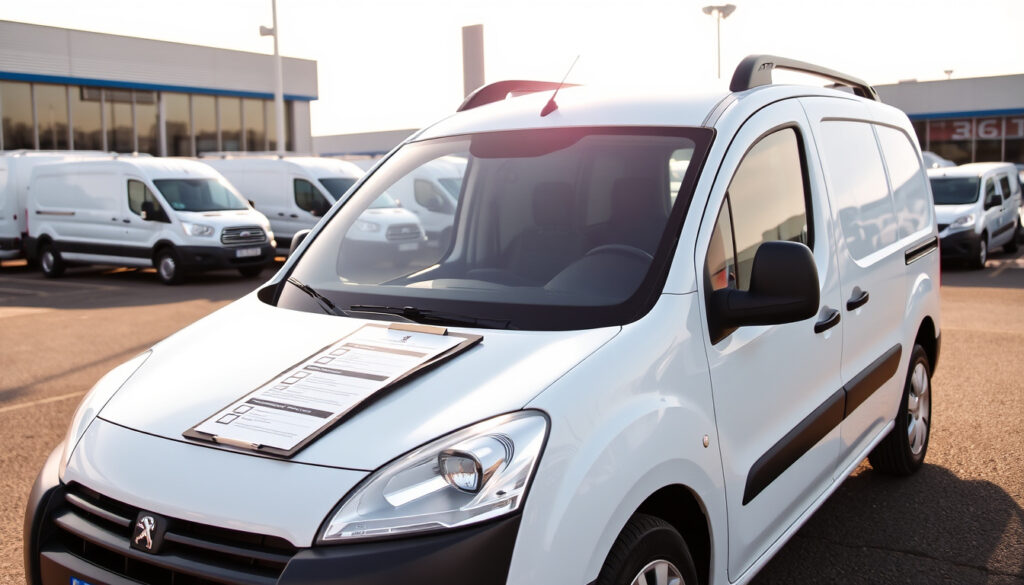
Peugeot Partner Vans for Sale: Reliability & Buying Guide
You’ve spotted a Peugeot Partner listed on DoneDeal or Carzone, and you’re wondering if it’s the right workhorse for your business. With over 500 used examples on the Irish market right now, the Partner is one of the most popular small vans around — but beneath the familiar badge lie a few quirks every buyer should know. This guide lays out the common problems, real-world longevity, and how the Partner stacks up against its identical twin, the Citroën Berlingo, so you can make a confident purchase.
Average price range (used, Ireland): €5,000 – €15,000 · Most common engine: 1.6 HDi (75–90 hp) · Typical lifespan: 200,000 – 300,000 km · Most reported problem: AdBlue system faults · Number of listings on DoneDeal: 583+
Quick snapshot
- Engine options: 1.6 HDi, 1.5 BlueHDi, electric (Complete Van (van review specialist))
- Payload: up to 1,000 kg (Peugeot Ireland (official manufacturer))
- Load volume: 3.3 – 4.1 m³ (Changing Lanes (Irish motoring publication))
- AdBlue system faults (Complete Van (van review specialist))
- DPF clogging (Complete Van (van review specialist))
- Electrical gremlins – window regulators, sensors (Peugeot Ireland (official manufacturer))
- Rust on rear doors and wheel arches (Changing Lanes (Irish motoring publication))
- Same platform and engines (Peugeot Ireland (official manufacturer))
- Berlingo often cheaper used (Complete Van (van review specialist))
- Partner has slightly higher resale value (Complete Van (van review specialist))
- Both have similar cargo space (Changing Lanes (Irish motoring publication))
- Check service history for timing belt changes (Complete Van (van review specialist))
- Inspect for AdBlue and DPF warning lights (Peugeot Ireland (official manufacturer))
- Prefer 2016+ models for improved reliability (Changing Lanes (Irish motoring publication))
- Test drive both diesel and electric if possible (Sandyford Motor Centre (Peugeot dealer))
| Detail | Value |
|---|---|
| Average price (used, Ireland) | €5,000 – €15,000 |
| Most common engine | 1.6 HDi (75–90 hp) |
| Typical lifespan | 200,000 – 300,000 km |
| Most reported problem | AdBlue system faults |
| Number of listings on DoneDeal | 583+ |
| Best year to buy | 2016 or later |
What is the most common problem with the Peugeot Partner?
AdBlue system issues
On diesel models, the AdBlue system is the single most frequent headache. The system’s injection pump and sensors can fail, often triggering a warning light that won’t clear without a dealer visit. Complete Van (van review specialist) notes that repair costs can run into hundreds of euros.
DPF regeneration problems
The diesel particulate filter (DPF) clogs when the van is used mainly for short city trips. The Partner’s DPF needs a sustained motorway run to regenerate. If the warning light stays on, a forced regeneration at a garage is needed — typically €150–€300.
Electrical faults
Window regulators, central locking, and dashboard sensors are known weak points. One common sign: the check engine light illuminates for a sensor fault that is easy to fix but costs diagnostic time. Peugeot Ireland (official manufacturer) advises a full electrical check before purchase.
Is a Citroën Berlingo better than a Peugeot Partner?
Engine and performance
Both vans share the exact same platform and engine lineup — the 1.6 HDi and 1.5 BlueHDi diesels are identical under the skin. Changing Lanes (Irish motoring publication) confirms there is no performance difference between the two.
Cargo space and dimensions
Both offer the same load volume (3.3–4.1 m³) and payload (up to 1,000 kg). The only difference is cosmetic — the Berlingo has a slightly different front grille and bumper design.
Reliability and common issues
Because they are mechanically identical, reliability is a tie. The deciding factor is individual vehicle history. Sandyford Motor Centre (Peugeot dealer) notes that service records matter more than the badge.
Price and value for money
On the used market, the Berlingo often sells for €500–€1,500 less than an equivalent Partner. The Partner tends to hold slightly higher resale value due to stronger brand recognition in Ireland. Complete Van (van review specialist) confirms this pricing gap.
If you want maximum value, buy a Berlingo. If you plan to sell within three years, the Partner will return more at resale — the premium you pay upfront is recouped later.
Three key specs, one pattern: the Partner and Berlingo are twins, so choose on price and condition.
| Feature | Peugeot Partner | Citroën Berlingo |
|---|---|---|
| Engine options | 1.6 HDi, 1.5 BlueHDi, electric | 1.6 HDi, 1.5 BlueHDi, electric |
| Payload (max) | 1,000 kg | 1,000 kg |
| Load volume | 3.3–4.1 m³ | 3.3–4.1 m³ |
| Average used price (Ireland) | €7,000–€15,000 | €5,500–€13,000 |
| Resale value after 3 years | ~55% of original | ~50% of original |
Is a Peugeot Partner a good van?
Pros: fuel economy, manoeuvrability, low running costs
The Partner’s 1.6 HDi returns 4.5–5.5 L/100 km, making it cheap to run. Its tight turning circle and compact dimensions make it ideal for Dublin’s narrow streets and tight loading bays. Peugeot Ireland (official manufacturer) quotes a payload of up to 1,000 kg, which covers most trades’ daily needs.
Cons: AdBlue issues, rust on older models
Beyond the AdBlue system, second-generation (M59) vans are prone to rust on rear doors and wheel arches. Changing Lanes (Irish motoring publication) advises inspecting the rear chassis rail carefully on pre-2008 models.
Who is it best for?
The Partner suits couriers, plumbers, electricians, and any tradesperson who values fuel economy over outright load capacity. It is not designed for heavy towing — the maximum braked trailer limit is 1,200 kg.
Which is the best Peugeot Partner engine?
1.6 HDi 75 hp
The entry-level diesel is underpowered for motorway merging but fine for local runs. Early versions (pre-2010) may have timing belt issues. Complete Van (van review specialist) says the 75 hp unit is reliable when serviced every 20,000 km.
1.6 HDi 90 hp
The sweet spot. The 90 hp version pulls well with a load and still returns ~5.0 L/100 km. Timing belt replacement every 100,000 km is essential.
1.5 BlueHDi 100 hp
Introduced in 2016, this Euro6 engine is cleaner but requires AdBlue — adding complexity. Peugeot Ireland (official manufacturer) states it meets the latest emissions standards and is paired with a five-speed manual in the Irish market.
Electric e-Partner
The e-Partner offers zero-emission driving and a claimed range of about 275 km. Peugeot Ireland (official manufacturer) markets it for low-emission zones. Long-term reliability is still being proven — few used examples exist yet.
Early 1.6 HDi engines (2008–2014) have timing belt failures that can destroy the engine. A broken belt costs €2,000+ to fix. Buyers must check the service record for belt changes. Sellers should mention recent belt replacement to justify the price.
Four engines, one standout: the 1.6 HDi 90 hp is the best balance of power, reliability, and running cost.
| Engine | Power | Fuel economy (L/100 km) | Best for |
|---|---|---|---|
| 1.6 HDi 75 hp | 55 kW / 75 hp | 5.0–5.5 | City runs, light loads |
| 1.6 HDi 90 hp | 66 kW / 90 hp | 4.5–5.0 | Mixed use, occasional A-road |
| 1.5 BlueHDi 100 hp | 74 kW / 100 hp | 4.2–4.8 | Motorway, low emissions zones |
| e-Partner (electric) | 100 kW / 136 hp | 17–20 kWh/100 km | City zero-emission, short routes |
What is the lifespan of a Peugeot Partner van?
Average mileage expectations
With proper maintenance, a Partner typically covers 200,000–300,000 km before major mechanical overhauls. Changing Lanes (Irish motoring publication) reports that well-cared-for examples have exceeded 400,000 km.
Importance of service history
Oil changes every 20,000 km and timing belt replacement every 100,000 km are non-negotiable. A missing belt change on a 1.6 HDi is a dealbreaker. Complete Van (van review specialist) emphasises that a full service history adds €1,000–€2,000 to resale value.
Common wear items to watch
Clutches last 150,000–200,000 km; dual-mass flywheels may fail at similar intervals. Suspension bushings and rear brake lines are known to corrode in Irish road salt. Sandyford Motor Centre (Peugeot dealer) recommends a pre-purchase inspection covering these points.
A 2016+ Partner with 150,000 km and full service history is the sweet spot: you get the Euro6 engine and half the van’s useful life still ahead. Expect to pay around €10,000–€12,000 for that combination on the Irish used market.
Peugeot Partner generations: timeline
- — First generation (M49) launched, basic but rugged.
- — Second generation (M59) with improved safety and airbags.
- — Third generation (B9) — the most common on the used market today.
- — Fourth generation (K9) with modern tech, electric e-Partner variant, and 2020 Irish Van of the Year award.
Confirmed facts vs. what remains unclear
Confirmed facts
- AdBlue system is a common problem on diesel models (Complete Van (van review specialist))
- Peugeot Partner and Citroën Berlingo are mechanically identical (Peugeot Ireland (official manufacturer))
- 1.6 HDi engine is generally reliable when maintained (Complete Van (van review specialist))
- Lifespan of 200,000–300,000 km is typical (Changing Lanes (Irish motoring publication))
- Partner won Irish Van of the Year 2020 (Changing Lanes (Irish motoring publication))
What’s unclear
- Which van (Partner vs Berlingo) has fewer overall problems – depends on individual maintenance
- Exact lifespan varies greatly with usage and care
- Long-term reliability of the electric e-Partner is not yet fully known
What the experts say
“The Peugeot Partner is a superb all-rounder for Irish trades. Its fuel economy and payload make it hard to beat.”
Complete Van (van review specialist)
“The Partner and Berlingo are the same van underneath. Your choice should come down to price and the dealer network near you.”
Changing Lanes (Irish motoring publication)
“The 1.6 HDi is a solid engine if the oil and timing belt have been changed on schedule. Neglect it and you’ll pay dearly.”
Sandyford Motor Centre (Peugeot dealer)
The Peugeot Partner remains a practical, affordable workhorse for the Irish market — but the AdBlue and DPF issues mean you cannot buy blind. Prioritise a full service history and a pre-purchase inspection. For city-based tradespeople looking at Peugeot Partner vans for sale in 2025, the smart pick is a 2016 or later 1.6 HDi 90 hp with 150,000 km or less. For buyers on a tighter budget, a well-maintained Berlingo offers the same van at a lower price. The choice is clear: know the van’s history, or pay the price later.
Frequently asked questions
What is the payload of a Peugeot Partner?
Payload ranges from 650 kg to 1,000 kg depending on the version. The Partner Grip version achieves the full 1,000 kg. Changing Lanes (Irish motoring publication) confirms the 1,000 kg maximum.
Does the Peugeot Partner have a timing belt or chain?
All 1.6 HDi and 1.5 BlueHDi engines use a timing belt. It must be replaced every 100,000 km or 5 years — whichever comes first.
Is the Peugeot Partner good for towing?
The Partner can tow up to 1,200 kg braked (1,100 kg for earlier models). It is adequate for a small trailer or a boat but not for heavy caravans.
What is the fuel consumption of a Peugeot Partner?
The 1.6 HDi achieves 4.5–5.5 L/100 km. The 1.5 BlueHDi can drop to 4.2 L/100 km on motorway runs. Complete Van (van review specialist) reports these figures from real-world tests.
How much does a new Peugeot Partner van cost?
In Ireland, a new Peugeot Partner starts at around €28,000 (ex-VAT) for the Access model. The top Grip trim is closer to €35,000.
What are the dimensions of a Peugeot Partner?
Load volume: 3.3–4.1 m³. Internal length: 1,817 mm (standard) or 2,170 mm (long wheelbase). Width between wheel arches: 1,249 mm.
Is the Peugeot Partner available as an electric van?
Yes, the e-Partner launched in 2021 with a 275 km range (WLTP) and 50 kW fast charging. Peugeot Ireland (official manufacturer) offers it as a utility van variant.
What is the warranty on a used Peugeot Partner?
Used Peugeot Partners sold through a Peugeot dealer often come with a 12-month warranty. Private sales have no statutory warranty — always get an independent inspection.
Related reading: T & C Motors Waterford: Peugeot Dealer New & Used Cars · Peugeot 308 For Sale – Prices, Specs & Best Deals
More related posts
 Best Coffee Machine with Grinder 2026: Reviews & Buying Guide
 He’s Just Not That Into You: Guide, Cast, Streaming & Info
 2024 New England Patriots Standings & Playoff Chances
 Cill Dara Golf Club – Guide to Fees, Course and Reviews
 DCU Clubs and Socs: 140+ Groups, Funding & How to Join
 Posiciones de la Liga 2025-26: Updated Standings Table
 AA Insurance Phone Number: How to Contact Customer Service
 The Time Traveler’s Wife: Cancellation, Ending, Worth It
